Affiliate disclosure: If you buy through our links, we may earn a commission at no extra cost to you. That support helps keep BuyersChoiceLab running and funds the research behind our guides.
If you’re looking at the Levoit Core 300S, you’re probably in one of these situations:
- You want a small-room air purifier that actually moves enough air to matter (not just a pretty cylinder that “freshens” the room).
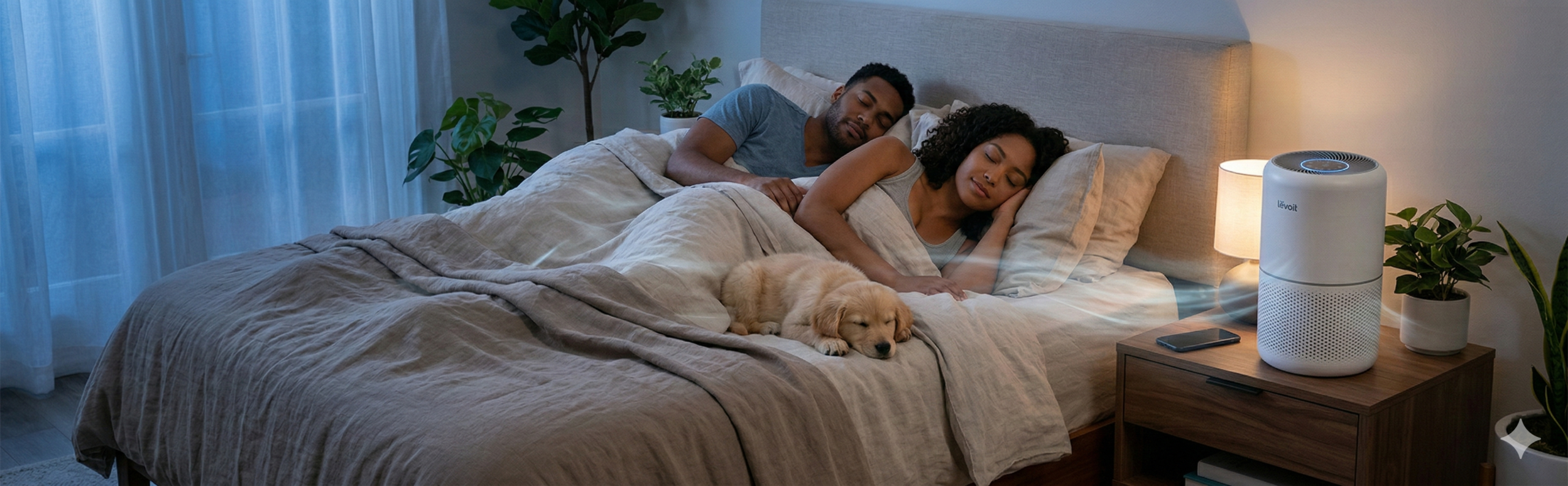
- You care about sleep-friendly noise and don’t want a machine that turns your bedroom into a wind tunnel at night.
- You want smart control (phone app, scheduling, maybe voice control) but you don’t want to pay “premium brand” pricing.
- You’re trying to figure out the real costs—because the purifier price is only half the story. Filters are the long-term bill.
This Levoit Core 300S review is written to help you make a clean decision, not just memorize specs. We’ll translate CADR into real room sizing, break down noise (what the numbers mean in a bedroom), estimate filter replacement costs, and explain the VeSync app features that matter day-to-day—plus when you should skip it and buy something else.
(And if you’re building a whole-house plan, start with our IAQ pillar guide here: https://buyerschoicelab.com/indoor-air-quality-home-guide-2026/)
Quick verdict (read this first)
The Levoit Core 300S is best for:
- Bedrooms, nurseries, offices, and small living rooms where you want meaningful particle reduction without a bulky machine.
- People who want smart features + Auto Mode in a compact unit (scheduling, remote control, PM2.5 updates).
- Buyers who are OK with replacing a combined HEPA + carbon filter about every 6–8 months (typical use).
You should skip it if:
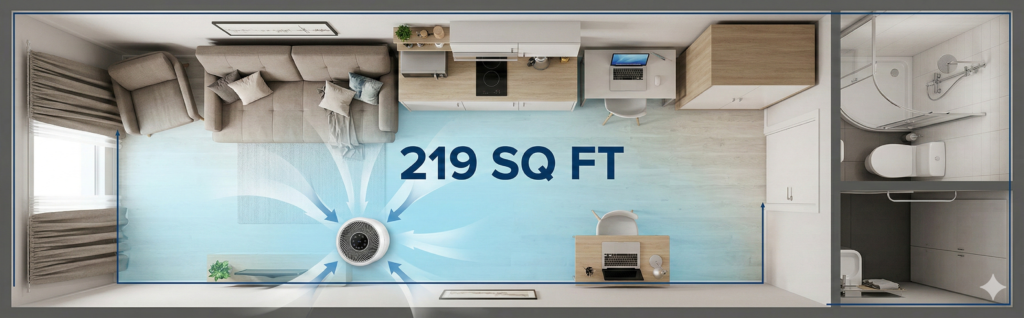
- Your main space is truly large or open-plan and you want fast cleanup. The Core 300S is designed around an “ideal room size” of about 219 sq ft (with the CADR to match).
- You need serious odor/gas control (any small purifier with a thin carbon layer has limits—more on that below).
- You want a unit with a larger filter and higher airflow so you can run it quieter while still getting strong cleaning.
Best place to buy (with warranty + easy returns):
Levoit Core 300S
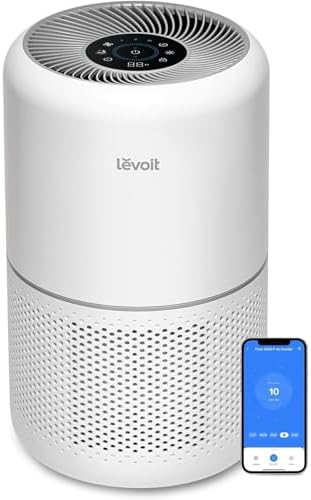
- 𝐖𝐇𝐘 𝐂𝐇𝐎𝐎𝐒𝐄 𝐀𝐇𝐀𝐌 𝐕𝐄𝐑𝐈𝐅𝐈𝐃𝐄 𝐀𝐈𝐑 𝐏𝐔𝐑𝐈𝐅𝐈𝐄𝐑𝐒: AHAM (Association of Home Appliance Manufacturers) is an ANSI-accredited organiz…
- 𝐖𝐀𝐊𝐄 𝐔𝐏 𝐑𝐄𝐅𝐑𝐄𝐒𝐇𝐄𝐃: Feeling sick after a night’s rest, the 3-in-1 filtration system helps you combat dry throats, nightly…
- 𝐀𝐂𝐂𝐄𝐒𝐒 𝐀𝐍𝐘𝐖𝐇𝐄𝐑𝐄 𝐀𝐍𝐘𝐓𝐈𝐌𝐄: Simply ask Alexa or Google Assistant to control the air purifier when your hands are full. The …
Key specs that matter (not the marketing fluff)
| Spec | Value | What it means in real life |
|---|---|---|
| CADR (Clean Air Delivery Rate) | 141 CFM | Airflow-cleaning speed for smoke-sized particles; translates to ~219 sq ft “AHAM-style” sizing. |
| Ideal room size | 219 sq ft | Best results in small rooms; larger rooms will clean slower. |
| Noise level | 22–50 dB | Very quiet at low/sleep; audible at higher speeds. |
| Rated power | 23 W | Low operating cost compared with many larger units. |
| Filtration | Pre-filter + H13 True HEPA + activated carbon | Pre-filter catches hair/dust; HEPA targets fine particles; carbon helps with light odors/VOCs. |
| Filter replacement interval | ~6–8 months (typical) | Your real annual cost depends on home pollution + runtime. |
| App | VeSync | Remote control, schedules, air quality updates, Auto modes, filter tracking. |
The one metric you should understand: CADR (and why it’s the fastest way to avoid buying the wrong purifier)
Most “room coverage” claims on product listings are confusing because brands can define them differently. CADR is the closest thing consumers have to a standardized shorthand for “how much clean air per minute” a purifier delivers.
AHAM (Association of Home Appliance Manufacturers) describes CADR as the volume of filtered air an air cleaner delivers, typically reported for smoke, dust, and pollen; higher CADR means faster cleaning.
The Levoit Core 300S lists a CADR of 141 CFM.
What does 141 CFM mean for room size?
A commonly used sizing approach is the relationship between smoke CADR and room size. AHAM’s materials describe a room-size relationship based on smoke CADR (and assumptions like an 8-foot ceiling). One simplified way to think about it:
- Room Size (sq ft) ≈ Smoke CADR × 1.55
So, for the Core 300S:
- 141 × 1.55 ≈ 218.55 sq ft (call it 219 sq ft)
That matches the manual’s “ideal room size” spec of 219 sq ft / 20 m².
This is why we like CADR: it cuts through the “up to 1,000+ sq ft” claims that are often based on slower air-change targets.
The practical takeaway
If your room is around:
- 120–200 sq ft: The Core 300S can be a strong fit. You’ll get faster cleanup and can often run it on lower speeds (quieter).
- 200–300 sq ft: It can still help, but cleanup slows down, and you’ll likely run it higher (more audible).
- Open-plan areas: Expect slower results unless you use multiple units or step up to a higher CADR model.
If you don’t want to do the math, use our CADR calculator here (it’s built exactly for this kind of decision):
https://buyerschoicelab.com/air-purifier-size-cadr-calculator/
Real-world performance: what to expect in a bedroom vs. a living room
Here’s a simple way to set expectations without pretending we ran lab tests.
The Core 300S is built to deliver about 5 air changes per hour in a closed room up to 219 sq ft (per the manual’s “air change per hour” guidance).
That’s the “sweet spot” where:
- You actually notice reduced dust buildup near bedding and surfaces over time
- Allergy sufferers often feel a difference (especially when paired with good vacuuming and humidity control)
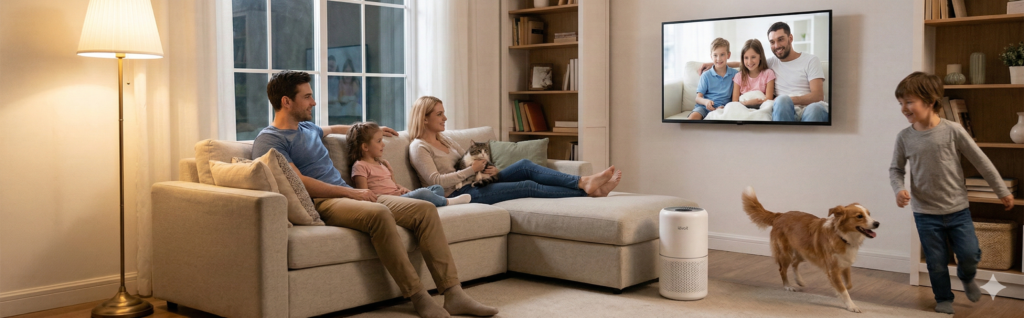
- Pet dander and fine particles are reduced faster than passive ventilation alone
But there’s a catch: portable purifiers are most effective when the room isn’t constantly being re-contaminated. If windows are open all day, or you have a lot of cooking smoke moving through the space, any small purifier will be fighting a moving target. The manual even notes to keep doors and windows closed for effective cleaning.
Best rooms for the Core 300S
- Bedrooms (especially where you want quiet + consistent nightly cleaning)
- Nurseries / kids’ rooms
- Home offices
- Small living rooms
- A “pet zone” room where the litter box or pet bed lives (as long as odors aren’t extreme)
Rooms where you should consider something stronger
- A big combined living/dining/kitchen space
- A main floor with lots of foot traffic and constant door opening
- A room where smoke events happen (frequent cooking smoke, wildfire smoke periods)—you may want higher CADR or multiple units
If you’re comparing this purifier to larger-room options, bookmark our comparison post (built specifically for this decision):
https://buyerschoicelab.com/core-300s-vs-winix-5500-2-vs-coway-200m/
Noise: will it bother you at night?
The Core 300S is rated around 22–50 dB depending on speed.
Those numbers matter, but the lived experience matters more:
- At low/sleep, it’s usually a soft, steady airflow sound—often similar to gentle white noise.
- At higher speeds, you’ll hear the fan and moving air more clearly. Some people like that for sleep masking; others find it distracting.
The main win here is that the Core 300S can be “quiet enough” for a bedroom while still being effective—because it’s properly sized for small rooms (it doesn’t need to be run on max all the time in a 120–180 sq ft room).
If your room is near the top of the recommended size (200+ sq ft) and you’re a light sleeper, you’ll likely face a tradeoff:
- run it quieter (slower cleaning), or
- run it faster (more noise)
That’s normal for every purifier, not just Levoit.
Practical placement tip: put it a few feet away from the bed (not right beside your pillow) and keep clearance around the intake. Also don’t jam it under furniture—air needs space to circulate.
If you want a “quiet but powerful” setup, the best strategy is often buying slightly more CADR than you need so you can run a lower speed while still moving enough clean air.
The VeSync app: features that actually matter day-to-day
Smart features can be either a genuine convenience or something you use once and forget. With the Core 300S, the manual outlines several VeSync functions that are actually useful: remote control, air quality updates, schedules, timers, and filter-life tracking.
Here’s what matters most in real life:
1) Scheduling (the “set it and forget it” win)
Schedules are underrated. A good schedule looks like:
- higher speed for 30–60 minutes after you make the bed / vacuum
- lower speed through the day
- sleep mode at night
This keeps air quality more stable without thinking about it constantly.
2) Air quality updates (PM2.5 trend, not perfection)
The Core 300S provides PM2.5 updates in the app and a short history view (per the manual).
Don’t treat any consumer sensor as a lab-grade instrument. Treat it like a “trend indicator”:
- Did cooking spike particles?
- Did vacuuming spike particles temporarily?
- Did closing windows and running the purifier bring levels back down?
That trend is useful because it helps you build habits that actually improve IAQ.
3) Auto Mode (especially “quiet auto”)
Auto Mode is helpful because it reacts to particle changes when you’re not paying attention. The manual notes additional auto modes like Quiet Auto and Efficient Auto, designed to avoid max fan noise or tailor cleaning to a selected area size.
That’s valuable if:
- you don’t want to manually adjust fan speed
- you want the purifier to respond to real changes (dust, cooking, outdoor air intrusion)
4) Filter tracking (so you don’t guess)
Filters are the hidden cost of every purifier. The app can help you track filter life percentage and shop for replacements.
That’s not “fun,” but it prevents a common mistake: people keep running old filters far past their useful life, then claim “the purifier doesn’t work.”
Filtration: what it captures well (and where small purifiers have limits)
The Core 300S uses:
- a pre-filter (for larger particles like dust, lint, hair, and pet fur)
- an H13 True HEPA filter (captures at least 99.97% of airborne particles at 0.3 microns, per the manual)
- an activated carbon filter (adsorbs smoke, odors, and fumes; can help with some VOCs)
That combination is exactly what most homes need for particle-focused cleaning (dust, pollen, dander, smoke particles). It’s the standard architecture of effective consumer purifiers.
The honest truth about odor and gas control
Small purifiers can help with light odors, but strong odor control usually requires:
- more carbon (thicker/heavier carbon filters)
- better ventilation source control
- sometimes a different device strategy
The Core 300S carbon stage can help with typical household smells, but if your main issue is heavy smoke odor or strong VOC events (fresh paint, strong solvents), don’t expect a compact purifier to be a miracle. You’ll do better focusing on source control and ventilation first, then using a purifier as a supporting tool.
A quick note about “virus” claims
The manual includes a clear note that Levoit’s filter size claims do not mean it reduces COVID-19 virus.
We respect that kind of clarity. It’s better than vague “kills viruses” marketing that consumers can misinterpret.
Filter options + what they’re best for
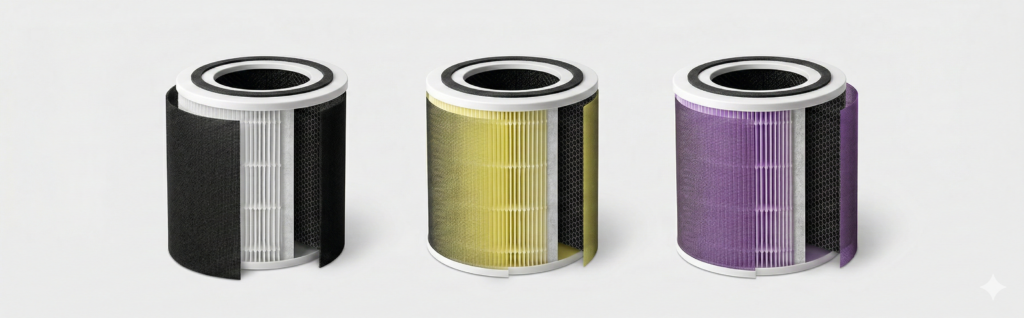
One of the nice things about the Core 300S ecosystem is that you can choose filters tailored to your environment. The manual lists three main replacement filter variants:
- Core 300-RF (Original): best for allergies, dust, and light odors
- Core 300-RF-PA (Pet Allergy): tuned for pet odors/cooking smells with an additional high-efficiency activated carbon emphasis
- Core 300-RF-TX (Toxin Absorber): designed for higher pollution/smoke and VOC-type concerns
Which one should you buy?
- If your goal is mostly dust/pollen/dander: Original is the default.
- If you have pets and you notice lingering odor: Pet Allergy is worth considering.
- If you’re dealing with wildfire smoke seasonally, or you live near traffic/pollution: Toxin Absorber can be a smart swap.
Buy replacement filters:
- Original

- 【Compatible Air Purifier Models】:Pulluty Core 300 HEPA Replacement Filter Widely compatible with LEVOIT Core 300 / Core …
- 【3-in-1 High Efficiency Filtration】 :Our Core 300 True HEPA Air Purifier Filter Replacement features 3-Stage Filtration …
- 【H13 True HEPA Filter】:The high efficiency Core 300 HEPA air filters capture 99.97% of airborne particles and particles …
- Pet Allergy
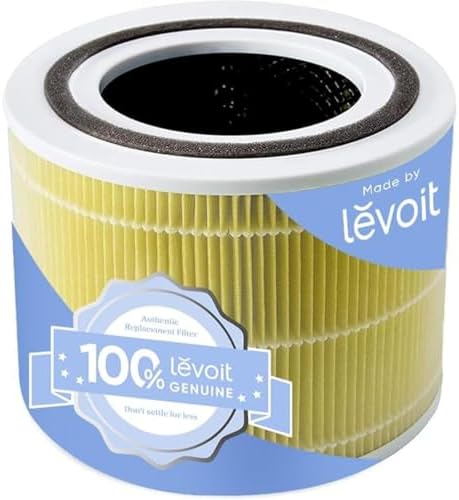
- 𝐆𝐄𝐍𝐔𝐈𝐍𝐄 𝐑𝐄𝐏𝐋𝐀𝐂𝐄𝐌𝐄𝐍𝐓 𝐅𝐈𝐋𝐓𝐄𝐑: Designed specifically for the Core 300-P / Core 300S-P air purifiers to maintain its peak pe…
- 𝐇𝐄𝐏𝐀-𝐆𝐑𝐀𝐃𝐄 𝐏𝐄𝐑𝐅𝐎𝐑𝐌𝐀𝐍𝐂𝐄 𝐈𝐍 𝐒𝐋𝐄𝐄𝐏 𝐌𝐎𝐃𝐄: Helps Levoit Core 300-P achieve HEPA* filtration efficiency during Sleep Mode. Zer…
- 𝐋𝐄𝐕𝐎𝐈𝐓 𝐆𝐄𝐍𝐔𝐈𝐍𝐄 𝐅𝐈𝐋𝐓𝐄𝐑: Guaranteed quality, detailed manufacturing process, and free from size mismatches to tackle unwan…
- Toxin Absorber

- [WIDELY USE]: Core300-P air purifier replacement filter compatible with Levoit Core 300/Core300-P, Core 300S/300S-P, Cor…
- [EFFECTIVE FILTRATION]: Core 300 Replacement Filter uses Vortexair Technology that creates a powerful airflow, which all…
- [PERIODIC REPLACEMENT]: 2 pack replacement for levoit core 300 filter available for your time replace. Size: 7.6 x 7.6 x…
Running costs: the part most reviews skip (and the part you’ll actually feel)
Here’s the simple truth: for a purifier you run daily, filters are the long-term spend. So we build a cost picture using:
- the manual’s replacement interval guidance, and
- typical genuine filter prices from Levoit listings.
How often do you replace the Core 300S filter?
The manual suggests checking/replacing around 6–8 months depending on use and conditions, and it also points out that higher pollution can require more frequent replacement.
So your realistic range is:
- Light use / lower pollution: ~8–12 months
- Typical daily use: ~6–8 months
- Heavy smoke/pets/dust: closer to 6 months (sometimes sooner)
Filter cost ranges (genuine filters)
Levoit’s filter listings commonly show prices like:
- Original filter around $29.99
- Pet Allergy and Toxin Absorber around $35.99
(Prices change, but that gives a fair planning baseline.)
Estimated yearly filter cost (simple planning table)
| Scenario | Replacement interval | Filters per year | Original filter yearly cost | Pet/Toxin filter yearly cost |
|---|---|---|---|---|
| Light use | 12 months | 1 | $29.99 | $35.99 |
| Typical use | 8 months | ~1–2 | $29.99–$59.98 | $35.99–$71.98 |
| Heavy use | 6 months | 2 | $59.98 | $71.98 |
If you want a cleaner estimate: assume 2 filters/year if you run it hard (pets + daily runtime), and assume 1 filter/year if it’s a gentle bedroom purifier in a relatively clean home.
Electricity cost
The rated power is 23W.
If you ran it at full rated power 24/7 (worst-case estimate):
- 0.023 kW × 24 × 365 ≈ 201 kWh/year
Multiply that by your electricity rate (in $/kWh). For many U.S. households, that’s roughly the cost of a few coffees per month—not nothing, but usually smaller than filter costs. In reality, your average usage is often below max power because you won’t be on top speed all day.
Bottom line: for most owners, filters are the main operating cost, not electricity.
Day-to-day usability: what it’s like to live with
A purifier can have great specs and still annoy you. Here are the livability points that matter most:
Controls and display
You can use the on-unit controls, and you can also shut off display lights (useful for bedrooms).
Display lock exists too, which matters if you have kids who love pushing buttons.
Timer (unit + app)
On the unit, you can set a timer for 1–12 hours, and the app supports longer options like 1–24 hours.
That’s useful if you want a “run for two hours after cooking” habit.
Maintenance effort (low, if you’re consistent)
The pre-filter should be cleaned every 2–4 weeks to maintain efficiency and extend filter life, and you should not wash the main filter with liquids.
That’s not hard, but it’s the difference between “my purifier works great” and “it stopped working after six months.”
If you want a full routine, we built a printable maintenance schedule later this month (bookmark it if you want something you can follow like a checklist):
https://buyerschoicelab.com/air-purifier-maintenance-schedule/
Pros and cons (straight talk)
Pros
- Strong fit for small rooms: CADR and sizing align cleanly with ~219 sq ft guidance.
- Very quiet at low/sleep (down to ~22 dB).
- Smart features that are actually useful (scheduling, auto mode variants, filter tracking).
- Filter options for different needs (Original / Pet / Toxin).
- Low rated power (23W).
Cons
- Not the right tool for big open spaces (works, but slower—physics wins).
- Odor/VOC control is limited by compact carbon capacity (fine for light odors, not “heavy smoke smell removal” magic).
- Filter costs add up over time (as with every HEPA purifier)—plan for it.
- 𝐖𝐇𝐘 𝐂𝐇𝐎𝐎𝐒𝐄 𝐀𝐇𝐀𝐌 𝐕𝐄𝐑𝐈𝐅𝐈𝐃𝐄 𝐀𝐈𝐑 𝐏𝐔𝐑𝐈𝐅𝐈𝐄𝐑𝐒: AHAM (Association of Home Appliance Manufacturers) is an ANSI-accredited organiz…
- 𝐖𝐀𝐊𝐄 𝐔𝐏 𝐑𝐄𝐅𝐑𝐄𝐒𝐇𝐄𝐃: Feeling sick after a night’s rest, the 3-in-1 filtration system helps you combat dry throats, nightly…
- 𝐀𝐂𝐂𝐄𝐒𝐒 𝐀𝐍𝐘𝐖𝐇𝐄𝐑𝐄 𝐀𝐍𝐘𝐓𝐈𝐌𝐄: Simply ask Alexa or Google Assistant to control the air purifier when your hands are full. The …
Who should buy the Levoit Core 300S?
Buy it if you want:
- A bedroom purifier that’s quiet enough to sleep with and still has real airflow/cleaning ability
- A small-room workhorse you can run daily
- Smart scheduling + Auto Mode without paying top-tier pricing
- A sensible long-term plan where you accept filter replacements as part of “clean air living”
It’s especially good for:
- Allergy households that need consistent particle reduction (pollen/dust/dander)
- Pet owners who want a purifier near the pet bed or litter area (plus the Pet filter option)
- People who want to track air quality changes from cooking, dust events, or seasonal shifts
Who should NOT buy it?
Skip it if:
- Your main room is much larger than ~219 sq ft and you want fast clean-up (or you don’t want to run the fan louder)
- You need heavy-duty odor control (you’ll likely want a unit with more carbon or a different strategy)
- You want one purifier to cover a whole open-plan floor (that’s usually a multi-purifier or higher-CADR scenario)
If you’re in that “in-between” zone, check our comparison post:
https://buyerschoicelab.com/core-300s-vs-winix-5500-2-vs-coway-200m/
Setup tips that improve results immediately
These sound simple, but they’re the difference between “I love it” and “I don’t notice anything.”
- Keep clearance around the unit
Don’t press it against a wall or bury it under furniture. Air needs to enter and exit freely. - Put it in the room where you actually spend time
A purifier in the hallway doesn’t clean the air in your bedroom as effectively as one placed in the bedroom. - Close doors/windows when you want fast cleanup
Even the manual notes that effectiveness improves when doors/windows are closed. - Clean the pre-filter consistently
Every 2–4 weeks is the guidance.
It’s quick, and it protects the expensive HEPA/carbon filter. - Replace filters on time
The manual’s typical range is 6–8 months, but adjust for your home conditions.
FAQ
Q1: What size room is the Levoit Core 300S actually good for?
A: The manual lists an ideal room size of about 219 sq ft, which lines up with its CADR (141 CFM) using common CADR-to-room sizing relationships. In smaller rooms, you get faster cleaning and can run lower speeds (quieter).
Q2: How loud is the Core 300S at night?
A: It’s rated around 22–50 dB depending on fan speed. Sleep/low settings are typically very quiet; higher speeds are more noticeable.
Q3: How often do you replace the Core 300S filter?
A: A typical range is about every 6–8 months depending on usage and pollution levels. Cleaning the pre-filter regularly can help extend filter life.
Q4: Does the Core 300S help with pet smells?
A: It can help with light odors, and Levoit offers a Pet Allergy filter option designed for pet-related needs. For strong odors, source control and ventilation still matter a lot.
Q5: What does the VeSync app actually do?
A: The app enables remote control, air quality updates, schedules, longer timer options, Auto modes, and filter-life tracking.