Small-space organization usually breaks down for one simple reason: people shop for containers before they define the job the storage needs to do. In a studio apartment, compact bedroom, small kitchen, or multipurpose home office, the wrong shelf, bin, rack, or drawer insert does not just waste money. It steals visual calm, blocks movement, and creates a second layer of clutter you now have to manage.
This guide is built to help you choose storage solutions for small spaces without falling into the usual traps. Instead of chasing “space-saving” products that look good in photos but fail in daily life, the goal here is to help you make decisions based on fit, load, access, routine, and long-term friction. That is what separates storage that quietly improves a home from storage that turns into drawer clutter, floor clutter, or return-label clutter.
Amazon disclosure: As an affiliate publisher, Buyers Choice Lab may earn a commission from qualifying purchases made through some links, at no extra cost to you. Editorial judgment should still start with fit, usefulness, and real-world practicality—not impulse buying.
Quick answer: The best storage solutions for small spaces are usually modular, appropriately sized, easy to access, easy to reset, and matched to one clear problem at a time. If a product is oversized, hard to clean, hard to reach, or too weak for the items you actually use every day, it is not a smart buy—no matter how attractive the listing looks.
If you already know you want product-category ideas after reading the framework below, start with Best Storage & Organization Products for Homes. That page works best once you understand which kind of solution fits your room, your routine, and your limits.
Why Most Storage Products Fail in Real Life
Most disappointing storage purchases fail before the box is even opened. The problem is not always product quality. Very often, the product was solving the wrong problem. People think they need “more storage,” but what they often need is one of five narrower fixes: better visibility, faster access, less visual mess, more vertical use, or easier reset at the end of the day.
Here are the most common real-life failure patterns:
- Wrong footprint: The unit technically fits the wall or closet, but once doors open, shoes slide, hangers swing, or people walk by, the area feels cramped.
- Wrong load level: Lightweight bins get filled with heavy items, fabric cubes sag, and cheap drawers stick or warp.
- Wrong access pattern: Top-opening containers get stacked, which means the item you need most is always buried.
- Wrong reset difficulty: If putting things away takes more than a few seconds, clutter returns quickly.
- Wrong visual role: Open storage can look airy in styled photos but feel chaotic in homes with mixed-use, high-turnover items.
That is why “more shelves” or “more bins” is not a buying strategy. In small homes, every storage item needs to earn its footprint. Good products reduce friction. Bad products create one more system you have to maintain.
The F.L.A.R.E. Framework for Small-Space Storage
A useful way to shop smarter is to score each storage option through five filters. I call it the F.L.A.R.E. framework: Fit, Load, Access, Reset, and Eye-level effect. If a product fails two or more of these, it is usually a weak choice for a compact home.
| Filter | Question to Ask | Good Sign | Warning Sign |
|---|---|---|---|
| Fit | Does it fit the space once doors, lids, and people are moving around? | Clearances are measured, not guessed. | It “barely fits” on paper. |
| Load | Can it handle the weight and frequency of use? | Material and design match real household use. | Looks fine empty, flexes when filled. |
| Access | Can you grab daily items without unstacking or moving other things? | Front access, open visibility, or labeled pull-out design. | Deep, dark, hard-to-reach pile. |
| Reset | How easy is it to put items back after use? | One-hand reset, obvious home for each item. | Requires folding, stacking, or rearranging every time. |
| Eye-level effect | Will it make the room calmer or busier? | Reduces visible clutter and blends with the room. | Turns every surface into display space. |
This framework is especially useful because it stops you from buying a product just because it belongs to the right category. A closet organizer can still be the wrong closet organizer. An under-bed bin can still be a bad under-bed bin. A wall rack can still be a bad wall rack if access becomes annoying or the items stored there are too heavy.
Start With the Space, Not the Product
One of the biggest mindset shifts in small-home organization is learning to define the storage job before shopping. Instead of asking “Should I buy baskets, shelves, or drawers?” ask these questions first:
- What exactly keeps getting left out?
- How often do I use it?
- Does it need to be hidden, displayed, or quickly reachable?
- Would vertical space solve this better than floor space?
- Am I organizing overflow, or am I compensating for owning too many duplicates?
That last question matters more than people think. Storage is not always the right fix. Sometimes the better answer is simply reducing volume. In a small room, one extra organizer can feel like “help,” but five slightly helpful organizers can make the room feel crowded again.
Rule worth remembering: If a product only works when you store more stuff than you can easily see, reach, and reset, it is usually hiding a volume problem rather than solving an organization problem.
Materials, Build Quality, and What Actually Matters
Materials matter, but not in the simplistic way product listings often suggest. There is no single “best” material for all storage. The right choice depends on where the item lives, what it holds, and how often it gets touched.
Plastic
Plastic can work very well for under-bed storage, pantry grouping, bathroom supplies, kid items, and general visibility. Its strengths are low weight, wipe-clean surfaces, and easy portability. The downside is that flimsy plastic often cracks at stress points, bows when stacked, or gets visually messy when every bin is translucent and overfilled.
Metal
Metal usually makes sense for load-bearing, vertical, or high-frequency use: shelving, over-the-door systems, utility racks, and closet support pieces. It tends to earn its cost when you need structure, not just containment. The tradeoff is that heavy or bulky metal pieces can become overkill in a room where you mainly need visibility and light organization.
Fabric
Fabric bins and soft-sided organizers are useful when weight is low and flexibility matters. They work well for sweaters, spare linens, accessories, seasonal wear, and soft goods. They are usually a poor choice for tools, heavy pantry items, or anything that needs crisp structure and frequent one-handed access.
Wood or engineered wood
Wood-based units can look more furniture-like, which helps in rooms where storage is visible all day. But the right choice depends on build quality, not just finish. In small homes, heavy furniture-style storage only makes sense when it can replace multiple lighter items and still preserve flow in the room.
| Material | Best For | Usually Skip For | Main Buying Check |
|---|---|---|---|
| Plastic | Bathrooms, under-bed, pantry grouping, kids’ items | Heavy stacks or load-bearing shelves | Watch for flex, latch quality, and shape distortion. |
| Metal | Vertical systems, utility storage, sturdy racks | Spaces where every inch of visual weight matters | Check footprint, load match, and whether it overwhelms the room. |
| Fabric | Closets, linens, seasonal or soft items | Heavy tools, hard goods, wet areas | Look for shape retention and easy carry handles. |
| Wood / engineered wood | Visible room storage that must feel like furniture | Temporary overflow fixes | Make sure it replaces other clutter instead of adding bulk. |
Sizing: Bigger Is Not Better in a Small Room
A common mistake in small-space shopping is assuming that the largest unit that fits the wall is the smartest use of space. In practice, oversized storage often harms the room in three ways: it blocks circulation, it invites overfilling, and it makes the room feel visually top-heavy.
A better approach is to measure four things, not one:
- Width: the obvious first measurement, but never enough by itself.
- Depth: the number people forget, especially near beds, desks, and hallway paths.
- Clearance: the room needed for drawers, lids, closet doors, or hangers to move freely.
- Reach zone: whether you can actually get to the items without bending, crouching, or rearranging something else.
If you are organizing a closet, compare the product depth to the actual usable depth once clothes are hanging. If you are buying under-bed storage, measure not just height under the frame but also how easily the bin clears rugs, bed skirts, or support legs. If you are buying entryway storage, test where shoes and bags land naturally first. That tells you where the storage needs to live.
Daily-Use Storage vs Occasional-Use Storage
This is one of the most important distinctions people overlook. Storage that holds daily-use items must be built and designed differently from storage that holds backup, seasonal, or low-access items.
Daily-use storage should be:
- easy to reach without bending into awkward positions,
- fast to reset when you are tired or in a hurry,
- strong enough for constant handling, and
- simple enough that everyone in the home understands the system.
Occasional-use storage can be:
- higher, deeper, or more tucked away,
- softer-sided or less rigid,
- less visible, and
- slightly slower to access without becoming a problem.
Once you separate those two jobs, a lot of buying decisions become easier. The shoe rack by the door should not be judged by the same criteria as the under-bed bin holding winter blankets. The tray that controls desk clutter should not be judged like the bin that stores spare cables you use twice a year.
If your biggest small-space frustration is closet overflow, this page also pairs naturally with Closet Organizers for Small Homes, where the closet-specific tradeoffs matter more than general organization advice.
What to Look For in the Best Small-Space Storage Solutions
1. Modular design
Modular products tend to outperform single oversized units because they let you build around the room instead of forcing the room to build around the product. Two narrow pieces often work better than one wide piece. A stackable system often works better than one deep bin. A set of smaller zones is easier to maintain than one giant “organization solution.”
2. Vertical use without visual overload
Vertical storage is almost always part of the answer in a compact home, but it should still preserve calm. Tall units work best when they store lower-turnover items up high and keep daily-use items in the easiest reach zone. If everything ends up stacked above eye level, you did not create accessible storage. You created delayed clutter.
3. Clear access path
Fast access matters because difficult access creates procrastination. The more steps it takes to get something out—or put it back—the more likely it is that the item ends up on a chair, countertop, nightstand, or floor instead.
4. Easy cleaning
Dust, hair, crumbs, and moisture turn good ideas into bad experiences quickly. In bathrooms, entryways, and kitchens, smooth surfaces and wipeable finishes matter more than perfect aesthetics. In closets and under-bed zones, easy-lift or easy-slide access matters because hidden buildup makes people avoid the area.
5. Honest capacity
The useful question is never “How much can this hold in theory?” It is “How much can this hold while still being usable?” A basket that fits twelve items but becomes impossible to reset after eight has an eight-item working capacity, not a twelve-item one.
Scenario-Based Recommendations: What Usually Works Best
Instead of treating small-space storage as one generic category, it helps to think in realistic home scenarios. Here is how I would usually approach the decision by room or lifestyle.
Studio apartment or one-room living
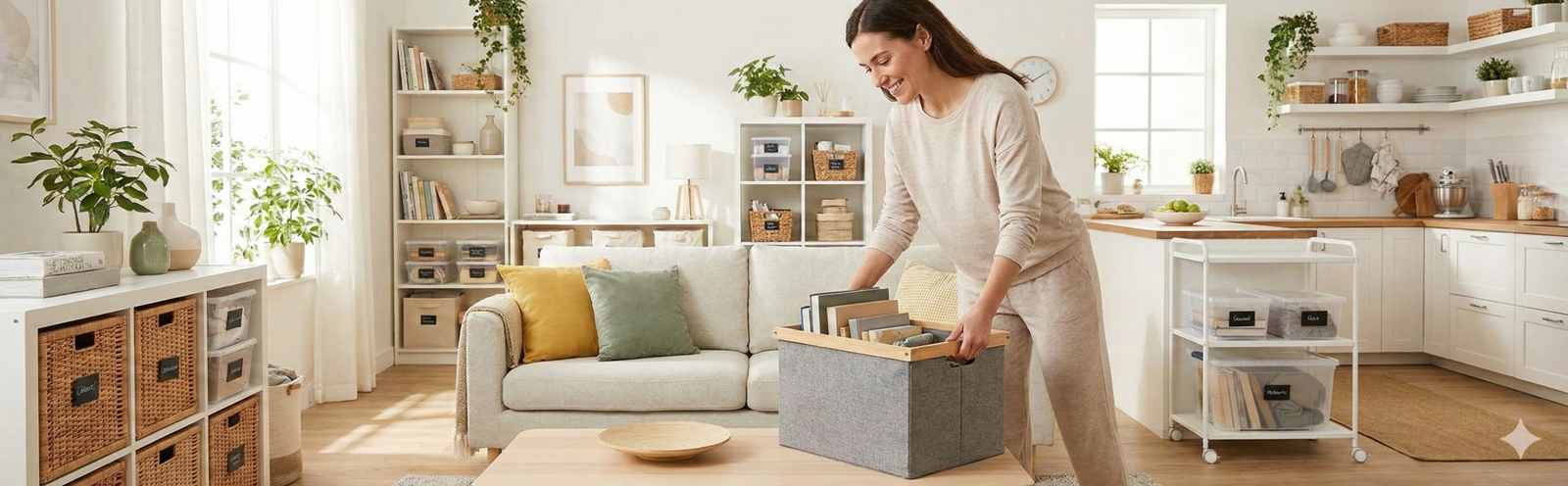
In a studio, storage has to solve multiple jobs without making the room feel boxed in. Priority usually goes to closed or semi-closed storage for the most visually noisy items, plus vertical solutions that preserve as much floor openness as possible. A good studio setup usually combines one anchor piece for hidden storage, one vertical zone, and one fast-drop zone near the entry or bed.
What usually works: slim shelving, under-bed containment, furniture with hidden compartments, and limited open display. What usually fails: too many separate baskets scattered around the room, bulky cube systems that interrupt movement, and decorative bins without a defined category.
Small bedroom with limited closet space
The best choices here depend on whether the pain point is hanging space, folded clothes, accessories, shoes, or seasonal overflow. The mistake is buying one “closet organizer” and expecting it to solve all five. Small bedrooms usually improve faster when you choose one organizer for one bottleneck: hangers for vertical efficiency, shelf dividers for folded stacks, hanging compartments for soft goods, or low-profile bins for under-bed overflow.
Compact entryway
Entryway storage succeeds or fails based on reset speed. If shoes, keys, bags, coats, and mail do not have an obvious landing zone, the entrance becomes a stress signal every time you walk in. Look for narrow-depth storage, simple hooks, and one defined drop area—not a collection of random containers that all compete for the same few feet.
Small kitchen
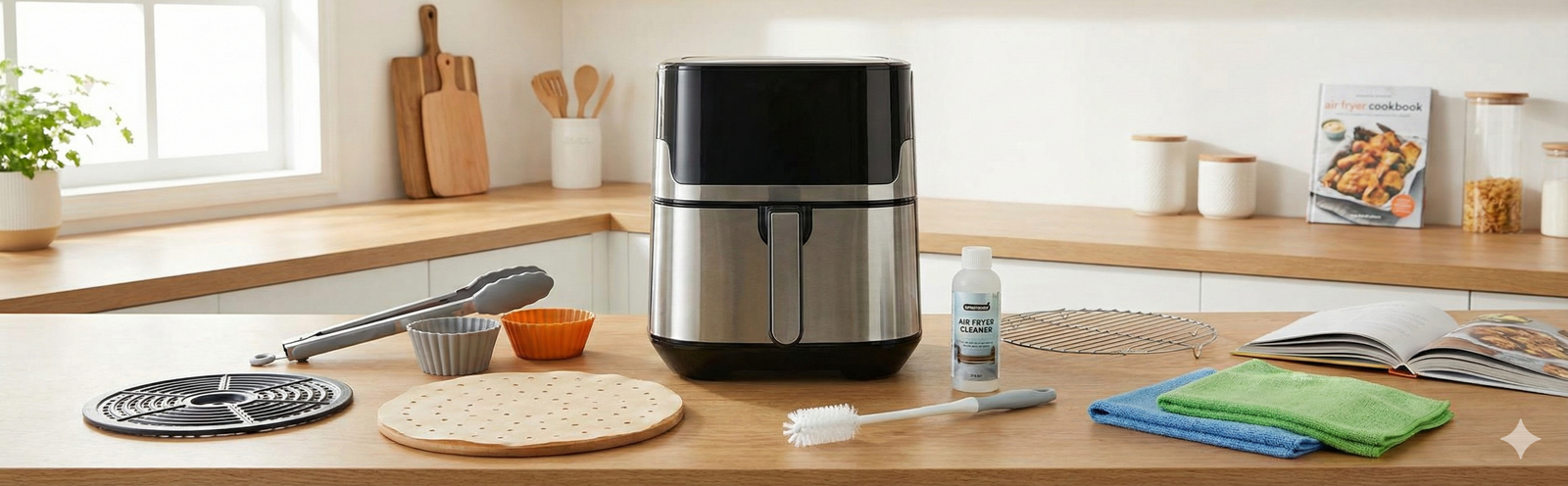
Kitchen storage is often less about “adding capacity” and more about reducing bad appliance and accessory decisions. Before buying a new organizer, check whether the real space problem comes from bulky gear you do not use enough to justify its footprint. That is also why appliance planning matters. If you are working with limited cabinets and counters, this guide pairs naturally with How to Choose an Air Fryer for Apartments and Air Fryer Accessories That Improve Results, because the wrong appliance size or accessory pile can quietly consume the very storage you are trying to gain.
Work-from-home corner or desk nook
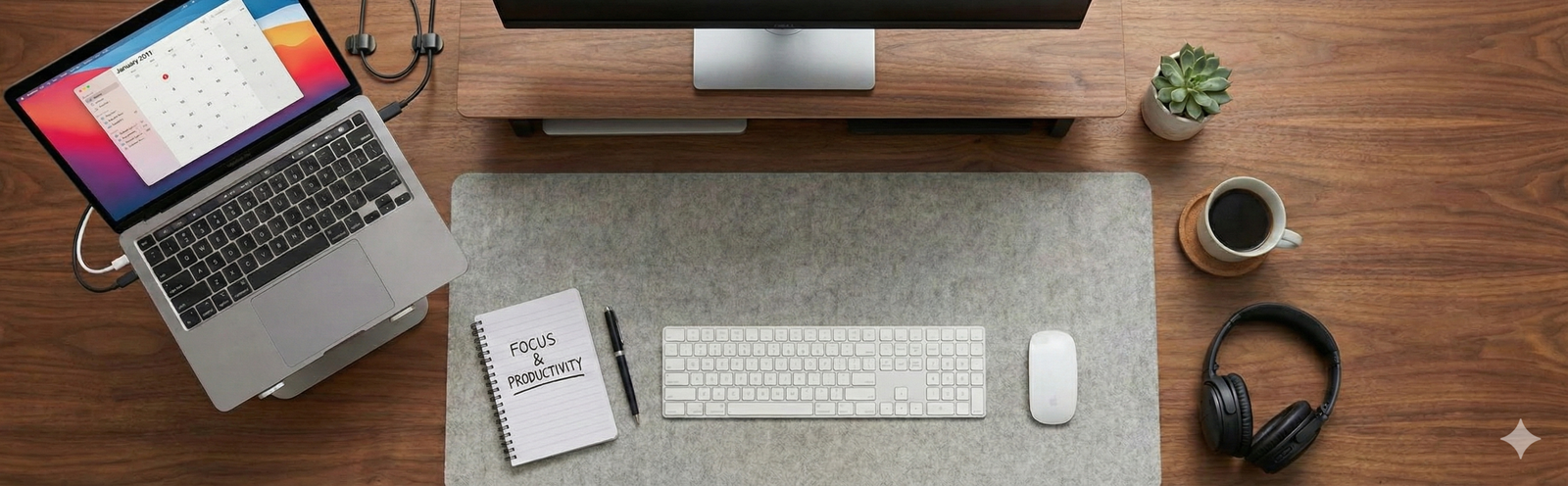
Desk organization in a small home should aim for reduced visual drag, not just more compartments. If your workspace is in a bedroom or living room, visible clutter affects the feel of the whole room. The best setup is usually a light, repeatable system: one tray for immediate tools, one cable solution, one document zone, and one overflow area that stays out of sight. For a more focused workspace setup, see Desk Organization Ideas That Improve Focus.
What Some People Should Skip
Not every small-space home needs more organizers. Some people should skip certain storage purchases altogether—at least for now.
- Skip oversized drawer towers if you have not defined what belongs in each drawer. They become miscellaneous clutter traps fast.
- Skip decorative baskets if you really need access and categories, not hidden piles.
- Skip open shelving if visual noise already stresses you out or your items are too mixed and irregular to look calm when exposed.
- Skip “universal” closet kits if your actual issue is only shoes, folded clothes, or accessories. Partial solutions are often better than one complicated system.
- Skip buying ten organizers at once if you still do not know where clutter naturally lands. Observe behavior first, then buy to support the routine that already happens.
A good small-space shopping rule is this: if you cannot explain the job of the product in one sentence, do not buy it yet.
Common Mistakes That Waste Money
Buying before measuring
Measure width, depth, height, clearance, and access path. Then re-measure the route the product takes into the room if assembly is not involved. A product can “fit the corner” and still be terrible once the room is in use.
Confusing visibility with organization
Seeing your stuff can help, but too much visible storage makes a small room feel busier. The goal is not maximum visibility. It is the right balance between visibility and calm.
Choosing the cheapest option for high-friction zones
Daily-use storage near doors, closets, or work areas gets touched constantly. That is where weak handles, sagging bins, or awkward designs become annoying fast. Budget options can work well for light-duty, low-access jobs. They often disappoint when used like furniture.
Organizing categories that should be reduced instead
If the category is full of duplicates, expired items, or random “maybe someday” purchases, the best storage solution is usually editing first. Small homes punish excess faster than larger homes do.
Creating systems nobody else can follow
A storage setup is only good if it can survive normal human behavior. If everyone in the home needs detailed instructions to put items away correctly, the system is too delicate.
A Practical Maintenance Routine That Keeps Small Spaces Working
Small-space storage is not a one-time project. It works best when there is a light maintenance rhythm built into normal life. The good news is that the routine does not have to be complicated.
Daily: 3-minute reset
At the end of the day, return visible items to their home zones: entryway, desk, bedside, and kitchen counters. This matters because those zones shape how the whole home feels.
Weekly: friction check
Ask one question: what did I leave out repeatedly this week? The answer usually reveals which storage decision is failing. Maybe the basket is too deep. Maybe the shelf is too high. Maybe the drawer is too full. Small corrections here prevent big clutter rebounds later.
Monthly: light edit
Remove duplicates, expired items, dead cables, empty boxes, and anything that has not justified its footprint. In compact homes, storage stays useful when it stays selective.
Seasonally: rebalance by weather and routine
Swap in what is current, move out what is not, and resist the urge to keep everything equally accessible all year. Seasonal rotation is not extra work. It is what keeps daily zones clean and efficient.
The best sign your storage is working: cleanup feels faster, surfaces stay clearer, and you do not have to think very hard about where things go back.
When It Is Worth Paying More
You do not need premium everything. But in a small home, some categories justify a better build because failure is more disruptive. Paying more usually makes sense when the product is load-bearing, highly visible, touched every day, or expected to replace multiple weaker items.
It is often worth spending more on:
- sturdy closet support pieces,
- entryway furniture-style storage,
- shelving that carries real weight,
- pieces that stay visible all day, and
- products where bad access would create daily irritation.
It is often fine to save money on:
- seasonal bins,
- light-duty fabric organizers,
- temporary category testing, and
- simple grouping solutions inside already enclosed cabinets or drawers.
How to Decide Between Open, Closed, and Hidden Storage
This choice affects both function and mood. In small homes, the visual effect of storage matters almost as much as the storage itself.
- Open storage works best for attractive, low-clutter categories you use often and can reset quickly.
- Closed storage works best for mixed, visually messy, or irregular items that would make the room feel busier if exposed.
- Hidden storage works best when the room has to perform multiple roles and you need surfaces and sightlines to stay calm.
If you are unsure, start more closed than open. It is easier to make a room feel airy later than it is to calm down a room that already feels overloaded.
A Better Way to Plan Your Next Purchase
Before you buy any organizer, write a one-line brief like this:
I need a storage solution that helps me store [category] in [location] with [daily frequency], while keeping [main frustration] low.
Examples:
- I need a storage solution that helps me store shoes by the entry with daily access, while keeping floor spillover low.
- I need a storage solution that helps me store off-season clothes under the bed with monthly access, while keeping dust and bulk low.
- I need a storage solution that helps me store desk tools in a bedroom workspace with daily access, while keeping visible clutter low.
That tiny exercise filters out a surprising number of bad buys. It forces the storage product to prove it fits a real habit, not just a shopping impulse.
Before You Click Buy: A 7-Point Final Checklist
A lot of bad storage purchases could be prevented by one final pause before checkout. Use this short checklist to stress-test the decision:
- Can I describe the exact problem this solves? If the answer is vague, the purchase is usually vague too.
- Have I measured the true usable space? That means depth, door swing, reach, and walk path—not just wall width.
- Am I storing daily-use or occasional-use items? The design should match the access frequency.
- Will this reduce visible clutter or increase it? The right organizer should calm the room, not crowd it.
- Can I reset this system quickly? If putting things away will feel annoying, the system will not hold.
- Am I buying to support a routine I already have? Storage works best when it supports real habits, not idealized habits.
- Would editing down the category solve this better? Sometimes fewer items beat better organizers.
This checklist is boring in the best possible way. It saves you from the very common pattern of buying a product that feels smart at checkout but becomes yet another object you have to work around. In small homes, every unnecessary item is more expensive than it looks because it costs both money and breathing room.
What Smart Small-Space Storage Usually Looks Like in Practice
A well-organized small home rarely looks like a showroom. It looks lived in, but controlled. The entry stays functional, the bed area stays calm, the desk resets quickly, and the kitchen counters are not doing the job of cabinets. That result usually comes from a few consistent decisions rather than one dramatic purchase.
In practice, smart storage usually means:
- using hidden or low-visual-weight storage for the messiest categories,
- keeping high-frequency items in the easiest reach zone,
- choosing a few strong systems instead of many weak ones,
- assigning one job to each organizer, and
- letting the room stay partially empty instead of treating every inch as a storage opportunity.
That last point matters. Empty space is not wasted space in a small home. It is what preserves movement, calm, and flexibility. Storage should support the room, not consume it.
Where to Go Next If You Want Specific Product Paths
Once you know your bottleneck, it becomes much easier to narrow product categories without getting overwhelmed. These related guides help you move from general strategy to more specific use cases:
- Best Storage & Organization Products for Homes for broader category ideas.
- Closet Organizers for Small Homes if closet overflow is the main issue.
- Desk Organization Ideas That Improve Focus if your workspace is part of the clutter problem.
- How to Choose an Air Fryer for Apartments if your kitchen storage problem is really an appliance-footprint problem.
FAQ: Storage Solutions for Small Spaces
What is the best type of storage for a small apartment?
Usually, the best type is modular storage that uses vertical space without making the room feel crowded. The exact answer depends on the problem you are solving: entryway clutter, closet overflow, under-bed use, kitchen crowding, or desk mess all call for different solutions.
Are open shelves good for small spaces?
They can be, but only when the stored items are visually calm and easy to reset. If your categories are mixed, irregular, or messy, open shelving can make a small room feel more chaotic rather than more organized.
How do I know if a storage product is too big?
If it technically fits but compromises movement, door swing, drawer access, or visual balance in the room, it is too big. In compact homes, usable space matters more than theoretical capacity.
Should I choose bins, drawers, or shelves?
Choose based on access pattern. Bins are good for grouped categories, drawers are good for concealment and repeated access, and shelves are good when items need visibility and structure. The best choice depends on the category and the room, not on trend appeal.
What is the biggest mistake when organizing a small home?
Buying organizers before understanding the clutter pattern. When you buy first and diagnose later, you often end up with the wrong size, wrong access style, or wrong number of solutions.
Is under-bed storage worth it?
Yes, when used for lower-turnover categories such as seasonal clothing, spare bedding, or backup soft goods. It is less useful for items you need every day unless the access is unusually easy.
How many storage products should I buy at once?
Usually fewer than you think. In most small homes, it is smarter to solve one friction point, test the result, and then expand. Buying too many organizers at once makes it harder to see what is actually helping.
Final Verdict
The best storage solutions for small spaces are not the ones with the most compartments or the most dramatic before-and-after promise. They are the ones that fit the room honestly, support the weight and frequency of use you actually have, make access easier, and make reset almost automatic.
If you want a practical way to shop, remember this order: define the friction, measure the space, choose the access style, match the load, and only then choose the product. That sequence protects you from the most common wasteful buys and leads to storage that feels lighter, calmer, and more sustainable over time.
And if you are ready to move from buying logic to specific categories, continue with Best Storage & Organization Products for Homes so you can narrow the search without getting buried in generic listicles.
Amazon disclosure: Buyers Choice Lab may earn from qualifying purchases through affiliate links. That does not change the goal of this guide: help you avoid buying storage that looks useful but performs poorly in real life.