Most of us have bought a container set that looked perfect in the listing and then quietly stopped using it two weeks later.
The lids felt annoying. The plastic started looking tired. The glass felt too heavy in a work bag. Half the set disappeared into a cabinet graveyard of random lids and mismatched bases. What sounded like a simple kitchen upgrade turned into one more thing that made meal prep feel harder.
That is why the glass-vs-plastic debate matters more than it seems. This is not really a debate about which material is “best” in the abstract. It is about which one fits the way you actually live: packing lunch when you are half awake, stacking meals in a crowded fridge, reheating at work, cleaning up quickly, and repeating the whole cycle tomorrow without dreading it.
If you are here because you want the shortest answer, here it is: plastic usually wins for carrying, glass usually wins for reheating, and a hybrid system often wins in real life. If you already know you want a brand-by-brand shortlist instead of a materials guide, go straight to Best Storage Containers for Meal Prep. If your bigger issue is freshness, condensation, and how food holds up over several days, use Meal Prep Containers That Keep Food Fresh alongside this article.
Quick answer: what should most people buy?
- Choose plastic first if your meals travel often, your lunch bag gets tossed around, or you want the lowest-friction option for daily carry.
- Choose glass first if you reheat often, hate lingering odors, care about a cleaner-looking fridge, or want containers that feel more satisfying to eat from.
- Choose a hybrid setup if you commute and meal prep. This is often the sweet spot: plastic for grab-and-go, glass for home storage and reheating.
- Do not choose based on hype. Choose based on the parts of the routine that usually annoy you: weight, leaks, cleanup, stains, odor, or stackability.
Why this comparison matters more than people think
A lot of container content treats this like a material science argument. That is usually not what buyers need. Most people are trying to solve a weekly systems problem:
- How do I make weekday lunches easier?
- What will actually survive my commute?
- What reheats without feeling annoying?
- Which containers stay usable instead of turning into drawer clutter?
- What keeps my fridge from feeling chaotic?
That is also where many posts miss search intent. Someone typing “glass vs plastic food storage containers” is usually not looking for a philosophical answer. They are looking for a purchase decision that will still feel smart on Monday morning, not just in a product comparison chart.
So instead of asking, “Which material is objectively superior?” the better question is: Which material creates less friction in the routine you repeat every week?
Once you frame it that way, the answer gets much clearer.
Why most food storage container systems fail in real life
Container systems usually fail for boring reasons, not dramatic ones. It is rarely because the set was totally unusable. It is because the day-to-day experience had just enough friction to make you stop reaching for it.
1) They are too precious for the way people actually live
Glass can feel premium, but if you are nervous every time it goes into a backpack or lunch tote, you may stop using it for work meals. Plastic can feel easy, but if it stains fast and starts looking permanently “old,” it stops feeling pleasant to use. Both materials can fail when they do not match the context they are being used in.
2) The lids become the real problem
People blame bases, but lids usually decide whether a set stays in rotation. If the lids are hard to match, hard to close, hold water, trap smells, or feel fussy to dry, the whole system slowly becomes annoying. This is also why random mixed sets become clutter so quickly.
3) The set tries to do every job badly
One set almost never excels at every use case. Carrying chili on a commute, freezing chopped fruit, portioning weekly lunches, and reheating leftovers at home are not the same task. A set that is merely okay at all of them is often less satisfying than a small system with different roles.
4) Buyers choose based on shelf appeal instead of routine fit
It is easy to buy based on aesthetics, marketing language, or the idea of being the kind of person who meal preps perfectly. It is harder, and much smarter, to buy based on your real week. Do you carry food more than you reheat it? Do you mostly store leftovers at home? Do you hate hand-washing fiddly lids? Do you pack school lunches? Those questions matter more than the pretty product photo.
5) They do not create consistency
The best container is the one you use without thinking. If the system is too heavy, too messy, too awkward, or too chaotic, your routine breaks. When the routine breaks, takeout and forgotten leftovers show up right behind it.
A better way to choose: the Carry-Reheat-Clean-Repeat framework
Instead of asking which material is better overall, score each one on the four moments that actually decide long-term satisfaction:
Carry
How does it feel in a bag, backpack, or lunch tote? Weight, break risk, and leak anxiety matter here more than anything else.
Reheat
Does it feel easy and normal when lunch time comes? Does it hold odors? Does it still feel clean after repeated microwave use and sauce-heavy meals?
Clean
Are the lids annoying? Do grooves hold water? Does the container start looking dingy or stained? Does cleanup feel like a chore?
Repeat
Will you want to use it again tomorrow, next week, and next month? This is the category that matters most, because consistency beats theoretical perfection.
Glass vs plastic at a glance
| Factor | Glass | Plastic |
|---|---|---|
| Weight for commuting | Heavier, less carefree in bags | Usually easier and lighter for daily carry |
| Reheating experience | Often feels cleaner and more satisfying | Convenient, but can feel less premium over time |
| Odor and stain resistance | Usually stronger | More likely to show wear depending on foods and use |
| Break stress | More mental overhead when traveling | Lower stress for school, work, and grab-and-go use |
| Fridge aesthetics | Often looks cleaner and more organized | Functional, but can look more utilitarian |
| Kid and teen lunches | Usually less ideal | Usually the safer default |
| Best overall role | Home storage + reheating | Transport + portioned weekday use |
Where glass containers feel clearly better
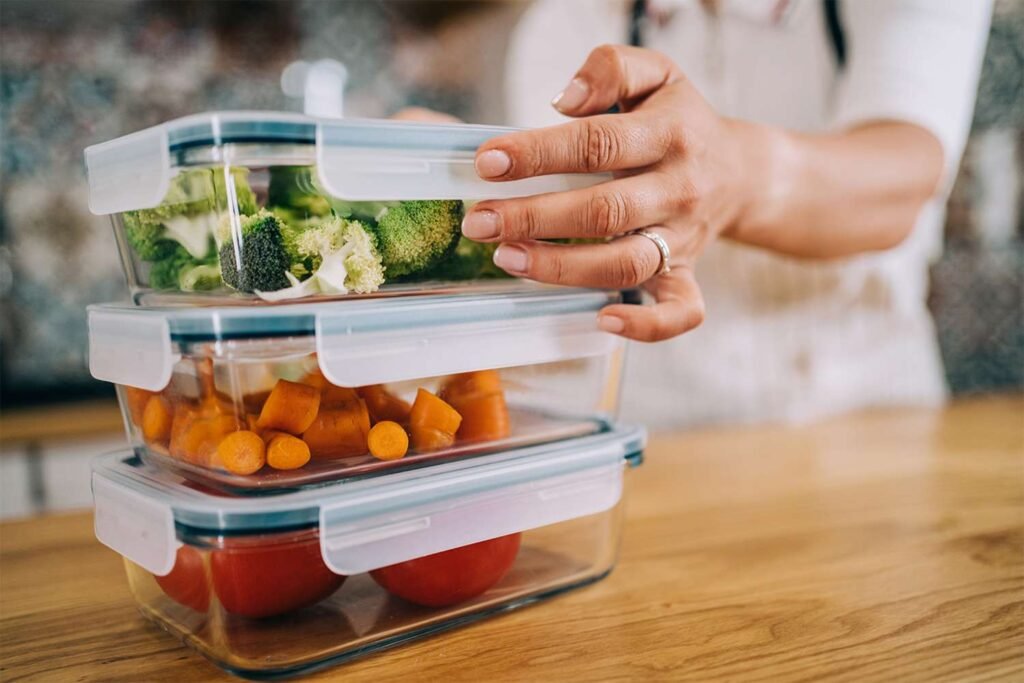
Glass tends to win in the moments that happen around the home base of your routine: portioning, fridge storage, leftovers, reheating, and meals where odor and visual cleanliness matter.
Glass is great for meal prep days
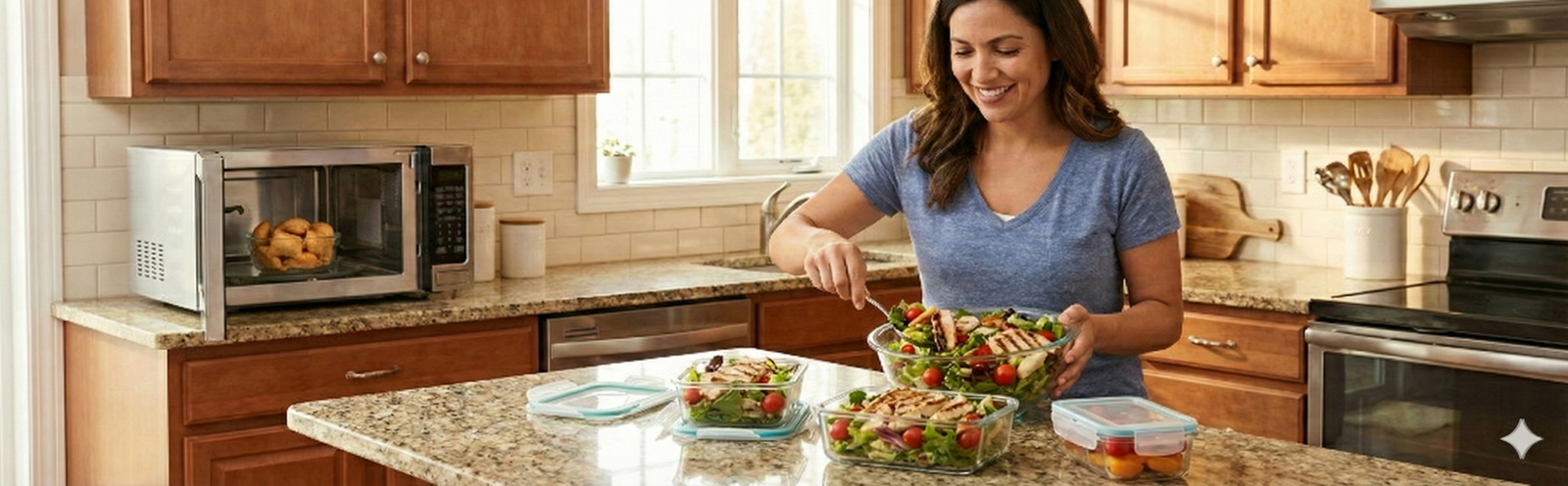
Meal prep can either feel orderly or exhausting. Glass often makes the orderly version easier. You portion food, let it cool slightly, add lids, stack everything, and the fridge suddenly feels less chaotic. It also tends to work well for people who hate when one strongly flavored meal leaves a reminder in the next one.
This matters more than it sounds. Many people stick with meal prep when the visual result feels satisfying. If opening the fridge makes you feel organized and on top of the week, you are more likely to keep going.
Glass usually feels better for reheating
When the container doubles as the bowl or plate you eat from, glass often feels like a noticeable upgrade. It stays clearer, feels less “temporary,” and often matches the experience people actually want at lunch: heat food, eat, rinse, move on.
This is one of the biggest reasons many people end up glass-first at home even if they stay plastic-first for the commute. The reheat moment is where the material difference feels real instead of theoretical.
Glass is strong when you care about odor and appearance
If you keep tomato sauces, curries, soups, chili, roasted vegetables, or onion-heavy leftovers in rotation, glass often feels easier to live with long term. It usually keeps that “clean container” look longer and reduces the sense that every lunch eventually turns the set dingy.
Glass can improve fridge discipline
This sounds minor, but it is not. People who like clean visual systems often become more consistent with leftovers and prep when the containers stack neatly and look uniform. The material alone does not fix your habits, but it can absolutely make good habits easier to maintain.
Where glass gets annoying
Glass becomes less charming the moment you need to carry it constantly. Weight adds up. Bags feel heavier. The mental overhead goes up if you are packing for work, school, or a day out. Even when the container is durable, many people simply feel less relaxed tossing it in a crowded tote alongside a laptop, charger, and water bottle.
So glass is often the better answer inside the kitchen and the weaker answer once the meal leaves the house.
Where plastic containers feel clearly better
Plastic tends to win anywhere convenience, portability, and low mental effort matter most. That is why so many weekday lunch routines quietly rely on plastic even in homes where glass is preferred for everything else.
Plastic is easier for the work bag test
If you commute, plastic is often the container you actually reach for. It feels lighter. It feels less stressful. It is easier to hand to a teen, toss into a backpack, or stack into a lunch bag without feeling like you are carrying around little pieces of dinnerware.
That lower-friction feeling matters. The easier a lunch is to grab and go, the more likely you are to keep bringing it.
Plastic is strong for portion-based routines
If your meal prep style is less about leftovers and more about a row of matching weekday portions, plastic can be incredibly practical. This is especially true when you want a lot of containers at once without a lot of weight or fuss.
For people who prep breakfast bowls, lunch portions, snack boxes, cut fruit, or “grab one and go” meals, plastic often fits the rhythm of the system better.
Plastic usually works better for families and school use
Adults carrying lunch to work, kids packing snacks, teens hauling meals in backpacks, parents juggling leftovers and next-day lunches: all of that adds up to one simple truth. A lighter, lower-stress material is often the easier family default.
This does not mean plastic is automatically better in every household. It means plastic often removes one source of friction in busy homes, and that matters.
Plastic can still work well for reheating when the design supports it
Some plastic systems are designed around microwave convenience, including venting or latch-open guidance to release steam during reheating. In practical terms, that can make the “heat and eat” routine feel much easier. When a system is built with weekday lunch use in mind, you feel it in the small moments.
Where plastic gets annoying
Plastic often loses points over time, not on day one. Repeated strong foods, repeated use, and repeated reheating can make it feel less clean, less visually satisfying, and less “worth it” to use. For some people that never matters. For others it becomes exactly the reason the set falls out of rotation.
This is why plastic is often the best weekday worker and not always the most satisfying long-term home-storage material.
The hybrid setup many people end up loving
If you have tried both materials and felt underwhelmed by each in different situations, that does not mean you chose wrong. It usually means you were asking one material to do two different jobs.
A hybrid setup is often the most realistic answer:
- Plastic for commuting, portioning, school lunches, and grab-and-go meals
- Glass for leftovers, home storage, reheating, and odor-heavy foods
That system makes sense because it lets each material do what it is naturally better at. It also reduces the resentment people feel when they force themselves into an all-glass or all-plastic identity that does not really fit their week.
In other words, you do not need a purity test. You need a system that makes your routine easier.
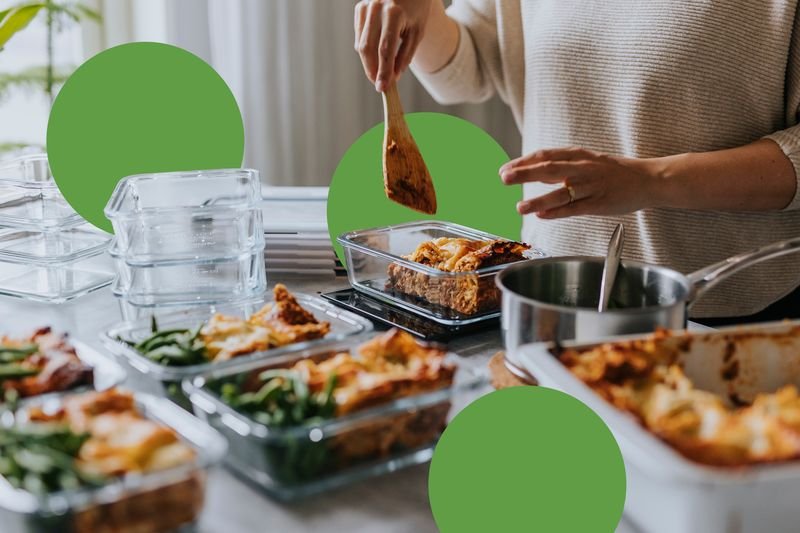
A simple hybrid starter system
- 4 to 6 plastic containers for work and school meals
- 3 to 5 glass containers for leftovers, reheating, and stronger-smelling foods
- One small snack or condiment size only if you use it weekly
- One lid style per material whenever possible to reduce chaos
Scenario-based recommendations
If you commute to work every day
Start plastic-first. The lower weight and lower stress usually matter more than the aesthetic advantages of glass. The lunch that actually makes it to work is better than the prettier system that stays in the cabinet.
If you reheat almost every lunch
Lean glass or hybrid. Reheating is the moment when glass often feels noticeably better, cleaner, and easier to enjoy. If you also commute, use plastic for transport and transfer your home-prepped meals into glass when practical, or keep glass for office days with easier carrying conditions.
If you mostly store leftovers at home
Glass often makes the most sense. The home-fridge role is where its strengths show up most consistently: odor resistance, visual clarity, better reheating feel, and a more organized look.
If you meal prep a full week at once
A hybrid system is usually smartest. Use plastic for the meals that leave the house and glass for the meals that stay home, especially odor-heavy dishes or anything you plan to reheat frequently.
If you live in a small apartment
The bigger issue may be system discipline, not material. Choose the material that lets you maintain a tidy stack and a simple lid ecosystem. One organized system beats a drawer full of “maybe useful someday” pieces.
If you pack school lunches or teen lunches
Plastic is usually the default answer. The day is already chaotic enough. Less break stress and easier carry are meaningful advantages here.
If you are trying to make leftovers more appealing
Glass can genuinely help. It does not make leftovers delicious by magic, but it often makes them feel more intentional and less like sad storage. That sounds small until you realize how much food waste depends on whether something still looks appealing on day three.
Freezer, microwave, cleanup, and sizes: the details that actually affect satisfaction
The spreadsheet guidance for this cluster points to a practical truth: most indexing-weak container content stays too generic. Buyers do not just want “glass vs plastic.” They want to know what happens in the freezer, microwave, sink, and cabinet.
| Decision point | Usually favor glass | Usually favor plastic |
|---|---|---|
| Microwave-heavy week | Yes, especially for home or office reheating | Yes only when the design is clearly built for microwave use and venting |
| Freezer batch prep | Strong if you prefer long-term reuse and reheating flow | Strong if you want lighter, easier bulk storage |
| Fast cleanup preference | Good for bases; lids still matter a lot | Good if the lids are simple and not trap-heavy |
| Portion-control lunch rows | Possible, but heavier | Usually easier and more practical |
| One-size collection | Better for leftovers and reheats | Better for packed lunches and snacks |
Container size matters too. Many people buy too many shapes too quickly. A better approach is to build from your real meals:
- Medium sizes usually do the most work for lunches and leftovers.
- Large sizes are useful for family leftovers and batch prep, but not as daily-driver lunch containers.
- Tiny sizes are worth adding only if you regularly pack sauces, fruit, or snack portions.
If food freshness is the main problem you are trying to solve, do not stop at material choice. Read this guide on containers that keep food fresh so you can think beyond material alone and account for seal quality, moisture management, and storage habits.
Who should skip all-glass, all-plastic, or random mixed sets
Who should skip an all-glass setup
- People who carry lunch daily and already hate a heavy bag
- Families packing multiple school or work meals each morning
- Anyone who wants a very forgiving, low-stress weekday system
Who should skip an all-plastic setup
- People who reheat most meals and care a lot about long-term cleanliness
- Anyone who gets annoyed by staining, lingering odors, or a worn-out look
- Home cooks trying to make leftovers and fridge organization feel more intentional
Who should skip the “random collection” approach
- Small-space households
- Busy families
- Beginners who need an easy default system
- Anyone who already has a drawer full of mismatched lids and keeps pretending it is manageable
Common mistakes people make when choosing containers
Mistake 1: Buying for fantasy-self meal prep
Do not buy for the routine you wish you had. Buy for the meals you actually make, store, carry, and reheat. A realistic system beats an aspirational one every time.
Mistake 2: Ignoring the carry step
People often choose based on storage and forget transport. If the container leaves the house often, weight and confidence matter more than buyers usually admit.
Mistake 3: Ignoring the cleanup step
If the lid design is annoying, the set is not “good enough.” That annoyance compounds quickly, especially in a weekly meal prep system.
Mistake 4: Buying too many shapes at once
A giant variety pack looks useful until it creates daily sorting friction. Start with the sizes you actually use and expand only when a real gap appears.
Mistake 5: Confusing leak resistance with routine fit
A strong seal matters, but it does not override everything else. A highly secure container you hate carrying or cleaning can still become a bad purchase.
Mistake 6: Forcing one material to do every job
This is the big one. People often keep trying to find the mythical perfect set instead of accepting that different routines may need different tools.
A maintenance routine that keeps containers usable instead of annoying
Container satisfaction is not just about what you buy. It is also about whether the cleanup and storage routine is easy enough to maintain.
A practical routine that works
- Rinse soon after use when possible, especially after sauces, oils, or strongly seasoned meals.
- Wash bases and lids according to the product’s allowed method.
- Let lids fully dry before stacking. This matters more than people think.
- Do not store containers sealed when empty if that traps odor or moisture in your setup.
- Retire the pieces that make you resent the whole system. One bad lid should not ruin the routine.
How to keep the fridge from becoming container chaos
- Use one dominant size for weekday meals.
- Keep a consistent lid system whenever possible.
- Store like with like instead of mixing every size and material together.
- Keep the “daily drivers” easiest to reach.
The biggest maintenance win is not a special cleaning trick. It is reducing system complexity. The less sorting and second-guessing you do, the more likely you are to stick with meal prep and leftovers.
Examples worth considering by routine
This is not a full picks list, and we are not inserting product links here because verified affiliate URLs for this page were not included in the attached materials. But these are the kinds of products people often consider because they map well to real routines.
Glass-style examples for reheating and odor control
- Pyrex Simply Store-style sets for people who want a straightforward home-storage and reheating flow.
- Snapware Total Solution-style glass with locking tabs for people who want the feel of glass with a more sealed, latch-based lid approach.
Plastic-style examples for daily carry and portioning
- Rubbermaid Brilliance-style plastic for people who want a more lunch-routine-oriented workflow with venting guidance.
- Bentgo Prep-style portion containers for people building a simple weekly row of portions rather than a “premium leftovers” system.
If you want actual shortlist-style recommendations instead of material logic, use our dedicated meal prep container roundup. That is the better place for brand-level narrowing once you know whether you are plastic-first, glass-first, or hybrid.
FAQ: glass vs plastic food storage containers
Are glass containers better than plastic overall?
No. Glass is not automatically better overall, and plastic is not automatically worse overall. Glass is usually better for home storage, reheating, and long-term cleanliness. Plastic is usually better for carrying, portioning, and everyday lunch logistics. The better material depends on the job.
Which is better for meal prep?
For true weekly meal prep, a hybrid setup is often the strongest answer. Use plastic for the meals that travel and glass for the meals that stay home or reheat often. If you must choose only one, choose based on whether your routine is more about commuting or more about reheating.
Which is better for reheating food?
Glass often feels better for reheating because it usually stays clearer, feels more satisfying to eat from, and fits the “heat, eat, rinse” flow well. Some plastic systems are designed for microwave convenience too, but the experience is often more routine-dependent.
Which is better for lunch bags and commuting?
Plastic is usually the better default for commuting. Lower weight and lower break stress matter a lot when the container leaves the house regularly.
Do glass containers keep food fresher than plastic?
Freshness is not only about material. Seal quality, moisture management, how hot food is when you close it, and how consistently you store it all matter. Material can affect long-term satisfaction, but freshness problems often need a broader solution. That is why our freshness-focused guide is worth reading too.
Are glass containers too heavy for everyday use?
They can be if you commute daily or carry multiple meals at once. For home use, many people love the feel of glass. For portable weekday routines, the weight can be the reason the system stops feeling easy.
Should families choose plastic over glass?
For school lunches, snacks, and high-volume weekday logistics, plastic is often the simpler answer. For home leftovers and adult reheats, glass may still deserve a place. That is another reason mixed systems work so well for families.
What is the best setup for beginners?
Beginners usually do best with a forgiving system: a few matching containers, limited sizes, and no complicated lid ecosystem. If you are unsure, start small instead of buying a giant “everything” set.
What if I already bought the wrong material?
You probably did not buy the wrong material. You probably assigned it the wrong role. Move glass toward home storage and reheating. Move plastic toward carrying and portioning. Reassigning the job is often more effective than replacing the entire set.
Final verdict
If you want one sentence you can actually use, here it is:
Buy plastic for the trip, buy glass for the reheat, and choose hybrid if your week includes both.
That is the most honest answer for most households. Plastic tends to make weekday lunch logistics easier. Glass tends to make home storage and reheating feel better. Neither material wins every category, and pretending otherwise is exactly how people end up with containers they stop using.
The real goal is not to own the “best” containers on paper. The goal is to build a system you will still be happy to use after the novelty wears off. That means less focus on hype and more focus on what your actual week asks from the containers: carry, reheat, clean, repeat.
If you are ready for the next step, use our meal prep container roundup for shortlist-style buying help, and use our freshness guide if seal quality and storage performance are the bigger issue in your routine.
Amazon disclosure
Buyers Choice Lab participates in affiliate programs, including Amazon Associates, and may earn a commission from qualifying purchases at no extra cost to the reader. Editorial independence remains the priority, and product recommendations should always be matched to real routine fit, not just marketing claims.