Smart home devices can absolutely make daily life easier, but only when you buy them in the right order and for the right reason. That is the real problem with this category. Most people do not regret buying smart tech because the idea was bad. They regret buying the wrong device first, choosing products that solve no real problem, or creating a setup that feels more annoying than helpful.
This guide is built to fix that. Instead of giving you another thin roundup stuffed with random gadgets, it focuses on the best smart home devices in 2026 for real household friction: controlling lights faster, automating small chores, improving entryway awareness, reducing repetitive cleaning, and making a home feel more responsive without turning it into a maintenance project.
You will find the best categories to start with, who each type of device is actually for, what most buyers get wrong, and how to build a practical setup that improves comfort, security, and convenience over time. If you are still deciding where to begin, you can also compare this guide with this beginner-focused smart home guide for a simpler step-by-step entry point.
Quick Answer
If you want the short version, here is the best way to think about smart home shopping in 2026:
- Start with a smart speaker if you want a central voice-and-routine hub.
- Start with smart plugs if you want the lowest-friction automation for lamps, fans, or coffee makers.
- Choose smart bulbs when lighting is the daily friction point, especially in bedrooms, living rooms, and workspaces.
- Choose a video doorbell when safety, package awareness, and front-door visibility matter more than comfort features.
- Choose a robot vacuum when your biggest goal is reducing repetitive cleaning, especially in homes with pets or busy schedules.
The best smart home is not the one with the most devices. It is the one that removes the most friction from your normal week.
| Category | Best For | Main Benefit | Skip If |
|---|---|---|---|
| Smart speakers | Beginners who want one control point | Voice control and routines | You do not want voice assistants in your home |
| Smart plugs | Budget-friendly automation | Turns ordinary devices into scheduled devices | You rarely repeat the same on/off tasks |
| Smart bulbs | Lighting, ambiance, and routines | Fast comfort upgrade | You prefer existing wall-switch habits only |
| Video doorbells | Entryway awareness and package monitoring | Better front-door visibility | Your building setup makes camera placement impractical |
| Robot vacuums | Busy households and pet owners | Reduces repetitive floor cleaning | Your floors are crowded, cluttered, or heavily segmented |
Why Smart Home Devices Are Worth It in 2026
Smart home devices are more compelling in 2026 not because the category suddenly became futuristic, but because the baseline expectation has changed. Buyers are less interested in gimmicks and more interested in practical convenience. They want fewer repetitive tasks, better awareness when they are away, and a home that feels more responsive without becoming more complicated.
That shift matters. A few years ago, some shoppers bought smart-home products mostly for novelty. Today, the strongest use cases are clearer: scheduled lighting that supports your day, devices that reduce wasted motion, voice control that removes tiny interruptions, and connected tools that help a household stay cleaner and calmer with less manual effort.
Another reason the category is stronger now is that you do not have to commit to a huge all-at-once setup. The most practical smart homes are built in layers. You can start with one speaker, one plug, or one lighting zone and still get real value. That makes the category more approachable for beginners and more forgiving for people who want to add only what fits.
The result is simple: smart-home buying is finally less about chasing the future and more about improving the present. That is why the category is worth taking seriously now, especially if your goal is comfort, security, and a smoother daily routine.
Why Most Smart Home Products Fail in Real Life
A lot of smart home roundups make the category sound easier than it is. They imply that anything with an app is automatically useful. In real homes, that is not how this works. The products that get ignored after a few weeks usually fail for one of five reasons.
First, buyers start with novelty instead of routine. A gadget can feel impressive on day one and still add no meaningful value to your life. Voice-controlled color changes sound fun. But if what you really needed was a better morning lighting routine or a way to stop forgetting the front porch light, the novelty wears off quickly.
Second, people buy too many pieces before they have a control plan. A smart home works best when the parts serve one clear system. If you buy random brands with random apps and no idea how you want the home to behave, you end up managing products instead of enjoying them.
Third, some products solve occasional problems, not recurring ones. The best smart devices address things you do every day or every week: turning things on, adjusting lights, checking the front door, cleaning floors, or building consistent routines. The weaker devices live on the edge of your habits and rarely get used.
Fourth, setup friction kills momentum. A device can have strong reviews and still be wrong for your household if it demands more attention than the problem it solves. Smart home buying gets much easier when you prefer products that reduce taps, reduce decisions, and reduce repetition.
Fifth, buyers confuse “smart” with “automatic.” Plenty of devices are technically connected but still require too much manual interaction. The goal is not just remote control from your phone. The goal is for the home to respond with less effort from you.
A Better Way to Choose: The Friction-First Framework
Here is the framework that keeps this category practical. Before buying anything, ask which of these four problems shows up most often in your week:
- Control friction: You want faster access to lights, music, reminders, timers, or routines.
- Comfort friction: Your lighting, ambiance, or room feel requires too many small manual adjustments.
- Security friction: You want better awareness of visitors, deliveries, or motion at the door.
- Cleaning friction: Repetitive floor upkeep keeps stealing time from the rest of your day.
Once you identify the real friction, the category choice gets much simpler. Smart speakers reduce control friction. Smart bulbs improve comfort and routine. Doorbells improve awareness. Robot vacuums reduce cleaning repetition. Smart plugs quietly solve many small control problems without forcing you to replace working products.
This also helps separate this page from a pure starter guide. If you want the easiest first purchase for a beginner, the beginner page is the better starting point. If you want to understand which type of device deserves your money based on real-life use, this page is the more useful lens.
Best Smart Home Devices to Buy in 2026
These are the most practical smart home categories for most households right now, ordered by how often they solve recurring daily problems rather than by hype value.
1. Smart Speakers
For many people, a smart speaker is the cleanest way to begin because it creates a central place to control routines, music, timers, reminders, and compatible devices. It is not just about asking for the weather. It is about lowering the number of tiny tasks you do manually every day.
A smart speaker makes the rest of a smart home easier to live with because it gives your setup a control layer. That matters more than people realize. When buyers skip the control layer and go straight to a pile of disconnected devices, the system starts feeling fragmented. A speaker helps unify the experience.
Who it is best for: buyers who want a hub for routines, voice commands, and gradual expansion into other device categories.
Who should skip it: anyone who dislikes voice assistants, rarely uses voice commands, or would rather manage everything manually from switches and buttons.
Common mistake: buying a speaker first and expecting it to feel life-changing on its own. The real value appears when it becomes the control layer for routines, plugs, bulbs, or cleaning devices.

Amazon Echo Dot
A practical starting point if you want simple voice control, quick routines, and an easy way to connect compatible smart devices without overcomplicating setup.
- Built around Alexa for voice commands, timers, questions, and everyday routines.
- Works well for music, audiobooks, and podcasts in a compact format.
- Useful as a basic smart-home control point for compatible devices.

Google Audio Bluetooth Speaker
A better fit for households that care more about richer room-filling audio and want a speaker that can also support a broader connected-home setup.
- Designed for wireless music streaming with fuller sound than a tiny bedside speaker.
- Can be used as part of a multi-room audio setup around the home.
- Makes sense for buyers who want smart features without giving up sound quality.
2. Smart Plugs
Smart plugs are one of the best smart home purchases because they let you automate devices you already own. That is a big deal from a cost-benefit perspective. Instead of replacing a perfectly good lamp, fan, or coffee setup, you can make it part of a schedule or routine with far less commitment.
This category works especially well when your goal is not “make everything smart,” but rather “remove one repeated annoyance.” Maybe you turn on the same lamp every evening. Maybe you want a small fan running before bedtime. Maybe you want a coffee corner or seasonal lighting to follow a schedule. Those are exactly the kinds of friction points smart plugs solve well.
Who it is best for: renters, budget-conscious buyers, and anyone who wants smart-home value without replacing existing products.
Who should skip it: buyers who do not have repeating on/off routines or who mostly use devices that should not be automated casually.
Common mistake: buying plugs for appliances you rarely use. Smart plugs shine when they support habits that happen automatically or predictably.
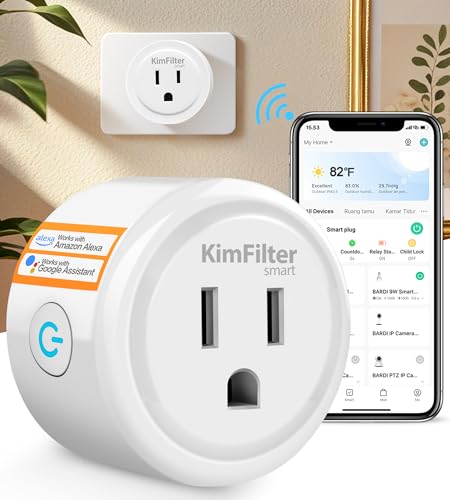
Mini Smart Plug
One of the easiest ways to make an ordinary lamp, fan, or coffee station feel smarter without replacing the device itself.
- Supports app-based remote control through compatible smart-home apps.
- Works with voice assistants once linked to your control app.
- Useful for simple schedules and on/off automation.
3. Smart LED Light Bulbs
If lighting affects how your home feels, smart bulbs are one of the fastest ways to notice a genuine upgrade. Good lighting changes how a room works in the morning, in the evening, during work, and when winding down. That makes this category more practical than it first appears.
The strongest use case is not constant color effects. It is creating useful lighting behavior: softer evening light, brighter work light, hands-free voice changes, and simple schedules that support the rhythm of your day. In other words, the value is comfort and consistency, not just novelty.
Who it is best for: people who care about room atmosphere, routines, and convenient app or voice-based lighting control.
Who should skip it: anyone who always uses physical wall switches in a way that would constantly cut power to the bulb and interrupt the smart features.
Common mistake: buying smart bulbs for every room before figuring out which spaces actually benefit from scenes and scheduled changes. Bedrooms, living rooms, and desks usually deliver the clearest value first.

Govee Smart Light Bulbs
A strong option for buyers who want flexible lighting scenes, app control, and more atmosphere than a standard white bulb can offer.
- Supports voice control for hands-free lighting changes.
- Offers millions of color options and preset scenes.
- Includes music-reactive effects for entertainment spaces.
4. Smart Video Doorbells
Doorbells are popular because they solve a very clear problem: you want to know who is at the door, when a package arrives, or whether motion at the entry is worth your attention. Unlike some smart categories that feel optional, this one is easy to justify when front-door awareness matters.
The strongest argument for a video doorbell is not fear. It is visibility. You can respond faster to deliveries, know whether a visitor actually rang, and reduce the uncertainty that usually comes with being away from home or even just being in another room.
Who it is best for: buyers who prioritize entryway awareness, remote check-ins, and package visibility.
Who should skip it: households where door placement, building rules, or Wi-Fi coverage make camera-style devices impractical.
Common mistake: buying a doorbell for “security” alone without thinking about notification quality. If alerts are noisy and irrelevant, the device becomes background clutter instead of a useful tool.

Smart 1080p Video Doorbell Camera
A practical front-door upgrade for buyers who want live alerts, two-way communication, and more awareness when packages or visitors arrive.
- Uses human-recognition alerts to cut down on irrelevant notifications.
- Includes two-way audio for speaking with visitors remotely.
- Supports encrypted cloud storage for saved recordings.
5. Smart Robot Vacuums
Robot vacuums are one of the most practical smart-home categories because they target a chore almost nobody enjoys repeating. They are not magic replacements for every kind of floor cleaning, but they can dramatically reduce maintenance cleaning when used in the right home.
They work best for everyday dust, crumbs, loose debris, and pet hair management. The real win is consistency. A robot vacuum that runs regularly usually keeps floors from ever reaching the level of mess that demands a big cleaning session. That is why this category matters so much in busy households.
This category also benefits from comparison shopping across cleaning styles. If you are not sure whether an autonomous cleaner actually fits your home better than a manual one, compare it with this cordless vacuum vs. robot vacuum guide before deciding.
Who it is best for: pet owners, busy families, and anyone who wants cleaner floors with less daily effort.
Who should skip it: homes with heavy floor clutter, frequent cords on the ground, or complex layouts that make uninterrupted runs difficult.
Common mistake: expecting a robot vacuum to replace all deep cleaning. It is strongest as a maintenance tool, not as the only floor-cleaning method you will ever need.

Robot Vacuum for Pet Hair, 2-in-1 Vacuum & Mop Combo
A convenience-first pick for homes that deal with daily dust, scattered debris, or pet hair and want routine floor cleaning with less manual effort.
- Combines vacuuming and mopping in one device.
- Supports voice and app control with multiple cleaning modes.
- Returns to charge automatically when battery runs low.
Which Smart Home Device Should You Buy First?
If you still feel torn between categories, use your living situation to narrow the decision.
For renters
Start with smart plugs or smart bulbs. They are low-commitment, easy to take with you, and do not require you to rework the home itself. A compact smart speaker can also make sense if you want routines and voice control, but plugs and bulbs usually create the fastest visible payoff.
For busy families
A smart speaker plus one practical automation layer is usually the strongest combo. That might mean lights for morning and evening flow, or a robot vacuum to cut down on visible mess. The key is choosing one recurring household pain point and making it easier every day.
For apartment living
Focus on plugs, bulbs, and a smaller speaker first. They add convenience without demanding major space or installation changes. A robot vacuum can also make a lot of sense in apartments because regular maintenance cleaning has an outsized effect when square footage is limited.
For pet owners
A robot vacuum often delivers the most obvious quality-of-life improvement, especially when hair and dust build up quickly. Pair it with a speaker or plugs later if you want a broader ecosystem, but the floor-cleaning win is often the most immediate.
For security-first buyers
A video doorbell is the most direct first purchase. It solves a specific visibility problem without requiring you to build a whole smart-home network first. After that, you can decide whether other categories support comfort or automation goals.
Room-by-Room Smart Home Ideas That Actually Make Sense
One of the easiest ways to waste money in this category is to think in terms of gadgets instead of rooms. Real homes are lived in by context. The friction in a bedroom is different from the friction in an entryway. The best smart-home device for a kitchen corner might be completely wrong for a living room or hallway.
Bedroom
This is where smart bulbs and compact speakers make the most sense. Bedrooms benefit from softer evening routines, voice-based alarms or timers, and lighting adjustments that do not require getting out of bed. The strongest bedroom smart-home setups are simple, calm, and low effort.
Living room
The living room is usually the best place for your first smart speaker because it tends to be a shared space where music, lights, and routines matter most. It is also a natural place for smart bulbs if you care about atmosphere during evenings, movies, reading time, or casual hosting.
Entryway
This is where a video doorbell earns its value quickly. It solves a focused problem and improves awareness with very little ambiguity. If your front door is the place where uncertainty happens, start there instead of buying a random indoor gadget that sounds more exciting but does less for your daily life.
Kitchen or coffee station
A smart plug can make an everyday corner feel easier to manage without replacing the products already there. This is one of the best examples of smart-home buying at its best: small automation, clear purpose, no unnecessary system complexity.
Floors throughout the home
If maintenance cleaning is what keeps breaking your rhythm, a robot vacuum belongs in the conversation before many other categories do. It is not “one room” specific, but it often becomes most valuable when the whole home would benefit from regular baseline cleaning without repeated manual setup.
How to Build a Smart Home Without Overbuilding It
A practical smart home usually grows in three stages. Stage one is control. That is where a speaker, a plug, or a light routine gives you a simple first win. Stage two is repeatability. This is where you automate the tasks you do constantly and stop relying on memory. Stage three is relief. That is when devices like doorbells and robot vacuums remove bigger recurring annoyances from your week.
The reason this phased approach works is that it keeps expectations realistic. You do not need to make your whole home smart in one weekend. You need one success first. Once you know what kind of benefit matters most in your house, every later purchase becomes easier to judge.
This is also what makes a page like this more useful than a generic “top gadgets” list. The point is not to show the largest number of categories. The point is to help you identify which purchase belongs first, second, or not at all. That is how you avoid overlap, clutter, and low-value tech that ends up unused.
So before you expand, ask one final question: if this device disappeared after a month, would I miss it? If the answer is no, it probably was not solving real friction in the first place.
Who Should Skip a Full Smart Home Setup?
Not everyone needs a full ecosystem, and that is worth saying clearly. You should probably skip building a larger smart-home setup right now if one of these sounds like you:
- You do not have a recurring household friction point to solve.
- You strongly prefer manual controls and know you will not use app or voice features.
- You are buying mainly because the category looks trendy, not because a specific device fits your routine.
- You want one purchase to change your entire home experience overnight.
- You do not want to manage compatibility, routines, or small setup tasks at all.
In those cases, a single targeted device is often smarter than a full system. Smart-home buying should feel like solving a problem, not adopting a hobby.
Common Smart Home Buying Mistakes
These are the mistakes that turn smart-home gear into drawer clutter, shelf clutter, or app clutter:
- Buying too broadly too fast. Start with one clear friction point and one useful device category.
- Ignoring compatibility habits. A device can be “compatible” and still fit poorly with the way your household actually behaves.
- Overvaluing novelty features. Scene effects, flashy routines, and gimmicky extras matter less than everyday reliability.
- Assuming app control alone is enough. The best smart-home products reduce effort. They do not just move the same task from a switch to a screen.
- Expecting full replacement value from maintenance tools. Robot vacuums, for example, are strongest as upkeep tools, not total substitutes for every type of cleaning.
- Placing devices in the wrong room first. The most-used room usually shows the biggest payoff. Start where your habits are strongest.
Routine and Maintenance: Keeping a Smart Home Useful
A smart home stays useful when the routines stay simple. Most households do better with a few dependable automations than with a complex web of conditions that nobody remembers how to manage.
A good maintenance mindset looks like this:
- Review your routines after the first two weeks and remove anything you are not using.
- Keep naming simple so devices are easy to identify in apps and voice commands.
- Put the most useful automations on a daily schedule, not a “maybe someday” schedule.
- Treat robot vacuums as regular maintenance helpers and keep the floor path reasonably clear.
- Treat doorbell notifications as a filter, not a constant stream you feel obligated to watch.
The best routine is the one you stop thinking about because it just works. That is the benchmark. If your smart setup creates more management than relief, simplify it.
Are Smart Home Devices Easy to Install?
In many cases, yes. The easiest categories are smart plugs, smart bulbs, and smart speakers because they are usually fast to place, connect, and start using. That is one reason these categories remain the strongest entry points for mainstream buyers.
The better question is not just whether a device is easy to install, but whether it is easy to keep using. A fast initial setup matters, but long-term value comes from whether the device fits your routine naturally after installation is over.
FAQ
What is the best smart home device for beginners?
For many beginners, a smart speaker or smart plug is the best first purchase. A speaker gives you a control layer for future routines, while a plug automates an ordinary device you already use. If you want the easiest entry path, those two categories usually create the clearest value first.
Are smart home devices worth it in 2026?
They are worth it when they solve a repeated daily problem. That could mean reducing manual light adjustments, improving front-door visibility, automating one or two recurring tasks, or cutting down on repetitive floor cleaning. They are not worth it when they add complexity without removing friction.
Which smart home devices save the most time?
Robot vacuums and smart plugs often save the most time because they automate tasks that repeat constantly. Smart speakers also save time by reducing app taps and making routines easier to trigger.
Do I need a smart speaker to build a smart home?
No. You can start with plugs, bulbs, or a doorbell without using a speaker at all. A speaker simply makes expansion easier because it creates a more unified control experience.
Are robot vacuums better than cordless vacuums?
Not automatically. They are better for maintenance cleaning and hands-off consistency. Cordless vacuums are usually better for fast manual cleanup and more targeted control. That is why the right choice depends on how your home gets dirty and how you prefer to clean it.
Can smart bulbs replace normal room lighting?
They can, but they work best when you actually use the flexibility they offer. If you never change scenes, brightness, or schedules and only rely on the wall switch, the benefit may feel smaller than expected.
What is the biggest mistake new smart-home buyers make?
Starting with too many unrelated devices. The smarter move is to identify one real household problem and solve that first, then expand only when the next device clearly supports the same system.
Final Verdict
The best smart home devices in 2026 are not the ones with the flashiest feature lists. They are the ones that make your home easier to live in without demanding constant attention. For most people, the smartest path is still category-based and gradual: start with control, then comfort, then awareness, then cleaning convenience if your routine justifies it.
If you want the most universally useful starting point, smart speakers and smart plugs remain the easiest categories to recommend. If your biggest goal is ambiance, smart bulbs make more sense. If you care most about your entryway, a video doorbell earns its place quickly. And if daily floor upkeep keeps wearing you down, a robot vacuum is often the most noticeable quality-of-life upgrade in the group.
In other words, do not build a smart home by chasing gadgets. Build it by solving repeated friction. That is how the category becomes practical, useful, and genuinely worth the money.
Amazon disclosure: As an Amazon Associate, Buyers Choice Lab may earn from qualifying purchases. That does not increase your price. The goal of this guide is to help you choose products that fit real household needs instead of buying smart-home gadgets just because they sound good on paper.