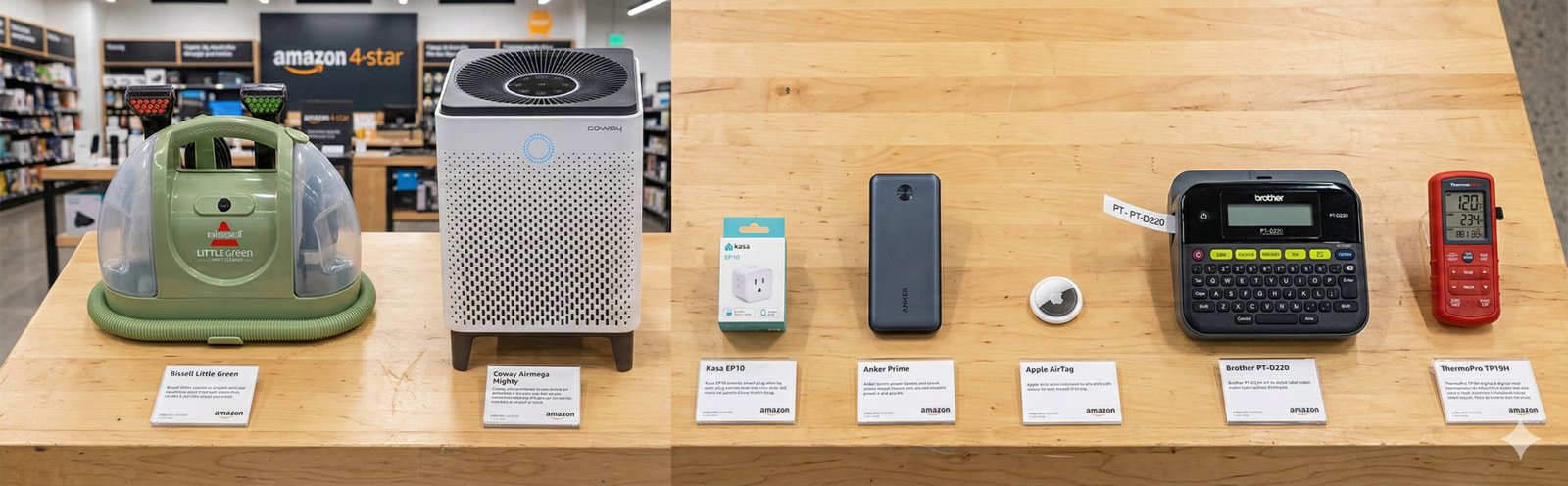
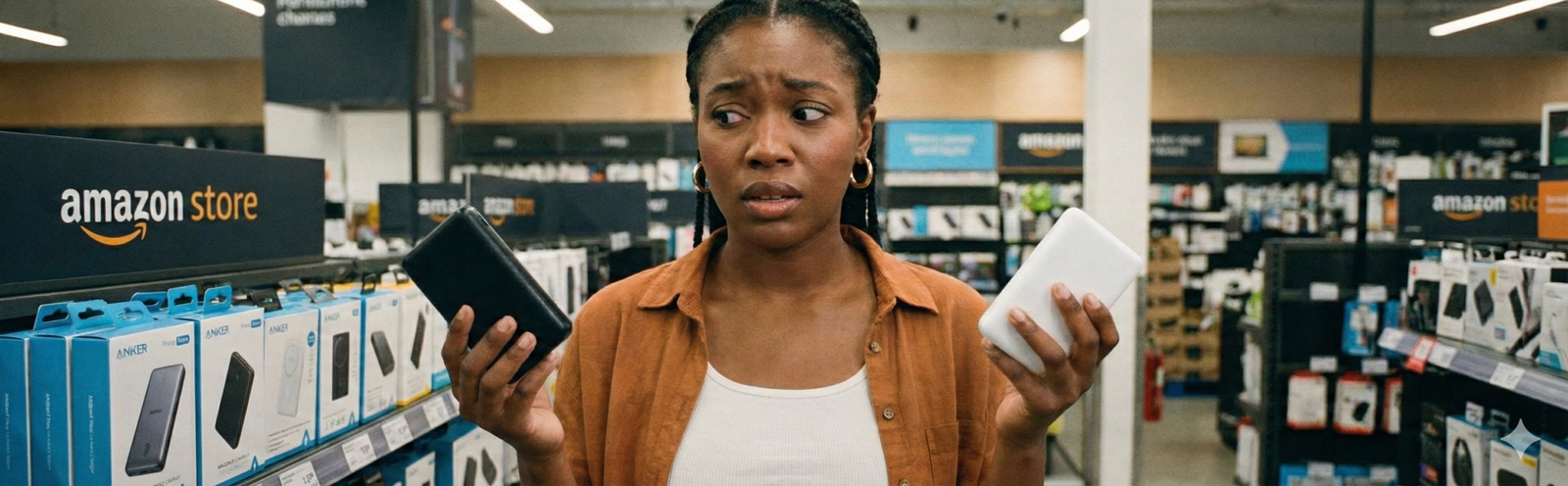
We’ve all bought something because it looked premium—then barely used it. Not because it was “bad,” but because it didn’t make daily life easier, didn’t match our space, or became annoying to maintain.
This article is about the opposite: budget-friendly alternatives that earn their place at home—the kind of items that quietly improve routines, reduce friction, and still give that “nice brand” vibe without turning your life into a maintenance project. Lists like “Amazon home finds that look expensive but aren’t” exist for a reason: people want the look and the practicality.
Have you read this post yet? Great — this post won’t repeat the buying criteria.
It focuses on how these products are used, day after day.
Related reading:
Affordable Products with Premium Feel (Buying Guide) → https://buyerschoicelab.com/affordable-products-premium-feel-guide/
Amazon Finds That Feel Expensive (But Aren’t) →
https://buyerschoicelab.com/amazon-finds-look-expensive/
Everyday situations where these products actually help
Saving time (less “micro-chaos” in your day)
Where it shows up:
- Morning routines: You stop hunting for basics (charger, keys, skincare, meds, coffee supplies) because everything has a clean “place.”
- Cooking weeknights: Quick pantry visibility means fewer duplicate purchases and less “what do we even have?” stress.
- Resetting the house: A 5-minute tidy becomes realistic when clutter has a designated container.
Real-life example: “The pantry reset”
You decant a few high-traffic items (cereal, pasta, snacks). Suddenly, you can see what’s low before grocery day—and you waste less. Many organization guides emphasize that a clearer system saves time and money long-term, and that multi-use containers matter (leftovers, freezer, microwave—when allowed by the manufacturer).
✅ Use it like real people do: start small—pick one shelf or one category (snacks, baking, coffee). It’s easier to maintain than “organize the whole kitchen in one Saturday.”
Practicality (less hassle, fewer “why is this annoying?” moments)
Budget alternatives work best when they remove friction.
Examples of friction they reduce:
- Dim lighting in hallways/closets → you stop turning on the big light.
- Messy cords → you stop unplugging/replugging or tripping over cables.
- Counter clutter → you stop clearing the same items just to cook.
Instruction-style reminder (light, but important):
- For adhesive-mounted organizers/hooks/lights: clean the surface first, let it dry, press firmly, and wait the recommended time before loading weight (this is where most “it fell off” complaints come from).
Comfort (your home feels “finished,” not temporary)
Premium brands often feel comfortable because they reduce visual noise and make spaces feel intentional.
Budget alternatives can do the same when used in “comfort zones”:
- Bedside (soft lighting, tidy charging)
- Entryway (drop zone)
- Bathroom (clean countertop)
- Living room (less clutter, more calm)
The comfort win is simple: your home stops feeling like a storage unit and starts feeling like a place you live.
Consistency of results (it works the same way every day)
The most satisfying budget purchases aren’t flashy—they’re consistent.
Consistency looks like:
- A tray that always collects keys/wallet (so you don’t lose them)
- Labels that keep the family from putting things “wherever”
- A simple lighting upgrade that makes your space feel the same every evening
That’s why “looks expensive” lists do so well—they tap into everyday consistency, not luxury fantasy.
Who benefits most from this kind of product (and why)
People who live alone
- You do everything yourself—so small upgrades that reduce friction feel bigger.
- A “drop zone” tray + cable management can eliminate daily mini-stress.
Families (and who in the family benefits)
- Parents/caregivers: less time searching, more predictable routines.
- Kids/teens: labeled bins make it easier to put things back (fewer arguments).
- Everyone: shared spaces stay functional when organization is simple.
Small apartments
- When storage is limited, good “premium-feel” alternatives aren’t decoration—they’re space strategy.
- Compact solutions (stacking, vertical storage, hidden cable control) make the apartment feel larger without remodeling.
Beginners vs enthusiasts
- Beginners: prefer simple upgrades with low learning curve (peel-and-stick, trays, bins, basic lighting).
- Enthusiasts: often go further (full pantry system, coordinated containers, layered lighting), but the daily benefit is the same: less friction, more consistency.
Products worth considering (light examples, real-use focused)
These aren’t “best models”—just high-signal categories that tend to deliver the premium feel in daily use.
- Ambient lighting upgrades (desk, bedside, hallway)
Why it’s worth it: makes spaces feel calmer and more intentional at night—without installing new fixtures. - Clear storage/organization (pantry, fridge, bathroom drawers)
Why it’s worth it: quick visibility + faster resets. Organization content consistently highlights how clear container systems improve usability and reduce waste. - “Drop zone” trays + entryway organizers
Why it’s worth it: prevents lost keys/wallet and instantly makes the entry feel higher-end. - Cable management (clips, sleeves, under-desk mounts)
Why it’s worth it: removes visual mess—the fastest way to make a setup look “premium.” - Bathroom counter upgrades (soap dispenser set, drawer bins, shelf risers)
Why it’s worth it: daily use + clean look = luxury hotel energy without hotel prices. - Closet uniformity (matching hangers, shelf dividers, labeled bins)
Why it’s worth it: outfits become faster, and the closet stops feeling chaotic.
Soft CTA: If you want specific picks (with prices and “why this one” notes), the pillar saves you the research time:
https://buyerschoicelab.com/amazon-finds-look-expensive/
Conclusion
Budget alternatives feel premium when they improve real routines: quicker mornings, easier resets, calmer evenings, and fewer small frustrations. The win isn’t only the look—it’s the daily experience.