If you’ve ever tried to slice a tomato and ended up crushing it, or chopped an onion and felt like the knife was fighting you the whole way, you already know the problem: the wrong knife makes cooking feel harder than it should.
The good news is that most home cooks do not need a giant knife block or a luxury collection. In real life, a smart setup is much simpler. You need one good main knife, one small precision knife, and, for many kitchens, one serrated blade for bread and delicate-skinned foods.
This guide is built to help you choose the best kitchen knives for home cooks without overcomplicating the decision. I’ll break down which knives matter most, who each pick is best for, what to avoid, and how to build a practical setup that feels good in your hand and works in everyday cooking.
If you want more home and kitchen content from BuyersChoiceLab, start here:
https://buyerschoicelab.com/
Quick Answer
If you want the shortest path to a smart decision, here’s the simple version:
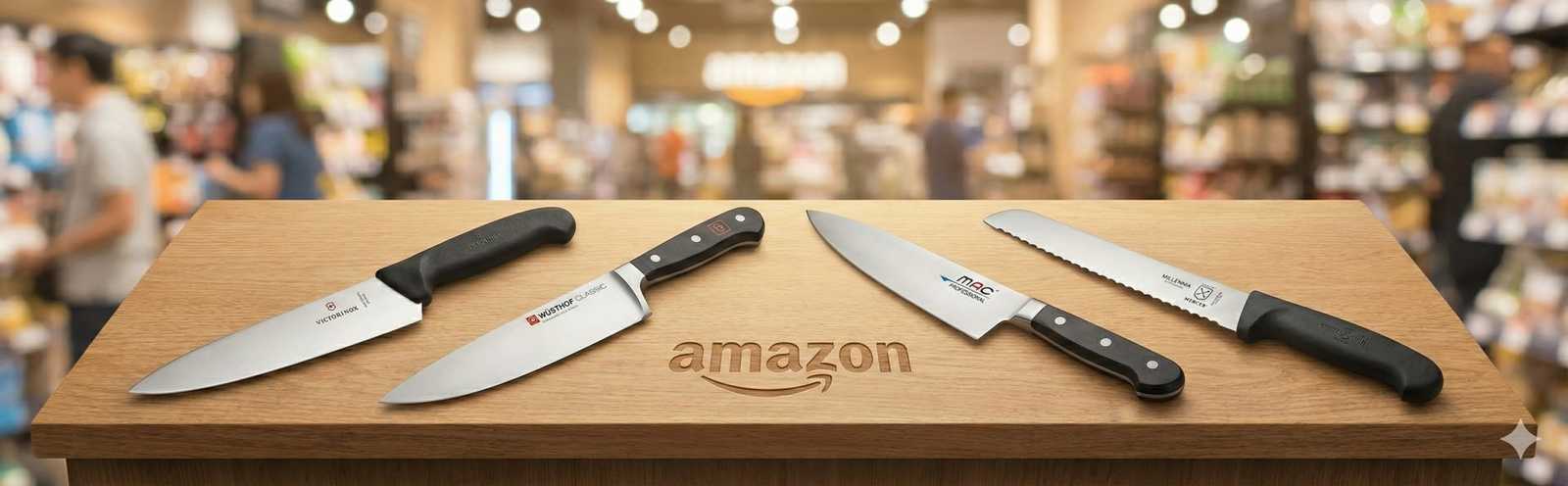
- Best budget chef’s knife: Victorinox Fibrox Pro 8″
- Best premium German-style chef’s knife: Wüsthof Classic 8″
- Best hybrid all-around pick: MAC Professional 8″
- Best precise vegetable-friendly option: Shun Classic 7″ Santoku
- Best value Japanese-style option: Tojiro DP Gyuto
- Best bread knife value: Mercer Millennia 10″
- Best small prep knife: Victorinox Swiss Classic Paring Knife
- Best all-stainless option: Global 8″ Chef’s Knife
For most people, the best first purchase is still an 8-inch chef’s knife. It covers the widest range of kitchen tasks and usually gives the best value for money.
How We Evaluate Kitchen Knives
Not every knife that looks impressive on Amazon performs well in a real home kitchen. For this guide, the goal is not to recommend the most expensive blade or the most hyped name. The goal is to identify knives that make everyday cooking easier, safer, and more enjoyable for real home cooks.
When evaluating kitchen knives, five factors matter most. First is versatility. A good knife should handle a wide range of common tasks, from dicing onions and slicing tomatoes to chopping herbs and trimming proteins. Second is comfort. Even a sharp knife can feel awkward if the handle is slippery, bulky, or poorly balanced for repeated use.
Third is edge behavior in real life. That includes how sharp the knife feels out of the box, how well it holds that edge with normal home use, and how realistic it is for the average buyer to maintain it over time. Fourth is durability. Some knives are more forgiving of less-than-perfect technique, while others reward careful use but punish rough habits.
Finally, value matters. The best kitchen knives for home cooks are not always the most premium options. In many cases, the smartest buy is the one that gives you the most practical performance for the money, especially if it fits your cooking style and maintenance habits.
That is why this list includes a mix of budget workhorses, premium Western knives, lighter Japanese-style options, and a few practical specialty picks that fill real gaps in a home kitchen.
What Actually Matters When Choosing Kitchen Knives
A lot of knife guides make this category feel more intimidating than it is. For most home cooks, the decision comes down to five practical factors.
1. Weight and feel
Some knives feel heavier, more powerful, and more planted on the board. Others feel lighter, faster, and more precise. Neither is automatically better. The right choice depends on how you cook.
If you cut dense vegetables, break down lots of ingredients, or like a knife that feels substantial, a heavier German-style profile often feels more natural.
If you prep lots of vegetables, prefer speed and precision, or dislike hand fatigue, a lighter Japanese-style or hybrid knife may feel better.
2. Blade shape
Blade shape changes how a knife behaves.
- Chef’s knives are the best all-purpose option.
- Santoku knives feel flatter and often shine in vegetable prep.
- Bread knives use serration to handle crusty or fragile foods.
- Paring knives are for small, controlled work.
A knife can be “sharp,” but still not be the right shape for the task.
3. Maintenance tolerance
This matters more than most beginners realize.
If you want low-drama ownership, choose a knife that is forgiving and easy to live with. If you are willing to hand wash, dry promptly, store carefully, and pay more attention to technique, you can enjoy thinner and more precise blades.
The knife that fits your maintenance habits is usually the better long-term buy.
4. Grip comfort
A knife can have great reputation and still feel wrong in your hand. Handle shape, balance, texture, and control all matter in daily use. A good knife should feel secure, not slippery, awkward, or overly bulky.
5. Your real cooking style
Ask yourself:
- Do I mostly chop vegetables?
- Do I cook proteins often?
- Do I slice bread, tomatoes, or pastries regularly?
- Do I want one main knife, or a small practical setup?
The more honestly you answer that, the easier the choice becomes.
What Knife Length Is Best for Beginners?
Knife length sounds like a small detail, but it changes how confident and comfortable a knife feels in daily cooking. For most home cooks, blade length affects control, board coverage, and overall ease of use more than expected.
A 6-inch knife can feel less intimidating for beginners, especially if you have small hands, limited counter space, or mostly prepare smaller ingredients. It is easier to maneuver and store, but it also gives up some versatility. Once you start working with larger vegetables, melons, cabbage, or bigger batches of food, a shorter blade can feel limiting.
A 7-inch santoku often hits a very comfortable middle ground. It is approachable, agile, and especially nice for vegetable-heavy prep. If you dislike bulky knives or want something that feels a little faster and flatter on the board, this size can be an excellent fit.
For many buyers, though, the 8-inch chef’s knife remains the sweet spot. It is long enough to handle most tasks efficiently, but still manageable for everyday use. That is why so many home cooks eventually end up here, even if they started with something smaller. It offers the best balance of reach, control, and long-term usefulness.
A 10-inch chef’s knife is usually more tool than the average home cook needs. It can be excellent in large kitchens or for people with strong knife skills, but for most buyers it feels oversized for daily meal prep.
If you are unsure, start with an 8-inch chef’s knife or a 7-inch santoku. Those two sizes cover the majority of real home cooking needs without feeling extreme in either direction.
The Best Kitchen Knives for Home Cooks
1. Victorinox Fibrox Pro 8″ Chef’s Knife
Best Budget Workhorse
This is the knife I would point most beginners toward first. It has a strong reputation because it gets the fundamentals right: useful blade length, comfortable handle, practical feel, and strong value.
Why it works:
- It handles everyday prep well
- The grip feels secure
- It is forgiving for beginners
- It usually costs much less than premium alternatives
Best for:
- First serious knife upgrade
- Families
- Everyday meal prep
- Buyers who care more about function than luxury finish
Possible downside:
It looks more utilitarian than premium. If you want beauty, prestige, or a heavier forged feel, this may not satisfy you emotionally even if it performs well.
Check current price on Amazon:

- For home chefs & professionals. This Fibro Pro chef’s knife has been the top choice of both home chefs and professionals…
- Fit for all tasks. Designed to handle kitchen tasks both big and small, This durable knife’s razor sharp and laser-teste…
- Easy handling. Each knife features an ergonomic handle made from thermoplastic Elastomer (TPE) for a non-slip grip – eve…
2. Wüsthof Classic 8″ Chef’s Knife
Best Premium German-Style Pick
If you want a knife that feels substantial, durable, and powerful, this is one of the safest premium choices. It fits the classic “buy once and use for years” idea many home cooks want.
Why it works:
- Strong, stable feel on the board
- Great for dense produce and everyday chopping
- Comfortable for people who like a traditional Western profile
- Feels more premium in fit and finish
Best for:
- Frequent cooks
- People who like a heavier knife
- Buyers who want a long-term main chef’s knife
Possible downside:
It may feel too heavy for some users, especially if you prefer faster, lighter blades.
Check current price on Amazon:

- CLASSIC WHITE Series embraces all the favourite features that food lovers and professional chefs have come to rely on fr…
- CHEF’S KNIFE The Classic White 8” Cook’s Knife is the most indispensable knife in the kitchen. As an all-purpose blade, …
- FULL TANG thatt is triple riveted to the handle for added stability and precise control. Classic White series handles ar…
3. MAC Professional 8″ Chef’s Knife
Best Hybrid All-Around Option
This is one of the most appealing choices for people stuck between German-style and Japanese-style knives. It often lands in that sweet spot: lighter and more agile than a classic heavy Western knife, but less intimidating than a delicate specialist blade.
Why it works:
- Nimble and efficient feel
- Great general-purpose performance
- Strong all-around choice for people who cook often
- Feels fast without feeling flimsy
Best for:
- Intermediate home cooks
- People upgrading from budget knives
- Buyers who want one strong all-purpose knife without going ultra-premium
Possible downside:
It costs more than entry-level options, and it still deserves decent care.
Check current price on Amazon:

4. Shun Classic 7″ Santoku
Best for Vegetable-Heavy Prep
If your kitchen routine involves lots of onions, herbs, peppers, cucumbers, and lighter prep work, a santoku can feel fantastic. The Shun Classic 7″ Santoku is the kind of knife that many people love because it feels quick, precise, and clean through vegetables.
Why it works:
- Very satisfying for clean slicing and straight chopping
- Lighter feel than many chef’s knives
- Strong choice for veggie-forward cooking
- Premium appearance and refined feel
Best for:
- Home cooks who prep lots of vegetables
- Buyers who prefer lighter knives
- People who dislike bulky chef’s knives
Possible downside:
This is not the best pick for rough treatment. If you twist, pry, hack, or use bad boards, a tougher Western-style knife is safer.
Check current price on Amazon:
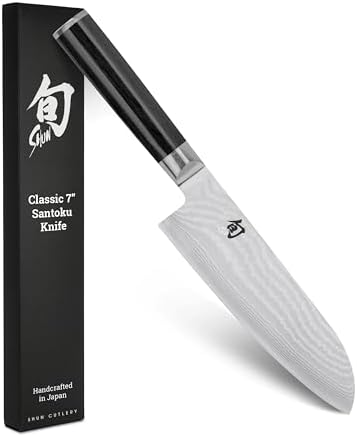
- 7-inch blade multipurpose Japanese knife; ideal for chopping, mincing, dicing and slicing
- Precision-forged high-carbon stainless-steel blade; holds a razor-sharp edge
- Clad with 16 layers of stainless steel to produce a rust-free Damascus look
5. Tojiro DP Gyuto
Best Value Japanese-Style Option
If you want a sharper, lighter Japanese-style experience without jumping straight into very expensive territory, this is an attractive step up. It is often the kind of knife people choose when they want precision and a more refined cutting feel for a reasonable price.
Why it works:
- Great value in the Japanese-style category
- Feels lighter and sharper than many Western options
- Strong choice for people ready to improve their knife habits
- Excellent for controlled slicing and prep
Best for:
- Buyers curious about Japanese knives
- Home cooks ready for better maintenance habits
- People who want precision without luxury pricing
Possible downside:
It is less forgiving than chunkier Western blades if used carelessly.
Check current price on Amazon:

- Steel Type: Stain-Resistant Steel
- Blade: Double-Edged (50/50 balanced)
- Blade Length: 10.5″ (27cm)
6. Global 8″ Chef’s Knife
Best All-Stainless Option
Some cooks love the clean, modern, all-metal design of Global knives. If that look appeals to you and the handle works for your grip, it can be a very appealing choice.
Why it works:
- Sleek and lightweight
- Easy to wipe down
- Fast, agile feel
- Good fit for people who dislike bulky handles
Best for:
- Buyers who want an all-stainless design
- People who prefer lighter knives
- Modern kitchen aesthetics
Possible downside:
The handle shape is polarizing. Some people love it, others never do.
Check current price on Amazon:

- Lightweight, precisely balanced 8-inch or 20cm chef’s knife
- Blade made of high-tech molybdenum/vanadium stainless steel
- Edge retains razor sharpness exceptionally well
7. Mercer Millennia 10″ Bread Knife
Best Budget Bread Knife
Bread knives are often overlooked until someone tries to cut crusty sourdough or ripe tomatoes with a chef’s knife and gets frustrated. A good serrated blade makes a visible difference.
Why it works:
- Great for crusty loaves
- Useful for tomatoes and soft-skinned foods
- Strong value
- Practical addition to a real home kitchen setup
Best for:
- Anyone who buys bread regularly
- Home bakers
- People tired of crushing sandwich loaves or pastries
Possible downside:
Serrated knives are not as easy to sharpen at home as straight-edged knives.
Check current price on Amazon:

- QUALITY CONSTRUCTION: Knife is crafted with one-piece high-carbon Japanese steel for easy edge maintenance and long-last…
- SUPERIOR DESIGN: Built to last ergonomic handle with textured finger points offers a non-slip grip with added comfort, d…
- BEST USE: The teeth on the wavy edge of the knife’s blade easily slice through foods’ crust or skin without tearing the …
8. Victorinox Swiss Classic Paring Knife
Best Small Knife for Everyday Prep
A paring knife is the unsung hero of home cooking. It does the jobs a chef’s knife feels clumsy for: peeling, trimming, coring, hulling, and small precise cuts.
Why it works:
- Inexpensive
- Lightweight
- Easy to control
- Useful almost every day
Best for:
- Everyone building a practical setup
- Fruit and vegetable prep
- Small precision tasks
Possible downside:
It is a complement, not a replacement, for a chef’s knife.
Check current price on Amazon:

- Perfect for cutting and preparing fruit and vegetables
- Swiss made paring knife with wavy edge
- With an ultrasharp wavy edge and ergonomic handle
Comparison Table
| Pick | Best For | Feel | Maintenance | Price Tier |
|---|---|---|---|---|
| Victorinox Fibrox Pro 8″ | Best value all-around | Practical, grippy | Low to medium | $ |
| Wüsthof Classic 8″ | Heavy-duty home prep | Heavier, powerful | Medium | $$$ |
| MAC Professional 8″ | Balanced all-purpose use | Nimble, hybrid feel | Medium | $$-$$$ |
| Shun Classic 7″ Santoku | Vegetable precision | Light, refined | Medium to high | $$$ |
| Tojiro DP Gyuto | Value Japanese-style experience | Light, sharp | Medium to high | $$ |
| Global 8″ Chef’s Knife | All-stainless preference | Light, quick | Medium | $$-$$$ |
| Mercer Millennia 10″ | Bread and tomatoes | Serrated | Low | $ |
| Victorinox Swiss Classic Paring | Small daily prep | Compact | Low | $ |
Chef’s Knife vs Santoku in Real Home Kitchens
For many home cooks, the hardest decision is not whether to buy a good knife. It is whether that knife should be a chef’s knife or a santoku. On paper, both are versatile. In practice, they feel different enough that the better choice often depends on how you actually cook at home.
A chef’s knife is usually the safer all-purpose recommendation. Its curved blade supports a rocking motion, which many people naturally use when mincing herbs, chopping onions, or working through piles of vegetables. It also tends to feel more capable when dealing with larger ingredients, thicker produce, and more varied prep sessions. If you cook a little bit of everything, a chef’s knife usually gives you the broadest range.
A santoku, by contrast, often feels flatter, lighter, and more controlled. Many home cooks love it for clean vegetable prep because it encourages more of an up-and-down slicing or push-cut motion. If your meals involve lots of cucumbers, peppers, mushrooms, carrots, garlic, and herbs, a santoku can feel extremely satisfying to use. It is also appealing to people who think a traditional chef’s knife feels too large or heavy.
There is also a comfort factor. Some beginners immediately click with a santoku because it feels less intimidating and more compact on the board. Others prefer the familiar versatility of a classic chef’s knife, especially if they want one blade to handle nearly everything.
A good rule is this: choose a chef’s knife if you want the safest one-knife solution for general home cooking. Choose a santoku if your cooking is more vegetable-focused, you prefer a lighter feel, or you simply do not enjoy the shape and motion of a larger Western chef’s knife.
Neither is universally better. The right answer depends on what feels natural in your hand and what shows up on your cutting board most often.
The Smartest Knife Setup for Most Home Cooks
If you want the most practical setup without wasting money, this is what I recommend:
Option 1: The minimal setup
- 1 chef’s knife
- 1 paring knife
This is enough for many people.
Option 2: The smartest everyday setup
- 1 chef’s knife
- 1 paring knife
- 1 bread knife
This is the best balance for most home kitchens.
Option 3: The style-specific setup
- 1 chef’s knife or santoku
- 1 paring knife
- 1 bread knife
- Optional second main knife if you enjoy cooking and want variety
Most people should not start with a giant knife set. They usually include filler pieces that add cost more than usefulness.
German vs. Japanese Knives: Simple Version
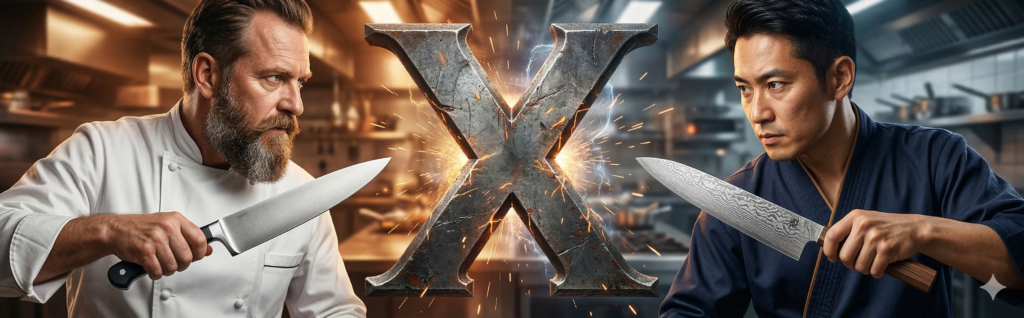
This topic gets overcomplicated, so here is the practical version.
German-style knives
Usually:
- Heavier
- Thicker
- More forgiving
- Better for people who want durability and ease
Best for:
- Dense vegetables
- Everyday rougher use
- Buyers who want less fuss
Japanese-style knives
Usually:
- Lighter
- Thinner
- More precise
- More rewarding when used carefully
Best for:
- Vegetable prep
- Clean slicing
- Buyers who enjoy finesse and control
If you are tough on tools, go German-style first.
If you enjoy precision and are willing to care for the blade more thoughtfully, Japanese-style can be very satisfying.
If you want a middle ground, that is where hybrid-feeling options like MAC often stand out.
German Steel vs Japanese Steel: What Home Cooks Need to Know
One reason German and Japanese knives feel so different is that they are often built around different priorities. For home cooks, this usually shows up in the balance between toughness, finesse, maintenance, and cutting feel.
German-style knives are typically designed to be more forgiving. They often use softer steel compared to many Japanese knives, which can make them less brittle in rough everyday use. That does not automatically make them “better,” but it does make them easier to live with for people who are still building knife habits. If you occasionally twist during cuts, scrape ingredients carelessly, or forget that knives should not be treated like pry bars, German-style knives tend to forgive those mistakes better.
Japanese-style knives are often made thinner and harder. That usually translates into a sharper, cleaner, more precise cutting experience. Slicing onions, herbs, cucumbers, and other vegetables can feel noticeably smoother. Many people love that sensation once they experience it. The tradeoff is that thinner, harder blades generally demand better habits. They reward control and technique, but they are not the ideal choice for careless use, very rough cutting, or poor storage.
For a home cook, the practical takeaway is simple. German-style knives usually make more sense if you want durability, low stress, and an easy learning curve. Japanese-style knives make more sense if you value precision, lighter handling, and a more refined cutting feel.
That is also why hybrid knives are so appealing. They often combine some of the nimbleness people like in Japanese-style blades with some of the practicality and familiarity found in Western designs. For many buyers, that middle ground ends up being the most realistic long-term choice.
Who Should Skip Buying New Kitchen Knives Right Now
Not everyone needs to buy immediately.
You may want to wait if:
- You rarely cook
- You mostly reheat ready-made meals
- You are not willing to hand wash and dry knives
- You do not yet own a good cutting board
- You are shopping only for aesthetics, not actual use
In some kitchens, improving the cutting board and storage habits does almost as much good as buying a new knife.
Common Buying Mistakes When Shopping for Kitchen Knives Online
Buying kitchen knives online is convenient, but it also creates a few traps for home cooks. The biggest mistake is assuming that the highest price automatically means the best choice. In reality, many buyers would be happier with a strong mid-range workhorse that matches their habits than with a premium knife that demands more care than they are willing to give.
Another common mistake is buying a giant knife set instead of the few knives you will actually use. Large sets look impressive, but many include filler pieces that spend most of their life untouched. For most kitchens, a chef’s knife, a paring knife, and a bread knife cover far more real-world use than a bulky block full of extras.
Many shoppers also underestimate the importance of handle comfort. Product photos may make a knife look beautiful, but they cannot tell you whether the grip shape feels secure, whether the balance suits your style, or whether the knife will feel tiring after fifteen minutes of prep.
There is also the problem of choosing based only on “sharpness.” Almost every decent knife should feel sharp when new. What matters more is whether the knife suits your ingredients, your maintenance habits, and your technique. A thinner, more delicate knife may impress at first but frustrate you later if you wanted something tougher and more forgiving.
The smartest way to shop is to think in terms of fit, not hype. Buy the knife that matches your real cooking style, your tolerance for maintenance, and the kind of tasks you do every week. That is usually where long-term satisfaction comes from.
Beginner Mistakes That Ruin Good Knives
A lot of disappointment comes from care mistakes, not from the knife itself.
Avoid these:
1. Throwing knives loose in a drawer
This dulls edges fast and increases accident risk.
2. Using glass or stone cutting boards
These are hard on edges and shorten useful sharpness.
3. Scraping food with the edge
Use the spine, not the sharp edge, to move chopped food.
4. Treating all knives the same
A heavier Western knife and a thinner Japanese knife do not want the same kind of abuse.
5. Thinking honing and sharpening are the same
Honing helps maintain alignment. Sharpening removes material to restore the edge.
Knife Care That Actually Matters
If you want the shortest version of knife maintenance, here it is:
- Wash by hand
- Dry promptly
- Store safely
- Use a wood or quality plastic board
- Hone when needed
- Sharpen when performance drops noticeably
That alone will put you ahead of most casual owners.
Best Cutting Boards and Storage for Knife Longevity
A good knife lasts longer when the surface underneath it and the way you store it both make sense. This is one of the easiest upgrades a home cook can make, and it often improves performance more than people expect.
For cutting boards, wood is usually one of the safest choices for preserving an edge. A quality wooden board gives enough support for stable cutting while remaining gentler on the blade than hard surfaces like glass, stone, ceramic, or marble. A good plastic board can also work well, especially if you want something lighter, lower maintenance, or easier to sanitize after handling proteins.
What matters most is what to avoid. Glass boards may look stylish, and stone boards may look premium, but both are hard on knife edges. Over time, they can dull a blade much faster than a wood or quality plastic surface.
Storage matters just as much. Throwing knives loose into a drawer causes repeated edge contact, which dulls the blade and increases the chance of accidents. Safer options include blade guards, a magnetic strip mounted securely on the wall, a knife block with clean slots, or a drawer insert designed to separate the blades.
If someone tells you their knife never seems to stay sharp, the problem is not always the steel or the sharpening. Sometimes it is the glass board, the cluttered drawer, or the habit of storing a good knife like a random utensil. Better surfaces and safer storage make a real difference.
FAQ
Do I need an expensive chef’s knife?
No. A good budget knife cared for properly is far better than an expensive knife treated badly.
Is an 8-inch chef’s knife too big?
For most people, no. It is usually the sweet spot. If you want something flatter or lighter, a 7-inch santoku can be a strong alternative.
Should I buy a knife set?
Usually no, unless the set is small, curated, and genuinely useful. Individual buying is often smarter.
What is the best first knife for a home cook?
A chef’s knife. Then a paring knife. Then a bread knife if you actually need one.
What is the best board for knife longevity?
Wood or a good plastic board is usually the safest practical choice.
Is a santoku better than a chef’s knife for beginners?
Not necessarily. A santoku can feel lighter and less intimidating, which some beginners love. But an 8-inch chef’s knife is still the most versatile first knife for most home cooks. The better choice is the one that feels natural in your hand and matches how you prep food at home.
How often should I sharpen a kitchen knife?
That depends on the knife, how often you cook, the board you use, and how well you maintain the edge. A frequently used home kitchen knife may need sharpening a few times a year, while honing can be done more often to help maintain performance between sharpenings.
Are expensive knives worth it for casual cooks?
Sometimes, but not always. Casual cooks often get more value from a well-chosen mid-range knife than from a premium blade with higher maintenance demands. Expensive knives make more sense when you know what kind of cutting feel you prefer and are willing to care for the blade properly.
Can one knife really handle most kitchen tasks?
Yes. A good chef’s knife can cover the majority of home kitchen prep, including chopping vegetables, slicing proteins, mincing herbs, and general meal prep. That is why it is usually the first knife worth upgrading. Smaller and serrated knives are helpful, but they are usually complements, not replacements.
Should I choose forged or stamped knives?
Forged knives often feel heavier and more substantial, while stamped knives are usually lighter and more affordable. Neither category is automatically better. What matters is overall design, comfort, steel quality, and how the knife performs for your type of cooking.
What is the easiest knife style to live with?
For many home cooks, a durable Western-style chef’s knife is the easiest long-term option. It tends to be more forgiving, more versatile, and less stressful to own than thinner specialty blades that need more careful handling.
Final Verdict
If I were keeping this decision simple for most home cooks, I would break it down like this:
- Buy the Victorinox Fibrox Pro 8″ if you want the best budget-friendly workhorse
- Buy the Wüsthof Classic 8″ if you want a heavier premium Western knife
- Buy the MAC Professional 8″ if you want the most balanced “middle ground” choice
- Buy the Shun Classic 7″ Santoku if your kitchen is very vegetable-focused
- Add the Mercer Millennia 10″ if you regularly slice bread or tomatoes
- Add the Victorinox Swiss Classic Paring Knife because it is useful in almost every kitchen
If you want the safest practical path, start with one great chef’s knife and one paring knife. That already covers most home cooking better than an oversized knife block.
More from BuyersChoiceLab:
https://buyerschoicelab.com/