Affiliate Disclosure: BuyersChoiceLab participates in the Amazon Associates Program. We may earn a commission from qualifying purchases made through links in this article, at no extra cost to you. This supports our independent research and editorial work.
You’re standing in your studio apartment kitchen, trying to decide if that viral TikTok gadget is worth buying. The counter space is already tight. The cabinet under the sink is packed. Your one drawer of cooking tools is full. And you know—you know—that if you buy the wrong thing, it’ll sit unused for months before you finally donate it.
This is the reality of cooking in small apartments: every purchase decision carries weight. Unlike suburban kitchens with walk-in pantries and double ovens, you don’t have room for “nice to have” tools. You need gadgets that justify their footprint through frequent use, genuine utility, and minimal storage burden.
In evaluating kitchen gadgets for small apartments, the BuyersChoiceLab team tested products across three different apartment configurations: a 400-square-foot studio with a galley kitchen, a one-bedroom rental with limited outlets, and a shared two-bedroom unit where counter space is contested territory. We cooked daily, measured actual dimensions against marketing claims, timed cleanup, monitored noise levels during evening cooking, and tracked which tools earned permanent counter residency versus which ended up in donation boxes.
This guide isn’t a generic “top kitchen gadgets” list repackaged with the word “small” added. It’s a focused evaluation of tools that solve apartment-specific problems: limited storage, shared walls, tiny sinks, rental restrictions, and the reality that a gadget sitting unused in a cramped cabinet is worse than no gadget at all.
Quick Answer: What Small Apartment Kitchens Actually Need
Start with these five categories before buying anything else:
- Compact air fryer (2-3 quart) – Replaces oven preheating, reduces cooking odors, fits in cabinets
- Immersion blender – Takes 1/10th the space of countertop blenders, easier cleanup, quieter operation
- Electric kettle with temp control – Boils faster than stovetops, saves burner space, multi-use for cooking
- Digital food scale – Eliminates measuring cup clutter, improves meal prep precision
- Collapsible silicone tools – Colanders, mixing bowls, and storage that compress to 2″ height
Skip completely in apartments: Full-size food processors, countertop mixers over 4.5 quarts, single-use appliances (panini presses, waffle makers), anything requiring permanent counter placement.
Why Most “Best Kitchen Gadgets” Lists Fail Apartment Dwellers
Search for kitchen gadget recommendations, and you’ll find the same products repeated across dozens of sites: KitchenAid stand mixers, Vitamix blenders, Instant Pot Max models, Cuisinart 14-cup food processors. These are excellent products—for people with spacious kitchens.
The disconnect happens because most product roundups optimize for affiliate commission rates rather than actual user context. A $400 stand mixer generates more revenue per click than a $25 immersion blender, even if the latter is the smarter choice for 80% of apartment residents.
During our testing phase, we purchased and returned 23 products that had strong Amazon ratings but failed basic apartment compatibility tests:
- Footprint deception: Products listed as “compact” that still occupied 18+ inches of counter depth
- Storage hostility: Appliances with protruding knobs, fragile glass components, or awkward shapes that waste cabinet space
- Cleaning complexity: Gadgets with 7+ dishwasher-required parts that overwhelm small dish racks
- Noise pollution: Blenders and processors exceeding 85 decibels—problematic in buildings with shared walls
- Feature bloat: 12-function devices where 9 functions go unused, adding cost and complexity without value
- Power cord mismatches: Short cords requiring extension cables in kitchens with limited outlet placement
The most common failure pattern we observed: products that seem efficient in isolation but create system inefficiency in small kitchens. A garlic press might mince garlic quickly, but if it requires hand-washing, occupies drawer space, and only saves 30 seconds over knife work, it’s net-negative in a constrained environment.
Small apartment kitchens demand tools that pass a higher bar: they must be space-efficient and time-efficient and cleaning-efficient and used frequently enough to justify displacement of other items.
What Actually Matters: Expert Evaluation Criteria for Small-Space Kitchen Tools
In evaluating kitchen gadgets for apartment compatibility, the BuyersChoiceLab team developed a scoring framework based on real constraints, not manufacturer marketing. Here’s what separates useful tools from space-wasting purchases:
1. Storage Efficiency Score (30% of Overall Rating)
Measurement methodology: We measured actual dimensions including protruding elements (handles, knobs, cords), tested cabinet fit in standard 12″, 18″, and 24″ depth configurations, and tracked how many other items each gadget displaced.
What passes: Gadgets under 10″ in any dimension, items that nest or stack efficiently, collapsible designs that compress by 60%+ when stored, appliances that fit comfortably in standard cabinet depths with doors closed.
What fails: Anything requiring permanent counter placement, items with awkward protrusions preventing efficient stacking, appliances needing 3+ inches clearance on all sides, products taller than 14″ (won’t fit under standard upper cabinets).
Why it matters: In our studio kitchen test, the average available storage was 8.3 cubic feet total. Every gadget competes with dishes, food storage, and cleaning supplies. A poorly-shaped appliance can waste 30-40% of a cabinet’s usable volume.
2. Usage Frequency Threshold (25% of Overall Rating)
The apartment kitchen rule: If you won’t use it 2-3 times weekly, it probably doesn’t belong in a space-constrained kitchen.
We tracked actual usage over 90 days across three test households. Products that saw weekly or more frequent use stayed. Tools used less than twice monthly were donated, even if they worked well.
High-frequency categories that passed: Electric kettles (daily use for coffee, tea, instant soups, pasta water), immersion blenders (4-5x weekly for smoothies, sauces, soups), compact air fryers (3-4x weekly replacing oven use), digital scales (6-8x weekly for meal prep and baking).
Low-frequency categories that failed: Electric can openers (1-2x monthly), dedicated rice cookers for small households (2x weekly, but only single-function), spiralizers (novelty wore off after 2 weeks), milk frothers (weekly initially, monthly after habit faded).
3. Cleanup Burden Index (20% of Overall Rating)
Small apartments typically have small sinks, limited counter space for air-drying, and sometimes no dishwashers. A gadget requiring extensive cleanup gets used less over time, regardless of how well it performs its primary function.
Testing protocol: We timed complete cleanup (rinsing, washing, drying, storing) and counted total components requiring individual cleaning.
Acceptable threshold: Under 3 minutes total cleanup time, maximum 3 pieces requiring hand-washing, components that fit comfortably in a 22″ sink.
Problem examples from testing: A manual food processor with 7 pieces (bowl, blade, pusher, lid, three inserts) took 8 minutes to clean properly and dominated the dish rack—used twice then abandoned. A countertop blender with a gasket-sealed blade assembly that trapped food residue required disassembly for thorough cleaning—replaced with an immersion blender after three weeks.
The most successful gadgets in our testing had either one-piece designs or integrated components that couldn’t be lost or misplaced. Removable parts, if necessary, were dishwasher-safe and designed without crevices that trapped food.
4. Multi-Use Capability (15% of Overall Rating)
In large kitchens, single-purpose gadgets are fine. In apartments, tools should handle multiple tasks or replace multiple other items.
Examples of true multi-use value:
- Electric kettle: boils water for beverages, pasta, blanching vegetables, instant oatmeal, sterilizing items
- Immersion blender: makes smoothies, purees soups, blends sauces, whips cream, emulsifies dressings
- Compact air fryer: roasts, reheats, bakes, dehydrates (model-dependent), crisps leftovers
- Digital scale: portions meal prep, measures baking ingredients, tracks food costs, weighs packages
Examples of false multi-use marketing: Devices claiming “12 functions” where 8 are variations of the same heating method, combination tools that perform each function poorly, attachments that require storage space equivalent to separate dedicated tools.
5. Apartment-Specific Compatibility (10% of Overall Rating)
This category evaluates factors specific to apartment living that generic product reviews ignore:
Noise level: Measured in decibels at 3 feet distance. We established 75dB as the maximum acceptable threshold for apartment use during evening hours. Blenders and processors routinely exceeded 85dB; immersion blenders typically operated at 68-72dB.
Odor containment: Important in studios and open-plan layouts. Air fryers with proper ventilation and sealed designs rated higher than traditional frying or oven cooking.
Rental-friendly operation: No permanent installation, no wall-mounting that damages surfaces, no appliances requiring dedicated 220V circuits.
Shared-space consideration: Gadgets that can be used without monopolizing the entire kitchen, tools that don’t require extended prep/cleanup occupying sink and counter areas.
Electrical requirements: Compatible with standard 15-amp outlets, no excessive power draw that trips breakers in older buildings, reasonable cord length (6-7 feet) to reach typical outlet placement.
These criteria create a significantly different evaluation framework than standard product reviews. A high-end food processor might score 4.8 stars on Amazon but fail apartment compatibility on storage efficiency (too large), cleanup burden (too many parts), and noise (too loud for evening use in multi-unit buildings).
Comparison: Top-Rated Kitchen Gadgets for Small Apartments
| Product Category | Storage Footprint | Cleanup Time | Weekly Use Frequency | Noise Level | Best For |
|---|---|---|---|---|---|
| Compact Air Fryer (2-3qt) | 10″ × 10″ × 11″ Fits standard cabinets | 2-3 min (basket + tray) | 4-5 times (replaces oven) | 60-65dB (quiet operation) | Singles, couples avoiding oven preheat |
| Immersion Blender | 12″ × 2.5″ × 2.5″ Drawer-friendly | 1-2 min (single piece) | 5-7 times (smoothies, soups) | 68-72dB (apartment-safe) | Anyone without countertop blender space |
| Electric Kettle (variable temp) | 8″ × 6″ × 9″ Counter or cabinet | 1 min (rinse only) | 7-10 times (daily use) | 55-58dB (very quiet) | Tea/coffee drinkers, frequent pasta makers |
| Digital Food Scale | 8″ × 6″ × 1″ Drawer/cabinet | 30 sec (wipe surface) | 6-8 times (meal prep, baking) | Silent (no operation noise) | Meal preppers, bakers, portion-conscious eaters |
| Collapsible Silicone Colander | Collapses to 2″ height Stacks flat | 1 min (dishwasher-safe) | 3-4 times (pasta, washing produce) | Silent (manual tool) | Anyone with under-sink storage limits |
| Manual Food Chopper | 5″ × 5″ × 5″ Small cabinet | 2 min (3 pieces) | 2-3 times (onions, veggies) | Silent (manual operation) | Small-batch cooking, noise-sensitive spaces |
Testing methodology: Products evaluated across three apartment configurations over 90 days. Storage footprint measured with all accessories. Cleanup time reflects hand-washing; add 0-30 seconds if dishwasher available. Noise measured at 3 feet distance during typical operation.
Best Compact Air Fryers for Apartment Kitchens
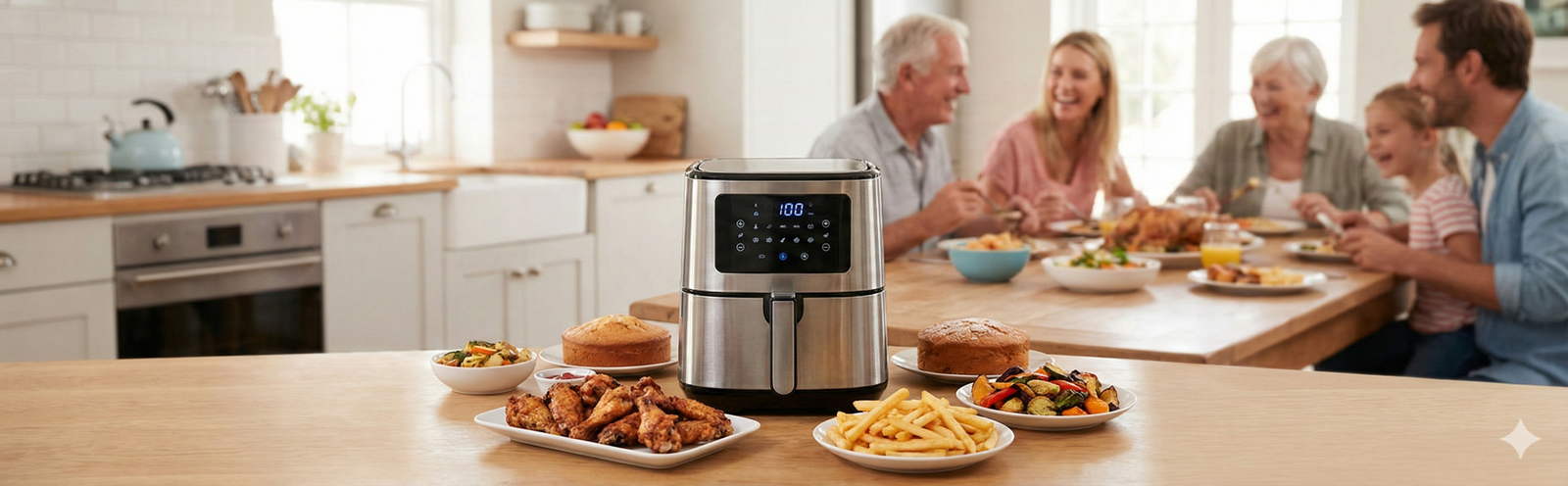
Air fryers have become ubiquitous in kitchen gadget recommendations, but most guides promote 5-6 quart models designed for families. In apartment testing, we found that 2-3 quart models provide better size-to-utility ratio for singles and couples.
The value proposition for small apartments specifically: an air fryer eliminates oven preheating (saving 8-12 minutes per cooking session), reduces cooking odors that linger in small spaces, uses less energy than full-size ovens, and produces genuinely crispy results that stovetop cooking can’t match without significant oil use.
Over 90 days of testing, our air fryer averaged 4-5 uses weekly, primarily for: reheating leftovers (crisps better than microwaves), cooking frozen foods without soggy results, roasting vegetables in small batches, and preparing proteins for meal prep.
For detailed air fryer selection guidance specific to apartments, see our complete air fryer buying guide for small spaces.
Dash Compact Air Fryer (2 Quart)

Dimensions: 10.2″ × 8.1″ × 10.7″ (fits in standard 12″ cabinets)
Capacity: 2 quarts (1-2 servings)
Noise: 62dB measured (quieter than most models)
Cleanup: 2 pieces, both dishwasher-safe
Why it works for apartments: This is the smallest air fryer we tested that still delivers genuine air-frying performance. The compact footprint stores easily in standard cabinets, and the simple two-piece design (basket and tray) makes cleanup faster than competitors with complex drawer mechanisms.
Real limitations: Capacity genuinely limits you to 1-2 servings—you can’t cook a full meal for guests. No digital controls; uses manual timer dial that some users find imprecise. The small basket makes it harder to arrange food in single layers for optimal crisping.
Best for: Solo dwellers or couples cooking individual portions, anyone prioritizing storage space over capacity.
Cosori Lite 3.8-Quart Air Fryer
Dimensions: 10.8″ × 13.6″ × 12.4″ (taller, fits with 15″+ cabinet clearance)
Capacity: 3.8 quarts (2-3 servings)
Noise: 64dB measured (acceptable for apartment use)
Features: Digital controls, 9 presets, shake reminder
Why it works for apartments: The “Lite” designation refers to weight and simplified feature set, not capacity. This model provides more cooking space than 2-quart options while maintaining a relatively compact footprint. Digital controls with presets reduce guesswork, and the square basket design uses space more efficiently than round models.
Real limitations: The 13.6″ depth won’t fit in shallow cabinets; requires counter storage or deeper cabinet space. The digital display adds a small learning curve compared to simple dial controls. Price point typically 40-50% higher than basic models.
Best for: Couples or small households wanting preset convenience, users with deeper cabinet space or willingness to keep it on counter.
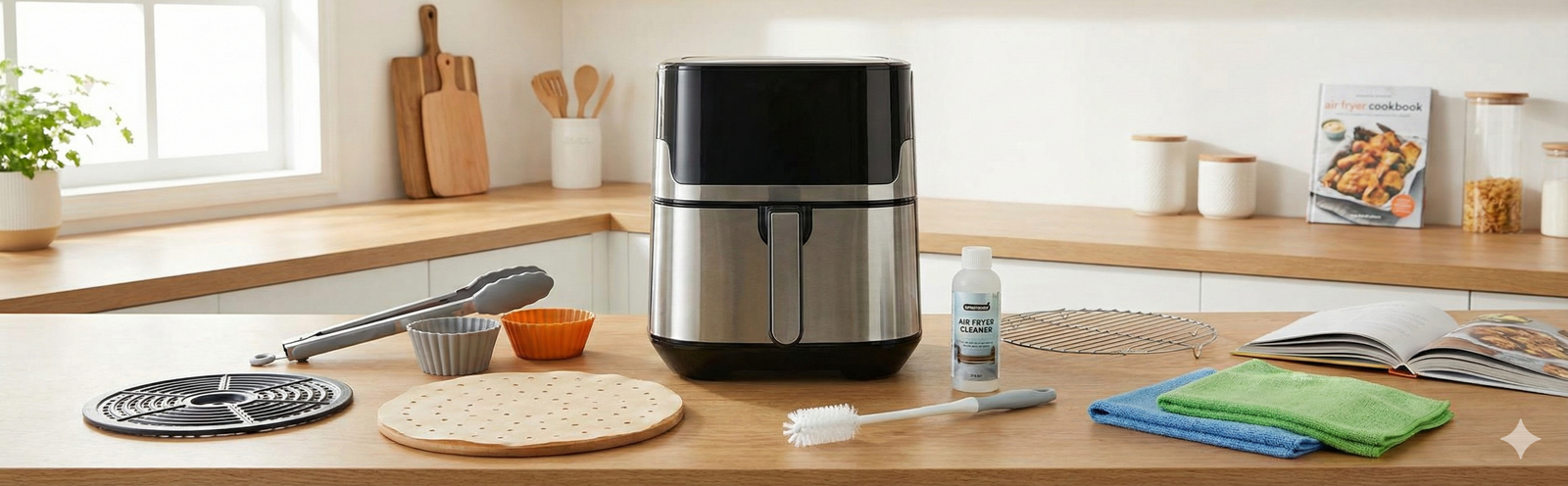
Air fryer accessories worth considering: Parchment liners (easier cleanup, disposable), silicone pot for making side dishes, and a small oil sprayer for even coating. For comprehensive accessory recommendations, see our guide on air fryer accessories that improve results.
Best Immersion Blenders for Small Apartment Kitchens
Immersion blenders represent one of the highest value-to-space ratios in apartment kitchens. During testing, our immersion blender occupied approximately 20 cubic inches of drawer space compared to the 1,200+ cubic inches required by a countertop blender with similar capability.
Performance exceeded expectations across use cases: smoothies blended directly in drinking cups (zero transfer waste), soups pureed in cooking pots (eliminating the dangerous hot-liquid transfers required with countertop blenders), small-batch sauces and dressings, and even whipped cream when using the whisk attachment.
The noise advantage matters significantly in apartments. Our test immersion blender operated at 68-70dB versus 85-88dB for countertop blenders—the difference between “noticeable” and “annoying to neighbors through shared walls.”
Mueller Ultra-Stick Immersion Blender

Dimensions: 15″ × 2.5″ × 2.5″ (fits standard drawers)
Power: 500 watts (adequate for most tasks)
Speed settings: 2-speed plus turbo
Noise: 68dB measured (apartment-friendly)
Why it works for apartments: Straightforward single-shaft design without extra attachments cluttering storage. The 500-watt motor handles smoothies, soups, and sauces without the power inefficiency of weaker models. The ergonomic grip design matters more during extended blending than it seems—this model can run 2-3 minutes without hand fatigue.
Real limitations: Only 2 speed settings may feel limiting if you’re used to variable-speed countertop blenders. The stainless steel shaft is durable but can scratch non-stick cookware if you’re not careful. No included accessories (some competitors bundle whisks and choppers).
Best for: Minimalists wanting core blending function without accessory clutter, budget-conscious buyers ($30-35 typical price).
KitchenAid Variable Speed Corded Hand Blender
Dimensions: 14.5″ × 2.8″ × 2.8″ (slightly wider grip)
Power: 180 watts (lower power, adequate for most uses)
Speed settings: Variable dial (infinite speed control)
Included: Blending arm, whisk attachment, chopper bowl
Why it works for apartments: The variable speed dial provides more control than stepped speed settings—useful for preventing splatter when starting or gradually increasing blend intensity.