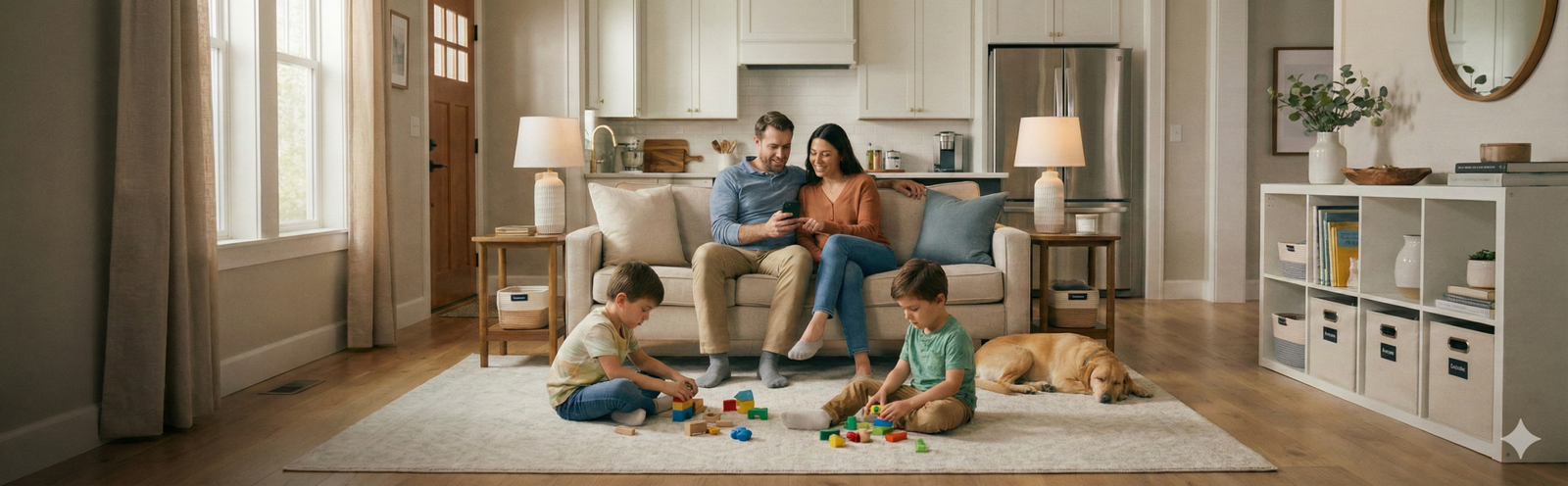
We all have that drawer, shelf, or under-sink corner filled with products that looked helpful online and then quietly became clutter. That usually happens because people do not actually need “more gadgets.” They need fewer points of friction in daily life.
That is the lens for this guide. These are not novelty buys, and this is not a random roundup of whatever happens to be trending. This is a practical look at Amazon finds that solve everyday problems in real life—the kinds of small products that reduce mess, wasted motion, repeat frustration, and “I’ll deal with it later” chores.
The goal is simple: help you buy more intentionally. If a product does not save time, reduce visual clutter, make a repeated task easier, or fit naturally into your routine, it does not belong in your home. If you want to browse broader category coverage after this guide, the site’s Amazon Finds archive and Home & Kitchen category are the best places to keep exploring.
Quick answer: which kinds of Amazon finds are actually worth buying?
The best Amazon finds are the ones that solve a specific repeated problem, live exactly where that problem happens, and do not add extra maintenance. In practical terms, that usually means products like:
- a sink organizer that stops wet sponges from taking over your counter
- cable clips that keep chargers from disappearing behind furniture
- an under-sink rack that turns dead plumbing space into usable storage
- reusable storage bags that simplify leftovers, freezer prep, and lunch packing
The wrong Amazon find creates another thing to clean, store, charge, refill, or ignore. The right one quietly removes friction so you stop thinking about the problem at all.
Why most “problem-solving” products fail in real life
A lot of products are sold with the same promise: organize better, clean faster, simplify your life, upgrade your space. The problem is that the marketing is often built around the idea of the product, not the lived reality of using it every day.
Here is why so many “useful” products end up ignored:
- They solve a vague problem. “I want to be more organized” is not specific enough. “I am tired of wet sponges on the counter” is.
- They live in the wrong place. Even good products fail when they are stored far from the task they are supposed to help with.
- They add steps. A product is not useful if it turns a five-second annoyance into a two-minute routine.
- They are bought for aspiration. Many buyers imagine a future version of themselves who meal-preps constantly, keeps every cable neat, or deep-cleans on schedule. Reality is messier.
- They create maintenance of their own. If an item is difficult to wipe down, dry, reposition, or refill, it can become another small burden.
That is why the best practical products usually share the same traits: they are simple, easy to understand at a glance, and immediately relevant to a repeated annoyance. They do not try to reinvent your routine. They make your current routine less annoying.
Before impulse-buying any “life upgrade,” it helps to read the site’s guides on smart buying tips for Amazon shoppers, how to choose Amazon finds under $50 that are actually worth it, and products that get more expensive. Those companion articles are useful because they help you separate urgency, hype, and discounts from actual long-term usefulness.
A better framework: buy for friction, not features
When evaluating everyday Amazon finds, I like a very simple test: What friction will this remove in the first week? Not someday. Not in a hypothetical perfect routine. In the first week.
That leads to a better buying framework than chasing star ratings or trendy labels. Ask these five questions:
- What exact repeated problem does this solve?
Be concrete. “Sink mess,” “charger cables slipping behind the nightstand,” “wasted cabinet space,” and “too many disposable food bags” are all specific enough. - Where will it live?
If you cannot picture the exact drawer, shelf, counter edge, or cabinet where the product belongs, you may not need it. - Will it reduce steps or add them?
The best products disappear into the routine. The worst ones become one more thing to adjust, wash, or remember. - Is the setup proportional to the problem?
A small daily annoyance should usually be solved by a simple physical tool, not a complicated system. - Will it still feel useful after the novelty wears off?
This is the real test. Useful products stay in circulation after the initial excitement is gone.
That framework also keeps you from overbuying. Not every problem needs a dedicated product. Sometimes one smart purchase eliminates three workarounds. Other times a product only sounds efficient because the product page is good at selling imagination.
The four products below work well as examples because each one maps cleanly to a real source of friction: wet sink clutter, loose cable mess, wasted under-sink space, and disposable-bag overuse. None of them are glamorous. That is exactly the point.
1) Sink clutter: small problem, constant visual noise
The kitchen sink is one of the easiest places for small messes to become constant irritation. A sponge here, a brush there, dish soap leaning awkwardly against the faucet, water pooling under everything—none of it is dramatic, but it adds up. When the sink area feels messy, the whole kitchen feels less under control.
This is why a sink organizer can be a better buy than a bigger “organization system.” It tackles a tiny but highly repeated problem right where it happens. The best ones do not just hold things. They help items drain, dry, and stay off the counter.
This category is especially good for smaller kitchens, apartments, and households that cook often. If you do dishes multiple times a day, the sink zone is not a minor detail—it is a repeat-use station. Keeping that station cleaner and less wet can make the kitchen feel easier to reset.
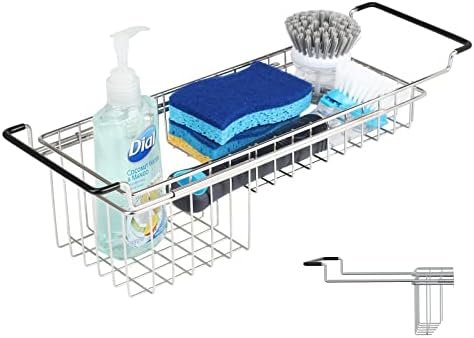
Best for: wet sink clutter and limited counter space
Sink Caddy Sponge Holder Kitchen Sink Organizer
A practical pick when your sink area needs a cleaner home for sponges, brushes, and soap instead of the usual damp pile-up on the counter edge.
- Expandable sink-caddy format that fits a wider range of sink setups
- Stainless-steel construction designed for wet kitchen use
- Divided storage helps separate tools instead of stacking everything together
What makes this kind of product worth it
It is not worth it because it is “organizational.” It is worth it because it improves the micro-routine around dishwashing. When the sponge dries better, the brush has a designated place, and the soap is not floating around visually, cleanup feels less sloppy and easier to repeat. That is what makes a low-cost kitchen product valuable over time.
Skip this type of product if:
- your sink is very shallow or unusually shaped
- you already use a setup that keeps tools fully off the sink and dry
- you tend to leave too many duplicate cleaning tools in the sink area
If your broader kitchen pain point is efficiency and clutter reduction, you may also want to browse related Home & Kitchen content like air fryer accessories that actually improve results, how to choose an air fryer for apartments, and air fryer finds for small kitchens. The same principle applies across categories: practical beats flashy.
2) Cable mess: low-level frustration that happens every day
Cable chaos is one of the most common examples of a small issue that never feels important enough to solve properly—until it keeps happening. Chargers slide behind the nightstand, USB cables tangle at the desk, the same cord falls off the edge over and over again, and a small visual mess becomes part of the room.
This is exactly the kind of problem where a tiny product can be disproportionately useful. Good cord clips do not “transform” a room. They make a repeated motion easier. That is enough.
For remote workers, students, bedside phone users, and anyone with a small work surface, cable clips can be one of the most cost-effective practical buys on Amazon. They take up almost no space, they create immediate payoff, and they do not ask you to reorganize an entire room to feel useful.

Best for: desks, nightstands, and high-use charging spots
Cord Holder Cable Organizer Clips
A simple adhesive cable-management option for keeping charging cords visible, reachable, and less likely to disappear behind furniture.
- Designed to keep cables neat and accessible instead of slipping away
- Silicone build with adhesive backing for fast placement
- Compatible with a range of smaller cords, including typical charging cables
Why this category actually gets used
Products like this keep getting used because they solve a problem you feel immediately. The first benefit is not aesthetics. It is access. You do not have to fish behind furniture, trace which cord belongs to which device, or keep resetting the same charging spot. The visual improvement is a bonus.
This also works well as a “starter” product if you are trying to improve a space without overcommitting. That is especially true for work-from-home areas. If desk organization is your main pain point, the companion guide on the best desk accessories for home office setups is the natural next read after this one.
Skip this type of product if:
- you constantly change desk layouts or move furniture around
- you want a full cable-management system rather than a small accessibility fix
- you know you do not prepare surfaces well before applying adhesive products
That last point matters. A lot of people blame a cable clip when the real issue was rushed placement on a dusty surface. For a small product like this, the setup is the maintenance.
3) Under-sink storage: one of the most wasted spaces in the home
Under-sink cabinets are often where useful space goes to die. Pipes interrupt the layout, bottles get lost behind each other, paper goods lean at odd angles, and the whole cabinet becomes a place where things disappear instead of a place that stores them well.
This is a classic example of why “organization” is not really the right word. The real issue is retrieval friction. If you cannot reach what you need quickly, the space is not serving you. It is slowing you down.
An expandable under-sink rack can be useful because it works around the exact limitation that makes those cabinets annoying: plumbing. Instead of treating the cabinet like one awkward hole, it creates more structured zones around the obstacles you cannot move.

Best for: cleaning-supply storage and awkward cabinet layouts
Simple Houseware Under Sink 2 Tier Expandable Rack
A practical under-sink organizer built for the kind of cabinets that lose space to plumbing and uneven storage needs.
- Expandable width helps it adapt to more cabinet sizes
- Adjustable-height setup is useful when pipes interrupt normal shelf planning
- Panel-style design creates better support for mixed cleaning supplies
What makes an under-sink rack worth the space it takes
A good under-sink organizer is worth it when it improves three things at once:
- Visibility: you can see what you own without pulling half the cabinet out
- Access: grab-and-go items stay in front, backup items stay behind
- Containment: spray bottles, cloths, and dishwasher supplies stop collapsing into each other
This is one of the most renter-friendly problem-solvers on the list because it does not ask for permanent installation and it solves a structural frustration that many kitchens and bathrooms share. If you have ever felt like you are always “reorganizing” the same cabinet and never improving it, this is exactly the kind of product to consider.
Skip this type of product if:
- the cabinet is extremely tight and barely fits your current essentials
- you mainly need to declutter products you no longer use, not organize the ones you do
- your main issue is leakage or cabinet damage rather than storage layout
If your kitchen workflow involves prep, leftovers, and storage more broadly, the guide on the best meal prep storage containers pairs well with this section. Storage only works when it is easy to use at the exact moment you need it.
4) Disposable-bag fatigue: where convenience and waste start competing
Reusable food storage is one of those categories people either love or abandon quickly. That is because the category only works when the habit is real. If you never wash and fully dry reusable bags, they become another “good intention” product. But when they fit your actual routine—leftovers, freezer portions, chopped produce, snack packing—they can be one of the few eco-leaning purchases that also feels practical day to day.
What makes these useful is not moral virtue. It is repetition. If your household goes through disposable bags constantly, a reusable option can reduce waste and simplify certain storage tasks at the same time.

Best for: leftovers, freezer prep, and repeated food storage
SPLF Reusable Silicone Food Storage Bags
A practical option for people who want reusable storage that can handle routine food use without feeling like a separate “zero-waste project.”
- Food-storage design intended for repeat use instead of disposable rotation
- Leak-resistant closure helps with leftovers, portions, and packed items
- Freezer-friendly, reusable format works best for households with regular prep habits
What actually makes reusable bags worth it
They are worth it when they replace a pattern, not just a single purchase. That means they make the most sense for people who:
- portion snacks or lunches regularly
- freeze ingredients or leftovers often
- prefer visible, grab-ready storage over flimsy disposable bags
They are less appealing if you know that hand-washing and drying reusable storage is a friction point in your home. That is not a moral failure. It is just a routine mismatch. The best practical product is the one you will maintain without resentment.
Skip this type of product if:
- you rarely store leftovers or freezer portions
- you dislike air-drying reusable items
- your real issue is container organization, not bag waste
If your broader goal is a more efficient kitchen routine, pair this with the site’s content on meal prep storage containers. Bags and containers serve different jobs. Knowing which problem you actually have prevents overbuying both.
Who should skip these kinds of “practical finds”
Not every useful-looking product deserves a place in your home. You should probably skip products in this category, or at least slow down, if any of the following sounds like you:
- You are shopping mainly for the feeling of getting your life together rather than solving one clear repeated problem.
- You do not yet know where the product would live.
- You are already over capacity on storage and should declutter before buying organizers.
- You expect one product to fix a routine you have not defined.
- You are drawn mostly to “viral” framing, not everyday use.
This is why practical-product content should never just be a shopping list. The buying decision matters as much as the item itself. The right question is not “Is this useful?” The right question is “Useful for whom, where, and how often?”
Common mistakes people make with everyday Amazon finds
1) Buying before measuring
This is especially common with sink organizers and under-sink racks. If the product category depends on fit, rough guessing is how disappointment starts. Measure first, then compare.
2) Solving the same problem twice
People often buy a new organizer when the real issue is duplicate products or poor placement. An organizer does not fix overaccumulation. It only improves access to things worth keeping.
3) Overvaluing versatility
“Works for everything” sounds good in theory, but products that solve one problem cleanly are often more useful than products trying to do six jobs in a mediocre way.
4) Ignoring maintenance
Reusable storage that never dries properly, sink accessories that never get rinsed, and adhesive products applied carelessly all create the same outcome: frustration blamed on the product instead of the routine mismatch.
5) Shopping by hype instead of frequency
A product you use twice a day is almost always a better buy than a more exciting product you use twice a month. Frequency beats novelty.
Routine and maintenance: what keeps these products useful
One underrated difference between products that stay useful and products that become clutter is how easy they are to maintain.
- Sink organizer: rinse it regularly so it does not become the thing creating grime instead of reducing it.
- Cable clips: clean the surface before placement and avoid repeatedly repositioning them without reason.
- Under-sink rack: assign zones—daily-use items in front, backup supplies in back, cleaning cloths together, dishwasher or sink items together.
- Reusable storage bags: wash promptly and let them dry fully so they stay easy to reuse.
This is also the point where many drawer-clutter products fail. If the product requires more discipline than the problem deserves, it will not survive long in a normal home. Low-friction maintenance matters just as much as low-friction use.
Scenario-based recommendations: what to buy first based on your real problem
If your kitchen always looks “almost clean” but never quite done
Start with the sink organizer. It addresses one of the most visible and constantly used problem areas in the kitchen. If that goes well, the under-sink rack is the next most logical upgrade because it improves what happens below that same work zone.
If your home office or bedside setup feels messy every day
Start with the cord organizer clips. This is the lowest-risk, highest-immediacy purchase in the group. You will know very quickly whether it solved your daily annoyance.
If you are a renter with awkward storage
The under-sink rack is probably the strongest first move because it reclaims usable space without permanent changes. Renters benefit most from solutions that improve layout without asking for installation complexity.
If you prep lunches, leftovers, or freezer portions regularly
The reusable storage bags are the most likely to stay in rotation. They make more sense for routine storage households than for occasional-use kitchens.
If you only want to buy one thing from this guide
Buy the product attached to the most repeated annoyance. Not the most expensive problem. Not the most aesthetically pleasing product. The most repeated annoyance. That is the clearest path to something that actually gets used.
And if you want a broader browse after fixing the immediate problem, the larger roundup at Best Amazon Finds 2026 is a good next stop.
Frequently asked questions
What makes an Amazon find actually useful instead of just trendy?
A useful find solves a repeated real-world problem, fits naturally into your existing routine, and does not create extra friction to use or maintain. Trendy products get attention. Useful products earn repeat use.
Are small practical Amazon finds worth buying, or should I save for bigger upgrades?
They are worth buying when they solve repeated low-level friction. A small daily annoyance can create more ongoing frustration than a bigger, less frequent one. The key is buying the right small product—not buying lots of small products.
How do I avoid turning practical finds into drawer clutter?
Use the friction test: identify the exact problem, choose where the item will live, decide how often it will be used, and make sure the setup is simpler than your current workaround. If that chain is not clear, skip it.
Are these kinds of products good for renters?
Usually, yes—especially products that improve storage or accessibility without permanent changes. Under-sink organizers and small placement-based tools tend to work well for renters because they fix layout friction without requiring installation-heavy solutions.
Should I buy a multipurpose gadget or a single-purpose tool?
For everyday problems, a single-purpose tool often wins if it solves one repeated issue cleanly. Multipurpose gadgets are appealing, but they can become compromise products that do several things only okay.
Are reusable silicone storage bags worth it for most households?
They are worth it for households that store leftovers, portion snacks, or freeze ingredients regularly. They are less worth it for people who know they will not wash and dry reusable storage consistently.
What should I buy first for a small kitchen?
Start with the product linked to your highest-friction zone. For many people, that is either the sink area or under-sink storage. If those areas feel chaotic, fixing them tends to create the biggest visible payoff fastest.
Is it better to shop broad Amazon roundup articles or targeted buying guides?
Targeted buying guides are better when you already know the problem. Broader roundups are better for discovery. The best approach is to discover by category, then buy by friction. That is why it helps to browse both the Amazon Finds archive and more problem-specific guides before making a final choice.
Final verdict
The best Amazon finds are rarely the flashiest ones. They are the products that fix something mildly annoying so consistently that your home starts feeling easier without you noticing why. That is what separates a practical buy from drawer clutter.
If your biggest irritation is sink mess, start there. If it is cable drift, fix that. If it is wasted cabinet space, reclaim it. If it is food-storage waste and repeat bag buying, choose the reusable option you will actually maintain. Buy for the friction that repeats most often, and you will usually make the smarter choice.
Amazon disclosure: As an Amazon Associate, Buyers Choice Lab may earn from qualifying purchases. That does not increase your price. The goal of this guide is to focus on products that make sense in real routines, not just products that look good in a roundup.
Use the links above only if the product matches your actual need. The right buy is the one you still use after the novelty is gone.