Introduction
Laundry room storage sounds simple—until you try to live with it.
A “good-looking” shelf can end up sagging. Cute baskets can be too small to be useful. Over-the-washer cabinets can block lids or feel cramped. And once you buy the wrong setup, you’re stuck with clutter you paid for—plus the daily annoyance of hunting for detergent, stain remover, or dryer sheets.
This guide is 100% educational: how to choose laundry room storage that matches your space, habits, and load volume—so your setup stays organized after the first week.
We’ve selected the best products for you.
Check them out now on Amazon.
https://buyerschoicelab.com/laundry-organization-cleaning-tools/
Key Buying Criteria (What to Look For)
1) Materials (what holds up in real laundry rooms)
Laundry rooms deal with humidity, splashes, and frequent handling. Material matters more than people expect.
- Powder-coated metal: Great for shelves and wall racks; resists moisture and is easy to wipe.
- Solid wood / quality plywood: Looks premium, but needs proper sealing/finish in humid spaces.
- Particleboard / MDF: Can be fine in dry areas, but tends to swell if exposed to moisture—common complaint in reviews when placed near washers.
- Plastic bins: Easy to clean and budget-friendly; look for thicker plastic that won’t crack when handled daily.
Quick rule: If it’s near a washer or sink, prioritize moisture-resistant materials.
2) Size & Capacity (measure first, buy once)
Most laundry storage fails because it’s bought for a photo, not for the room.
Measure these before you shop:
- Wall width (usable space, not total wall)
- Height clearance above washer/dryer (especially if the lid opens upward)
- Depth (storage that sticks out too far becomes annoying fast)
- Door swing and walking path (cabinets that collide = daily frustration)
Capacity questions to ask yourself:
- Do you buy bulk detergent or small bottles?
- Do you need space for refills, stain removers, brushes, lint tools?
- Do you want storage for towels/linens, or just supplies?
Practical tip: Pick storage that fits your largest item (often detergent or softener) plus a little “grab space” so you’re not scraping bottles in/out.
3) Durability (stress points reviewers mention)
When you scan Amazon reviews or home-organization communities, complaints tend to repeat around the same weak spots:
- Shelf sagging (too much weight, thin materials, poor brackets)
- Hardware stripping (cheap screws, soft metal)
- Bins cracking at handles
- Adhesive mounts failing in humidity
- Rust on uncoated metal in damp rooms
What to do:
- Look for weight ratings for shelves/racks (and stay under them).
- Prefer wall-anchored shelves over tension/adhesive for heavy loads.
- If you rent, choose lighter-duty systems but keep loads light (sprays, cloths, small bins).
4) Functionality (storage should match your routine)
The best laundry storage supports your workflow, not just your aesthetics.
Think in zones:
- “Daily grab” zone: detergent, stain remover, measuring cup, dryer balls/sheets
- “Weekly” zone: refills, extra towels, lint roller refills, cleaning tablets
- “Rarely” zone: seasonal items, backups, spare bins
Best functional formats:
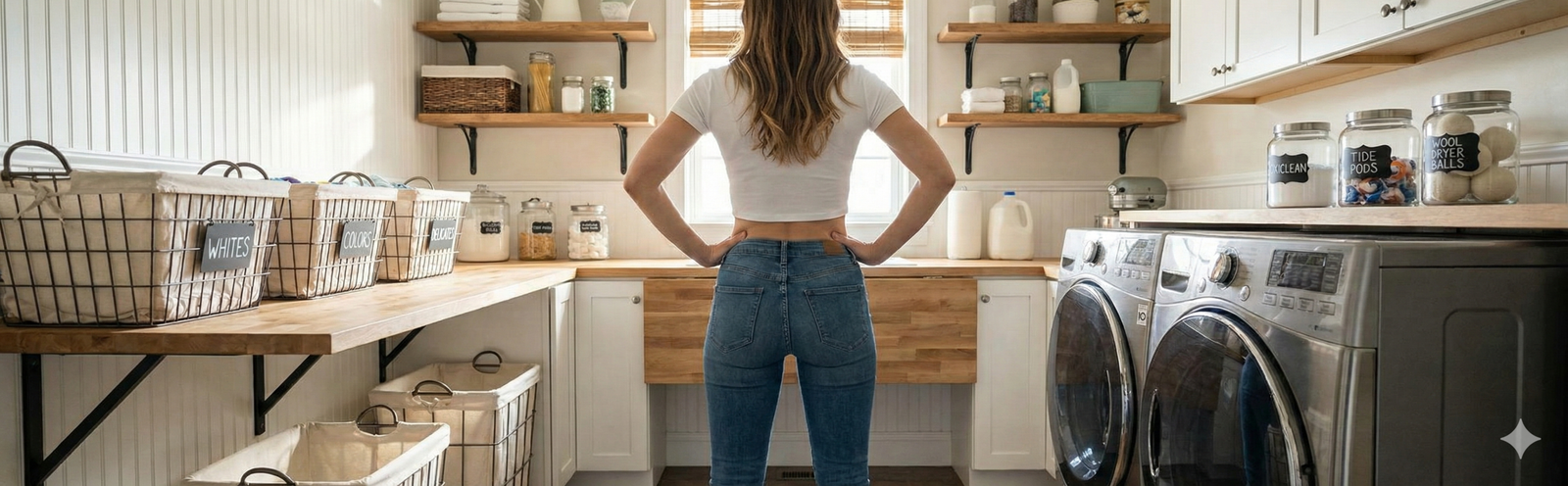
- Open shelves + labeled bins: fastest access, easiest to maintain
- Slim rolling cart: great for tight gaps; works well in small laundry rooms
- Wall-mounted rails/hooks: hang brushes, dustpans, reusable bags
- Over-the-washer shelves: high value for small rooms if you maintain lid clearance
Simple win: Make stain remover and a small cloth easy to reach—when it’s visible, you use it more often.
5) Ease of Use & Cleaning (make it “low maintenance”)
Laundry rooms get dusty, linty, and sometimes sticky (hello, detergent drips).
Choose storage that’s:
- Wipeable (smooth surfaces beat woven texture if you hate dust)
- Easy to remove (bins that lift out are easier than fixed baskets)
- Not too deep (deep shelves become “where things go to disappear”)
If you love woven baskets, consider using them for light, dry items (dryer sheets, clothespins), not for leaking bottles.
6) What Real People Say (how to interpret reviews without overthinking)
You’ll see patterns in reviews across Amazon, forums, and social media. Use them like a filter:
- If many people mention “smaller than expected” → check dimensions, not photos.
- If you see “instructions unclear / hard assembly” → consider whether you’ll install it confidently.
- If complaints are about hardware, wobble, or sag → avoid for heavy products.
- If you see “works great in small space” with photos → those are the most valuable reviews.
Pro tip: Give extra weight to reviews that mention:
- the user’s space constraints (apartment, closet laundry, tiny room)
- what they stored (detergent jugs vs small bottles)
- how long they’ve used it (durability clues)
Common Mistakes (and How to Avoid Them)
Mistake 1: Buying storage based on looks, not measurements
Why it happens: Product photos make shelves look deeper and rooms look bigger.
Avoid it: Measure width, depth, and height clearance—especially above top-load washers.
Mistake 2: Overloading shelves meant for light items
Why it happens: Detergent is heavy, and “one more bottle” adds up.
Avoid it: Reserve heavy items for lower shelves or floor-level storage, and use rated brackets.
Mistake 3: Choosing fabric/woven baskets for bottles that drip
Why it happens: Woven baskets look clean—until detergent leaks.
Avoid it: Use plastic bins for liquids; woven baskets for dry accessories.
Mistake 4: Using adhesive mounts in humid areas for weight-bearing storage
Why it happens: It seems renter-friendly and easy.
Avoid it: Adhesive is best for light tools (cloths, brushes), not jugs or stacked bins.
Mistake 5: Creating “deep storage” that becomes a junk zone
Why it happens: More space feels better—until it hides clutter.
Avoid it: Use bins with labels, and keep everyday items within arm’s reach.
Mistake 6: Ignoring the routine (where items are used)
Why it happens: Storage is installed where it fits, not where it’s useful.
Avoid it: Place stain remover near where you unload pockets or sort clothes—right where stains are noticed.
When It’s Worth Paying More
Not everything needs to be premium. But in a laundry space, paying more can be justified in specific scenarios:
1) You’re storing heavy items (bulk detergent, refills, multiple bottles)
Invest in:
- sturdier shelving
- better wall anchors/brackets
- thicker plastic bins with strong handles
Real benefit: fewer failures, less wobble, safer storage.
2) You have a very small laundry area
Premium = often space efficiency:
- slim rolling carts that don’t tip
- vertical shelving designed for narrow footprints
- over-the-washer systems with smart clearance
Real benefit: you gain function without crowding movement.
3) You want storage that stays clean-looking with minimal effort
Higher-quality materials often wipe cleaner and resist moisture better.
Real benefit: less lint buildup, fewer stains, less “visual mess.”
4) You plan to stay in the home long-term
If you’re not moving soon, durable storage becomes a “buy once” item.
Real benefit: long-term value and fewer replacements.
Where you can save:
- basic labels
- simple plastic bins
- hooks/rails for lightweight tools
- minimal organizers (don’t overbuy)
Next Step
Now that you know how to choose storage that fits your space and routine, the next step is picking the tools and organizers that actually get used—from divided hampers to washer-care items and practical storage accessories.
Go to the main guide here for specific recommendations and current options:
Best Laundry Organization & Cleaning Tools: https://buyerschoicelab.com/laundry-organization-cleaning-tools/
It’ll save you time hunting across dozens of product pages—and help you choose faster with more confidence.