Some of the most useful things you buy for your home are not big purchases, dramatic upgrades, or trendy gadgets. They are the small products that quietly remove friction from ordinary life: the item that keeps cables from disappearing behind the desk, the organizer that stops a drawer from becoming a daily frustration, the container that makes leftovers easier to store, or the touch-free tool that feels minor at first but becomes part of your routine within a week.
That is the real test. A product does not make life easier because it sounds smart online. It makes life easier because it gets used without asking for extra effort. The minute a so-called convenience product adds setup, maintenance, confusion, or storage burden, it stops being helpful and starts becoming clutter.
This guide is for people who want a more practical filter. Instead of chasing novelty, we are looking at what usually earns a permanent place in real homes: small products that solve repeated problems, fit limited space, work with existing habits, and keep delivering value after the first week. If you want the broader roundup built around recurring household frustrations, also read Amazon Finds That Solve Everyday Problems.
TL;DR
The best small products usually share four traits: they solve a problem you face often, they work with almost no learning curve, they take up very little space, and they save more effort than they create.
That is why categories like cable organizers, drawer dividers, touch-free dispensers, under-cabinet storage, reusable containers, and small routine-based organizers tend to outperform flashy “as seen online” gadgets. They are not exciting for five minutes. They are useful for months.
If you want to buy smarter, ask one question first: Will this remove a repeated annoyance from my day, or am I just attracted to the idea of it?
Why most small products fail in real life
A lot of “life easier” products fail for the same reason many impulse buys fail: they are purchased at the point of imagination rather than the point of routine. It is easy to picture yourself becoming more organized, more efficient, cleaner, calmer, and more in control. It is much harder to admit that most homes do not need another clever object unless that object fits naturally into what already happens every day.
The first failure pattern is novelty without frequency. A product may solve a problem, but if you only have that problem once a month, the product rarely justifies the space it takes up. That is why some “viral” tools feel brilliant during the demo and pointless after two weeks. They solve a problem that is too occasional, too specific, or too easy to handle another way.
The second failure pattern is friction disguised as convenience. A product may promise convenience but require assembly, battery replacement, special refills, awkward cleaning, or a habit change that never sticks. Real convenience is usually boring. It works quickly, predictably, and with almost no thought. If you need instructions every time, it is not convenient enough.
The third failure pattern is space blindness. Small products look harmless because they are small individually. In real homes, though, ten small products can create more visual noise than one large appliance. This is especially true in apartments, shared kitchens, home offices, and entryways. If a product does not earn a stable place in your layout, it usually ends up in a drawer, on a counter, or on a shelf where it competes with things you already use.
The fourth failure pattern is buying categories instead of problems. People often search for “useful products” or “must-have Amazon finds” without getting specific about what feels annoying in their own routine. That leads to a shopping list built around trends instead of real-life friction. A much better starting point is the method behind How to Choose Problem-Solving Amazon Products: begin with an actual recurring frustration, then choose the smallest product that makes that frustration easier to handle.
The fifth failure pattern is emotional overbuying. When your home feels messy, rushed, or out of control, it is tempting to shop for the feeling of improvement instead of the source of the problem. But products rarely fix vague stress. They work best when the problem is concrete: lost charging cables, chaotic cutlery, wet sponges, inaccessible storage, countertop overflow, drawer clutter, or food storage that never stacks properly.
Useful rule: a product is not “helpful” because it adds options. It is helpful because it removes repeated hesitation, searching, bending, wiping, sorting, or redoing.
A better framework: the four-part “actually gets used” test
If you want a simple way to judge whether a small product will improve daily life or become clutter, use this four-part filter. It works especially well for home convenience products, organizers, kitchen tools, desk helpers, and everyday “Amazon find” categories.
1) Frequency: does the problem happen often enough?
The best small products solve annoyances that show up repeatedly. Not “once in a while.” Not “in theory.” Repeatedly. A cable clip matters because you reach for chargers constantly. A drawer divider matters because you open that drawer daily. A reusable container matters because food storage is part of an existing kitchen rhythm. The more frequent the friction, the easier it is for a small product to earn its place.
2) Fit: does it match your current habits?
Products that work with your routine outperform products that ask you to build a new one. If you already refill soap, a better dispenser may help. If you already keep leftovers, stackable containers may help. If you never label anything, buying a label system will not magically turn you into someone who does. Great small products reduce friction inside habits you already have.
3) Footprint: does it deserve the space it occupies?
This is where a lot of “helpful” products lose. The space cost is not just physical. It is visual and mental too. A small organizer that creates order is valuable. A small gadget that needs to sit permanently on the counter with no obvious home is usually not. In smaller homes, this question matters even more. If storage is a challenge in your space, you may also want to compare this guide with Best Storage & Organization Products for Homes.
4) Friction balance: does it save more effort than it creates?
This is the deciding question. If the product needs complicated installation, difficult cleanup, awkward placement, or frequent adjustment, its convenience score drops fast. But if it quietly removes an annoying step from something you already do, it tends to last. The best small products disappear into your routine. You stop thinking about them because they just work.
The small product categories that usually hold up best
The categories below tend to outperform trend-driven impulse buys because they solve visible, repeated problems. This is not about claiming that every product in every category is automatically worth buying. It is about identifying the kinds of small products that usually make sense when matched to the right routine.
Cable organizers, desk clips, and charging control tools
This is one of the clearest examples of a small product category that gets used because the problem never really disappears on its own. Charging cables fall, slide, tangle, or visually clutter surfaces. Small clips, sleeves, wraps, and cable channels tend to work when they reduce the daily search-and-reach cycle. Their value is not dramatic. It is cumulative.
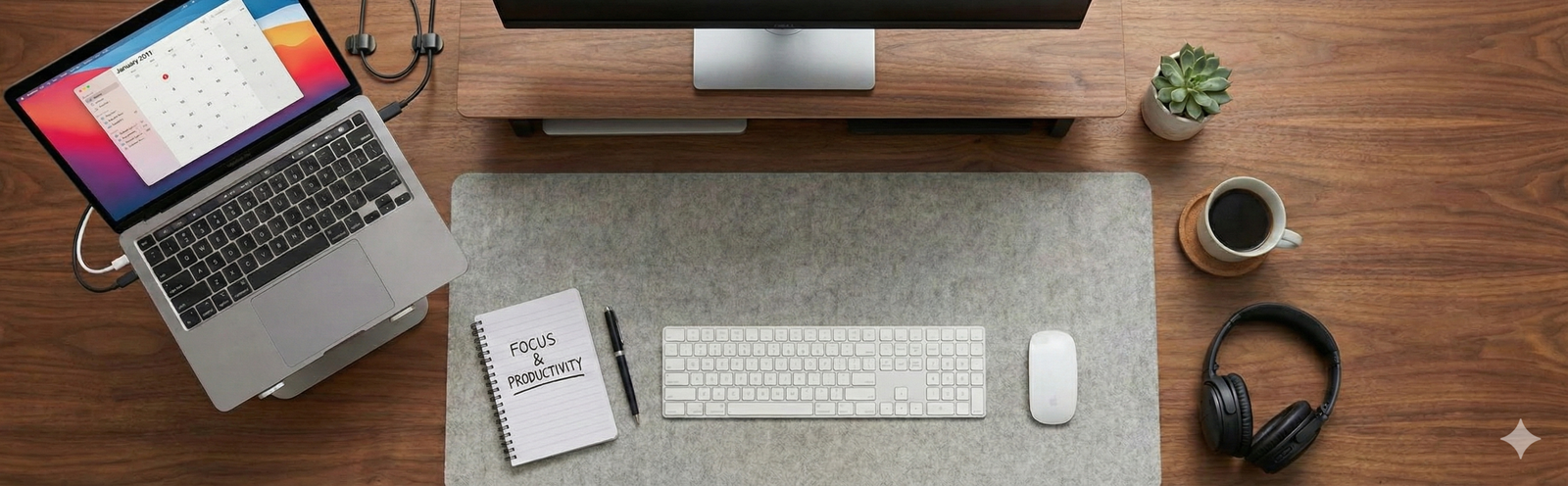
This category is strongest for people with work desks, bedside charging zones, kitchen counters, shared family charging areas, or any home office setup where visual noise hurts focus. If desk clutter is part of the problem, pair this thinking with Desk Organization Ideas That Improve Focus. A cable product is often most effective when it supports a broader layout rather than acting alone.
Skip this category if your issue is not cable chaos but outlet access, charging speed, or furniture placement. In that case, the organizer will treat the symptom, not the real frustration.
Drawer dividers and small containment systems
When people say a home feels stressful, the source is often not size. It is retrieval friction. You know the object exists, but you cannot find it quickly. Drawer dividers, bins, and micro-organizers help because they reduce visual and tactile searching. Instead of digging through a mixed pile, you move directly to a category.
This category works best in junk drawers, kitchen utensils, bathroom drawers, office supplies, makeup storage, and entryway catch-alls. The win is not only neatness. It is decision speed. That matters more than people realize. A drawer that opens cleanly reduces frustration in tiny moments all day long.
The mistake is overcomplicating it. If the divider system is more specific than your habits, it can backfire. You do not need a perfect Pinterest layout. You need enough separation that the drawer stops wasting your time.
Touch-free and hands-busy products
Products in this category often stay useful because they show up at the exact moments when people have the least spare attention: while cooking, cleaning, carrying, rinsing, or moving quickly. Think touch-free soap dispensing, easier trash access, or simple one-motion functionality when your hands are occupied.
These products are especially strong in kitchens, bathrooms, laundry zones, and homes with kids where multitasking is constant. Their practical advantage is not just hygiene. It is interruption reduction. They cut down on the small breaks in motion that make chores feel more annoying than they need to be.
They are weaker when the space is too tight, when power/refill upkeep becomes annoying, or when the “upgraded” version adds more maintenance than the basic version ever caused. This is a perfect example of friction balance mattering more than features.
Under-cabinet, vertical, and otherwise wasted-space organizers
One of the most consistently helpful home-product ideas is not “buy a bigger storage item.” It is “use the dead space you already have.” Under-shelf baskets, narrow risers, sink caddies, cabinet-door organizers, and slim vertical helpers succeed because they create access without expanding the room.
This category matters most in small kitchens, apartments, narrow bathrooms, and multipurpose rooms. A product that uses height, cabinet walls, or the underside of a shelf often creates more functional space than a bulkier organizer that simply relocates clutter.
The key is not buying all of them. The key is choosing the single wasted-space problem that irritates you most: the under-sink zone, the coffee area, the snack shelf, the cleaning caddy area, or the bathroom cabinet. Solve one zone well before buying organizers for five more.
Reusable storage products that simplify kitchen routines
Reusable bags, containers, lids, and stacking systems tend to stay useful when they make storing, seeing, and accessing food easier than the messy alternative. Their strongest use case is not moral virtue or aesthetics. It is routine convenience. You are more likely to reuse a product when it is easy to wash, easy to stack, and easy to spot in the fridge or pantry.
Where this category often goes wrong is complexity. If container sizes do not nest well, lids constantly go missing, or the set takes too much cabinet space, the system becomes irritating. But when the set is simple and consistent, it can save money, reduce waste, and make kitchen cleanup calmer.
This category works best for people who meal prep lightly, store leftovers often, pack lunches, or maintain a compact kitchen where visibility matters. It is weaker for people who rarely store food at home or already have a system that works.
Small comfort upgrades that reduce repeated annoyance
Not every useful small product is about organization. Some are about repeated micro-discomfort: the sponge that never has a good place to dry, the cabinet door that is awkward when your hands are full, the item that slides around in a drawer, the entryway mess that happens every evening, the coffee area that always looks busier than it should.
These products matter because comfort is not only physical. It is mental. Reducing small annoyances can make a room feel more functional even when nothing major changes. The important thing is being honest about the source of irritation. A tiny comfort product can be great when it addresses something you notice daily. It is not great when you buy it because a nice lifestyle video made the problem look bigger than it really is.
| Category | Best for | Why it usually works | Who should skip |
|---|---|---|---|
| Cable organizers | Desks, bedside tables, shared charging spots | Solves a daily annoyance fast | People whose real issue is outlet placement, not cable control |
| Drawer dividers | Junk drawers, utensils, office supplies | Cuts search time and visual clutter | People who want a “perfect system” more than a usable one |
| Touch-free helpers | Kitchens, bathrooms, busy family routines | Reduces interruptions when hands are busy | Anyone bothered by refills, charging, or extra upkeep |
| Vertical organizers | Small kitchens, bathrooms, apartments | Uses dead space efficiently | People who have not identified the exact clutter zone yet |
| Reusable storage | Leftovers, meal prep, lunch packing | Supports an existing food-storage routine | People who rarely cook or already have an easy system |
Who usually benefits the most from these products
People living alone
Solo households often benefit from small routine helpers because there is nobody else to compensate for a messy system. If something is inconvenient, you absorb the inconvenience every time. That makes low-friction organizers, quick-access tools, and layout fixes especially valuable. People living alone usually do best with compact products that remove repeat effort without demanding a full organizing overhaul.
Families and shared homes
In shared spaces, the best small products are often the ones that reduce chaos at transition points: the kitchen during meal prep, the entryway during arrivals, the bathroom counter during rushed mornings, or the charging zone everyone fights over. Families do not need more random gadgets. They need small systems that make the default behavior easier for everyone.
Small apartments
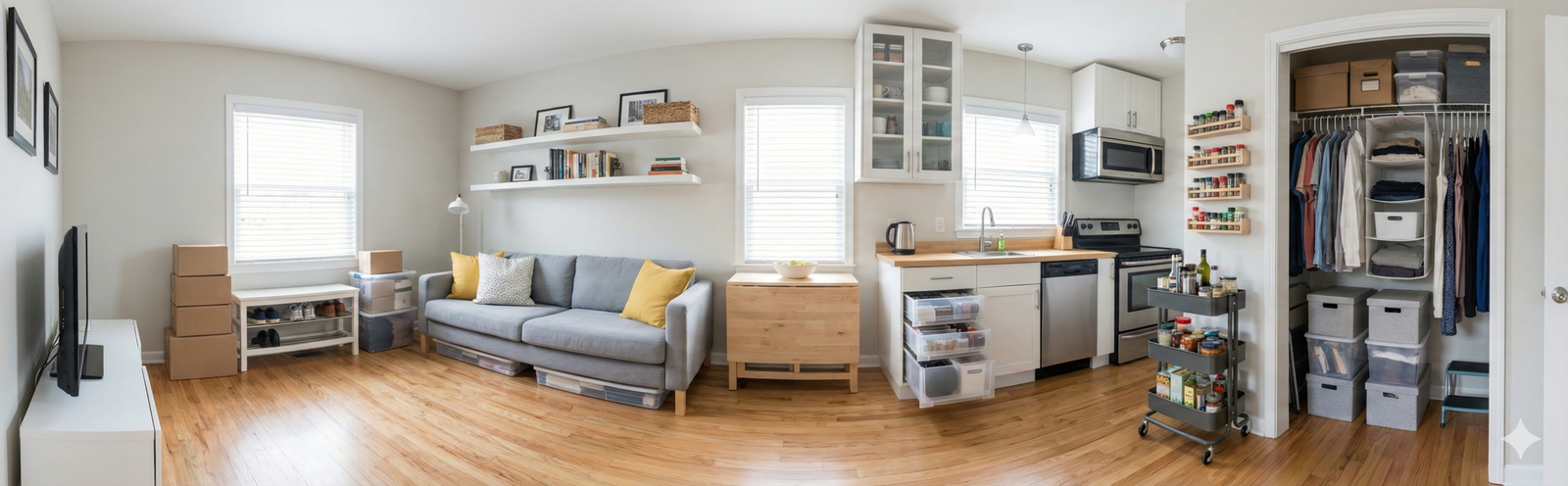
Smaller homes get the biggest payoff from products that improve access rather than simply add storage. This is where slim organizers, stackable systems, wall-adjacent helpers, and vertical use of space matter most. In tight homes, clutter spreads faster and visual calm matters more, so a product that helps a room stay functional can punch far above its size.
Beginners who are tired of wasting money
If you are trying to buy more intentionally, this category is a great place to practice. Small products are usually lower risk than large appliances, but they still reveal your buying habits very clearly. If you can learn to choose one small product that truly solves a repeated problem, you will usually make better decisions everywhere else too. It is the same logic behind reading How to Choose Products That Tend to Get More Expensive: buying slowly and specifically often beats reacting emotionally.
Who should skip this kind of shopping
Not everyone needs a “small products that make life easier” phase. Some people should skip most of it.
- Skip it if your real problem is volume, not organization. If you simply own too much, no micro-organizer will fix that. Decluttering comes first.
- Skip it if you are shopping out of frustration without identifying the exact problem. Vague stress leads to vague purchases.
- Skip it if you hate maintenance. Products with refills, charging, constant cleaning, or complicated assembly rarely feel “easy” for long.
- Skip it if your counters and drawers are already crowded. A product that has no stable home often becomes part of the mess it was supposed to reduce.
- Skip it if the benefit is mostly aesthetic and you are seeking a practical win. Pretty can be nice, but pretty is not the same as useful.
The point of this category is not to collect better clutter. It is to make daily life feel smoother. If a product does not clearly move you in that direction, it belongs on the skip list.
Common mistakes people make when buying “useful” small products
Mistake 1: Buying five products for one problem
This is extremely common with organizing. People see one messy area and order baskets, labels, risers, hooks, bins, dividers, and trays all at once. In real life, one well-chosen product often reveals whether the problem is placement, visibility, category confusion, or excess. Start with the smallest effective fix.
Mistake 2: Copying someone else’s home instead of solving your own friction
A product that is brilliant in a large family kitchen may be pointless in a studio apartment. A desk organizer that helps a remote worker may be irrelevant for someone who only uses a laptop at the dining table. “Useful” is always contextual.
Mistake 3: Underestimating cleanup and upkeep
A product that is slightly harder to clean than expected loses value fast. If the product lives in a splash zone, grease zone, food zone, or kid zone, you have to count maintenance as part of the real ownership experience.
Mistake 4: Choosing the feature-rich version instead of the obvious one
The version with more settings, moving parts, accessories, or extra functions is not automatically better. In small convenience products, simplicity is often the feature. A product with one clear job tends to outperform a product with six half-useful ones.
Mistake 5: Treating small products like identity purchases
People sometimes buy tiny home products as a way to feel more organized, more efficient, or more “together.” There is nothing wrong with wanting your home to feel better. But identity shopping leads to weaker decisions than friction-based shopping. Buy for what keeps annoying you, not for who you wish you were on your best day.
A realistic routine: how to make small products stay useful
Even the right product can lose its value if you do not place it well or keep the surrounding routine simple. The easiest way to get long-term value from small home products is to think in terms of “use zones.” Put the product where the problem happens, not where you think it looks neatest from a distance.
- Charging products should live exactly where devices are usually dropped.
- Kitchen organizers should be within the motion path of cooking, storing, or cleaning.
- Desk products should reduce hand movement and visual clutter, not just decorate the workspace.
- Bathroom helpers should be easy to wipe down and easy to access one-handed.
- Entryway products should support what people actually do when they walk in, not what you wish they would do.
A good maintenance rule is this: if a product creates a weekly annoyance, reconsider it. Small products earn their place when upkeep is minor compared with the problem they remove. If upkeep starts feeling like the main experience, the product is no longer helping enough.
Scenario-based recommendations
If your home feels visually noisy
Start with cable control, drawer separation, and one vertical organizer. Visual noise often comes from things that do not have a stable resting place. You do not need ten aesthetic bins. You need fewer floating objects.
If your kitchen feels more tiring than it should
Look at touch-free helpers, under-sink order, and easier food containment. Kitchen friction usually comes from interrupted motion: wet hands, blocked storage, stacked clutter, or lids and leftovers that never quite behave.
If your desk hurts focus
Prioritize cable management, one catch-all zone for small tools, and fewer visual decisions on the surface. A desk rarely needs more accessories. It usually needs fewer loose objects and a cleaner retrieval path.
If you live in a small apartment
Choose products that borrow unused space rather than occupying new floor or counter space. Slim, stackable, vertical, and dual-purpose categories matter more than cute single-use items. In compact homes, footprint discipline is part of what makes a product “useful.”
If you tend to impulse buy “helpful” gadgets
Do one thing before buying: write down the exact moment the product is supposed to help. “When I come home and throw my keys on the counter.” “When I cook and touch the trash lid with messy hands.” “When I plug in my phone before bed.” If you cannot describe the moment clearly, you probably do not need the product yet.
Where this article fits in the broader cluster
Use this page as the practical filter. Then use the related guides for the next step:
- Amazon Finds That Solve Everyday Problems for the broader pillar view
- How to Choose Problem-Solving Amazon Products for smarter buying logic
- Best Storage & Organization Products for Homes for room-by-room storage help
- Desk Organization Ideas That Improve Focus if your main friction point is workspace clutter
FAQ
What kinds of small products usually make life easier?
The products that usually help most are the ones tied to repeated annoyances: cable control, drawer organization, better access to storage, easier food containment, and low-effort tools for moments when your hands are busy. The key is not the category alone. It is whether the product removes a problem you face often.
How do I know if a small product will actually get used?
Ask whether the problem happens several times a week, whether the product fits your current habits, whether it has a stable home, and whether it saves more effort than it creates. If the answer is yes to all four, it has a much better chance of sticking.
Are small home products worth it in apartments?
They can be especially worth it in apartments because small spaces magnify friction. But the right apartment products are usually vertical, slim, stackable, or layout-based. Compact homes benefit less from novelty gadgets and more from products that improve access and reduce visible clutter.
Why do so many “useful” products end up as clutter?
Because people buy for imagined convenience instead of repeated routine. A product can be clever and still be a poor fit. If it is too specific, too annoying to maintain, or not used often enough, it stops feeling useful very quickly.
Should I buy organizers before I declutter?
Usually no. If your real problem is volume, organizers can disguise clutter instead of solving it. A better order is: identify what truly belongs in the space, reduce excess, then add the smallest organizer that supports the remaining routine.
What is the biggest mistake people make with small convenience products?
Buying too many at once. It is much easier to judge usefulness when you solve one problem at a time. One smart purchase can clarify the real issue. Ten rushed purchases usually create a new one.
How can I make better Amazon-style household purchases in general?
Start with the friction, not the feed. Search from a problem you want to reduce, not from a vague desire to “upgrade” your life. That usually leads to fewer regret buys and more products that actually remain in use.
Do I need a product recommendation list to benefit from this guide?
Not necessarily. For many people, the most valuable step is learning how to evaluate a category before buying anything. Once you know the pattern of what tends to stay useful, product lists become easier to judge and much less tempting in the wrong way.
Final verdict
Small products make life easier when they are humble enough to fit into real routines. That is the whole point. The winners are rarely the loudest or most impressive. They are the ones that save a little time, reduce a little mess, remove a little irritation, and keep doing that without asking for much back.
If you are deciding what to buy next, do not ask which product looks the most clever. Ask which repeated annoyance is quietly wasting your time or attention right now. Start there. Buy smaller, buy more specifically, and let routine—not hype—decide what deserves a place in your home.
For a broader problem-based roundup, continue with Amazon Finds That Solve Everyday Problems.
Amazon Disclosure
Buyers Choice Lab participates in affiliate programs, including Amazon Associates, and may earn commissions from qualifying purchases at no extra cost to the reader.
Editorial recommendations should always be based on practical fit, not impulse appeal. The goal is to help you choose products that solve real problems and actually get used.