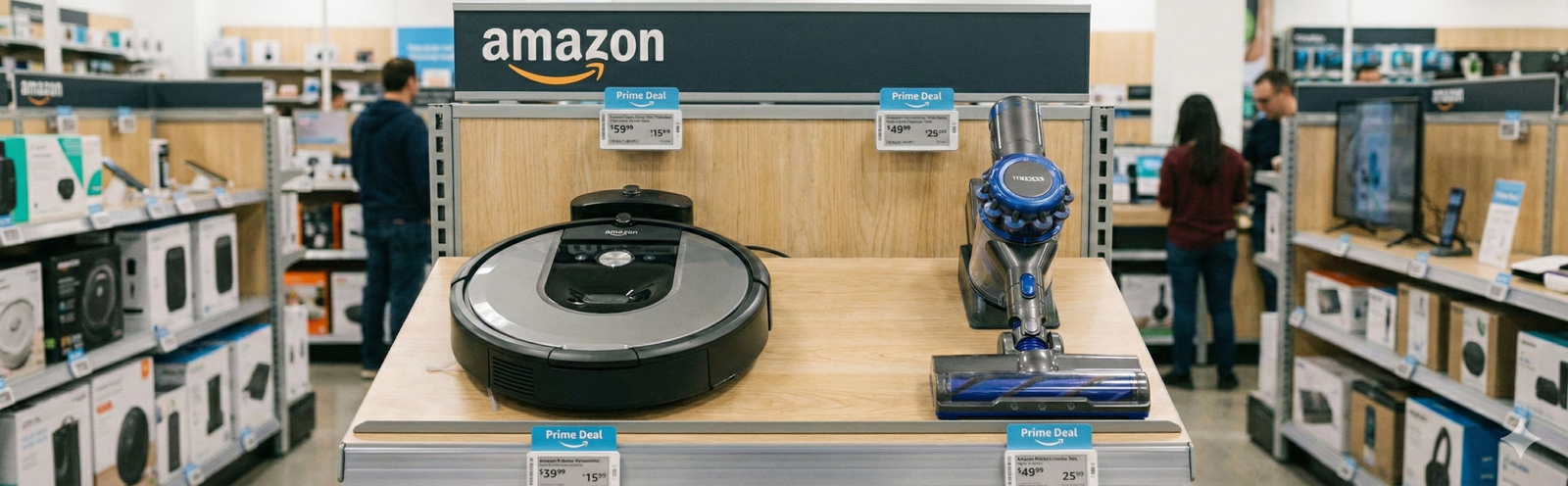
Choosing a vacuum sounds simple until you realize that cordless vacuums and robot vacuums are built for very different jobs.
One gives you control, speed, and better reach. The other reduces effort by automating routine cleaning. If you choose based on marketing promises instead of real-life needs, you can easily waste money on features that do not actually help in your home.
This guide breaks the decision down in practical terms: apartment living, pets, stairs, mixed flooring, noise, maintenance, and daily routine. By the end, you will know whether a cordless vacuum, a robot vacuum, or a combination of both makes the most sense for your lifestyle.
If you already think a stick vacuum may be the better fit, you can also check my full guide to the best cordless vacuums for apartments.
Quick Answer
If you want the shortest possible answer, here it is:
- Choose a cordless vacuum if you want stronger hands-on cleaning, better control, and easier cleaning on stairs, corners, furniture, and spot messes.
- Choose a robot vacuum if your priority is reducing daily effort and keeping floors consistently cleaner with less involvement.
- Choose both if you want the most complete setup: a robot for routine floor maintenance and a cordless vacuum for deep cleaning, edges, upholstery, and fast messes.
The wrong choice usually happens when buyers expect one category to do the other category’s job.
Cordless Vacuum vs Robot Vacuum at a Glance
| Factor | Cordless Vacuum | Robot Vacuum | Better Choice |
|---|---|---|---|
| Deep cleaning | Stronger direct cleaning | Better for upkeep than deep cleaning | Cordless |
| Daily effort | Manual | Automated | Robot |
| Spot cleaning | Fast and precise | Not ideal for sudden messes | Cordless |
| Stairs | Excellent | Poor | Cordless |
| Under furniture | Limited by design | Usually better | Robot |
| Corners and edges | Better control | Often inconsistent | Cordless |
| Cluttered homes | Easier to use around obstacles | Can get stuck or miss areas | Cordless |
| Open floor maintenance | Good but manual | Excellent | Robot |
| Setup | Minimal | More setup and learning | Cordless |
| Ongoing maintenance | Filters, dustbin, battery care | Brushes, sensors, wheels, mapping issues | Depends |
| Best for busy routines | Good | Excellent | Robot |
| Best overall flexibility | Very high | Moderate | Cordless |
The Real Difference: Control vs Automation
The biggest difference is not the motor, the battery, or the app. It is the cleaning experience.
A cordless vacuum gives you direct control. You choose the exact area, angle, and time. That makes it especially effective for:
- quick spills
- stairs
- corners
- furniture
- car interiors
- mixed surfaces
- detailed cleaning
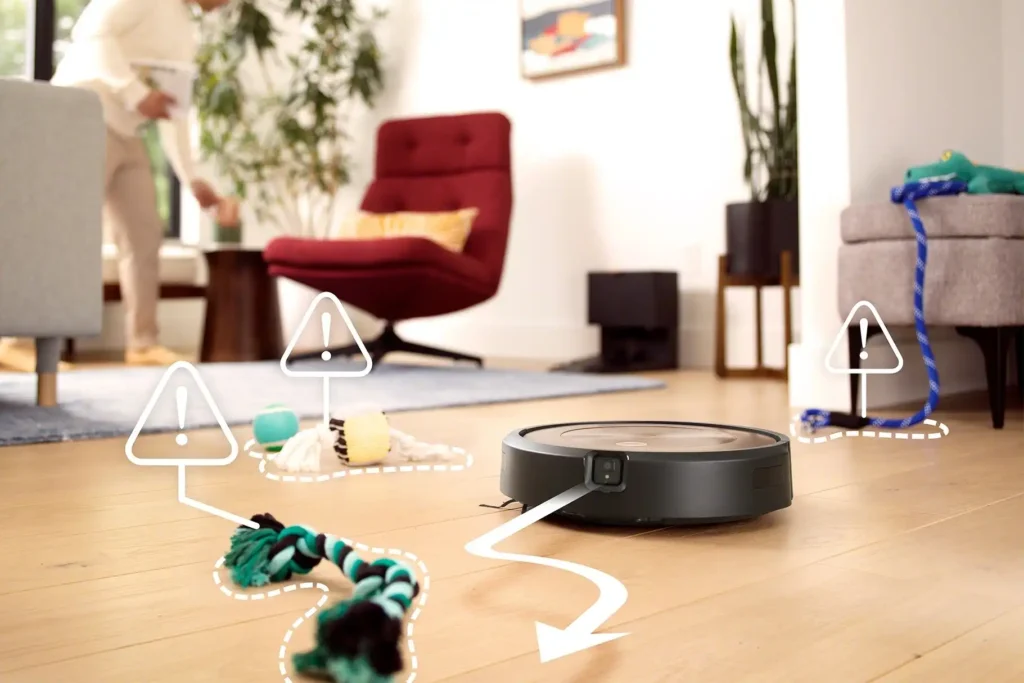
A robot vacuum gives you automation. It works best when your space allows it to move freely and when your goal is not perfection in one pass, but less daily buildup over time.
That makes it appealing for:
- routine floor maintenance
- open layouts
- busy schedules
- homes where dust accumulates daily
- people who want less manual work
This is why many households feel disappointed after buying the wrong type. They are solving the wrong problem.
Core Functionality

When a Cordless Vacuum Is the Better Choice
A cordless vacuum is usually the better choice if your home requires flexibility.
1. You Need Stronger Hands-On Cleaning
Cordless vacuums are better when the goal is active cleaning rather than passive maintenance. You can target dirty zones immediately, apply extra attention where needed, and clean beyond the floor.
That matters in real life because dirt does not only collect in one predictable path. It builds up on:
- stairs
- baseboards
- sofa edges
- corners
- entryways
- under tables
- tight spaces around furniture
A robot vacuum may help with visible dust across the main floor, but it usually does not replace the control of a cordless model.
2. You Live in an Apartment
For many apartment setups, cordless vacuums make more sense.
Why? Because apartment living often includes:
- smaller storage areas
- tighter layouts
- furniture placed closer together
- rugs, thresholds, and narrow zones
- a need for quick cleanup without a full cleaning cycle
A cordless vacuum is easy to grab, use, empty, and store. You do not need to prepare the floor, remove obstacles, or wait for a full mapping cycle to finish.
If apartment use is your main concern, see this related guide on the best cordless vacuums for apartments.
3. Your Home Has Stairs
This is one of the clearest decision points.
Robot vacuums do not solve stair cleaning. Even models with cliff sensors still need to be manually moved between floors. They also do not clean stair steps themselves.
A cordless vacuum is the obvious winner here. It is more practical, safer, and far more effective.
4. You Want Fast Spot Cleaning
If cereal spills in the kitchen, pet hair builds up in one corner, or you track dirt in after coming home, a cordless vacuum is simply faster.
You grab it, clean the mess, and put it back.
A robot vacuum is not designed for that kind of instant response.
When a Robot Vacuum Is the Better Choice
A robot vacuum becomes more attractive when your main goal is reducing effort, not maximizing control.
1. You Want Cleaner Floors With Less Work
This is the biggest advantage of robot vacuums.
Instead of waiting until the floor looks dirty, you can schedule routine cleaning. That means less visible dust, less everyday debris, and fewer full cleaning sessions.
For people with long workdays, kids, pets, or low motivation for frequent vacuuming, that convenience can matter more than raw cleaning power.
2. You Have an Open Layout
Robot vacuums perform best when they can move through a space without constant interruption.
They work better in homes with:
- fewer cables
- fewer floor obstacles
- more open paths
- less clutter
- consistent flooring
In those situations, automation becomes more useful because the vacuum can actually complete its routine with fewer problems.
3. You Want Maintenance Cleaning, Not Detailed Cleaning
Robot vacuums are best viewed as maintenance tools. They help reduce how quickly dirt builds up.
That is different from deep cleaning.
If your goal is to keep floors “pretty good” most of the time without much effort, a robot vacuum can be a great fit. If your goal is detailed, deliberate cleaning, it is usually not enough on its own.
Which One Is Better for Pets?
This depends on the type of pet mess you deal with.
A robot vacuum can help a lot with daily pet hair maintenance, especially on hard floors and in homes where fur spreads quickly every day.
A cordless vacuum is better for:
- upholstery
- corners
- pet beds
- stairs
- concentrated fur buildup
- faster cleanup around feeding areas or litter zones
If you have pets, many buyers end up happiest with a mixed approach:
- robot vacuum for daily floor upkeep
- cordless vacuum for weekly detail cleaning and pet-heavy areas
Which One Is Better for Carpets and Mixed Flooring?
In most cases, a cordless vacuum is the safer choice if your home has mixed flooring or carpets that need stronger pickup.
That is because cordless vacuums let you adapt in real time. You can move from hard floor to rug to corner to edge without depending on navigation logic or suction adjustments decided by software.
Robot vacuums can still work well on some low-pile rugs and open mixed-floor spaces, but performance often drops when the home includes:
- thicker rugs
- transitions between surfaces
- tight furniture spacing
- clutter
- cords
- problem corners
If your floors are simple and open, a robot vacuum can be helpful. If your floors are varied and harder to navigate, cordless usually wins.
Which One Is Easier to Maintain?
Many buyers assume robot vacuums are lower effort overall. That is only partly true.
Cordless Vacuum Maintenance
Typical maintenance includes:
- emptying the dustbin
- cleaning or replacing filters
- checking the brush roll
- managing battery health over time
This is simple and familiar for most users.
Robot Vacuum Maintenance
Typical maintenance includes:
- emptying the bin or base
- cleaning brushes more often
- removing hair tangles
- wiping sensors
- checking wheels
- handling occasional app or mapping issues
- clearing obstacles when the unit gets stuck
In other words, robot vacuums reduce manual cleaning effort, but they can introduce a different kind of maintenance effort.
If you want the least technical ownership experience, cordless is usually simpler.
Which One Is Better for Small Homes and Apartments?
For most small homes and apartments, a cordless vacuum is the more practical single purchase.
Why?
Because small-space living often rewards:
- fast access
- compact storage
- better maneuverability
- easier cleaning around furniture
- less setup friction
A robot vacuum can still work in apartments, but its value depends heavily on layout. If the apartment is cluttered, narrow, or full of floor obstacles, the convenience drops quickly.
If the apartment is open, tidy, and you want help with daily upkeep, then a robot vacuum may still be worth considering.
The 7 Questions You Should Ask Before Buying
Before choosing either one, ask yourself these questions:
1. Do I want less cleaning effort or better cleaning control?
- Less effort = robot vacuum
- Better control = cordless vacuum
2. Do I need to clean stairs?
- Yes = cordless vacuum
3. Is my floor layout open or cluttered?
- Open = robot vacuum becomes more attractive
- Cluttered = cordless vacuum is easier
4. Do I mostly need quick cleanup or scheduled maintenance?
- Quick cleanup = cordless
- Scheduled maintenance = robot
5. Do I have pets?
- Daily fur control = robot can help
- Detailed fur cleanup = cordless is stronger
6. Do I want a simple appliance or am I okay with apps and setup?
- Simple = cordless
- Okay with setup and automation = robot
7. Am I expecting one vacuum to do everything?
- If yes, cordless is usually the safer single purchase
Common Buying Mistakes
Mistake 1: Expecting a Robot Vacuum to Replace All Cleaning
This is probably the most common mistake.
A robot vacuum can reduce routine floor dirt, but it usually does not fully replace detailed vacuuming. Many buyers eventually realize they still need a second vacuum for corners, furniture, stairs, and more targeted cleaning.
Mistake 2: Buying a Cordless Vacuum Only for Convenience
Cordless vacuums are convenient, but they still require you to do the cleaning yourself. If your main pain point is lack of time or lack of motivation, a robot vacuum may solve the bigger problem.
Mistake 3: Ignoring Floor Layout
A robot vacuum may look ideal on paper, but real homes include:
- cords
- chair legs
- thresholds
- rugs
- toys
- clutter
- tight corners
If your floor is not robot-friendly, the convenience may not match the promise.
Mistake 4: Paying for Features You Will Never Use
App features, voice assistants, advanced mapping, cleaning zones, smart home integrations, and self-empty docks can all sound impressive. But not every buyer uses them enough to justify the cost.
Pay for features that solve a real problem in your home, not just features that sound advanced.
Who Should Skip a Robot Vacuum?
You should probably skip a robot vacuum if:
- your home has stairs and that is a major cleaning concern
- your floor is usually cluttered
- you want one vacuum to handle detailed cleaning
- you get annoyed by setup, apps, or troubleshooting
- you mainly need fast cleanup of small messes
Who Should Skip a Cordless Vacuum?
You should probably skip a cordless vacuum as your only solution if:
- your biggest problem is lack of time for regular floor cleaning
- you want more daily automation
- you prefer scheduled cleaning over hands-on cleaning
- your home has a relatively open layout that suits robot navigation
- you know you are unlikely to vacuum often unless it happens automatically
When Buying Both Actually Makes Sense
For many homes, the best answer is not cordless vs robot. It is cordless plus robot.
That combination makes sense when:
- you want daily automated upkeep
- you also want real cleaning power on demand
- you have pets
- you have mixed flooring
- you want less dust buildup without giving up control
In that setup:
- the robot vacuum handles routine floor maintenance
- the cordless vacuum handles spot messes, stairs, upholstery, corners, and deeper cleaning
This is often the most realistic long-term solution for busy households.
Final Verdict
There is no universal winner between a cordless vacuum and a robot vacuum. There is only the better match for your home.
Choose a cordless vacuum if you want stronger direct cleaning, easier use on stairs and furniture, more flexibility, and fewer tech-related frustrations.
Choose a robot vacuum if you want less daily effort, more automated upkeep, and your home layout supports efficient navigation.
Choose both if you want the most complete cleaning system and the budget allows it.
If you are still leaning toward a cordless model for apartment life, the next step is my full guide to the best cordless vacuums for apartments.
FAQ
Is a robot vacuum better than a cordless vacuum?
Not necessarily. A robot vacuum is better for automated daily maintenance, while a cordless vacuum is better for direct control, spot cleaning, stairs, and deeper cleaning.
Can a robot vacuum replace a cordless vacuum?
For most homes, no. A robot vacuum can reduce how often you clean manually, but it usually does not replace the need for a cordless or standard vacuum.
Which is better for apartments: robot or cordless vacuum?
In many apartments, a cordless vacuum is the better single purchase because it is easier to store, faster to use, and more effective in tight layouts. A robot vacuum can still work well in open, uncluttered apartments.
Which vacuum is better for pet hair?
A robot vacuum helps with daily pet hair maintenance, while a cordless vacuum is better for furniture, corners, concentrated fur, and more detailed cleanup.
Is it worth owning both?
Yes, for many households it is. A robot vacuum helps with routine cleaning, while a cordless vacuum covers the areas and messes robots usually miss.