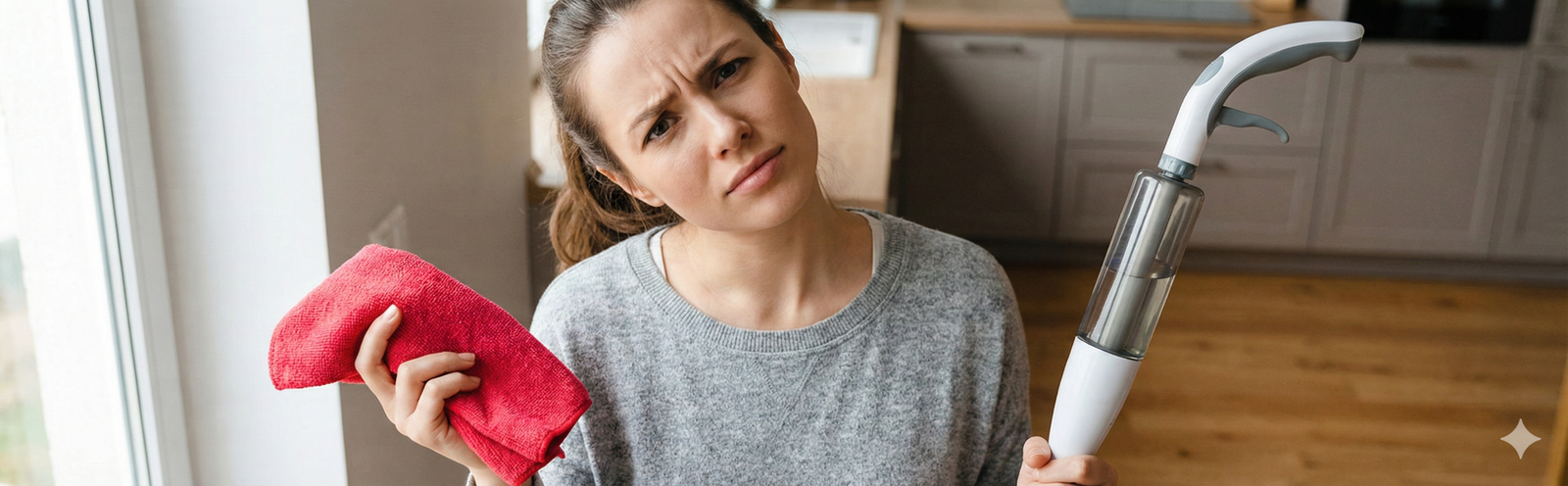
Most homes have at least one cleaning product that looked smart in a product photo and then disappeared into a closet after two uses. That is usually not a motivation problem. It is a fit problem. A tool can be powerful, highly rated, and full of features, then still fail in real life because it asks too much of you before the cleaning even starts.
The cleaning tools people actually keep using are usually not the flashiest ones. They are the ones that reduce friction. They are easy to grab, easy to store, easy to reset, and useful for messes that happen every week instead of only once a season. That matters more than clever packaging, one huge spec, or the promise that one product will solve every room in the house.
This guide is built around repeat use, not novelty. The goal is to help you figure out which tools earn a permanent place in your routine, which ones sound good but become clutter, what to buy first when you do not want to overspend, and how to match tools to the way your home actually gets dirty. If you want the broader category overview after this, the natural next step is our pillar guide on best home cleaning tools that save time. If your angle is more about cost avoidance and preventing cleanup from turning into a paid job, continue later with cleaning tools that help you avoid expensive services.
Quick Answer / TL;DR
The cleaning tools you actually use are the ones that solve common messes with almost no setup penalty. For most homes, that means some combination of:
- One fast floor tool for crumbs, dust, pet hair, and daily reset cleaning.
- One surface-wiping system that makes counters, mirrors, appliance fronts, and bathroom touch-ups easy.
- One targeted friction-killer for the room you avoid most, which is often the bathroom.
- One realistic hard-floor solution that matches your layout, storage, and mess level.
For many households, the repeat-use winners are a cordless stick vacuum, microfiber cloths, a spray mop or spin mop depending on floor area, and an electric scrubber only when bathrooms consistently become the dreaded bottleneck.
If a cleaning tool is bulky, annoying to reset, hard to store, or too specialized for how often the problem happens, it usually turns into drawer clutter instead of routine help.
Why Most Cleaning Tools Fail in Real Life
Most underused cleaning tools fail for predictable reasons. Not because the user is lazy. Not because the category is useless. They fail because the tool solves a fantasy version of cleaning instead of the version that happens in actual homes. Real cleaning is messy, interrupted, repetitive, and usually squeezed between other responsibilities. That changes what “best” means.
1) The setup tax is too high
If you have to assemble the tool, fill a tank, find the charger, untangle the cord, clear storage space, or do too much cleanup afterward, the job stops feeling small. A small mess should stay a small job. The moment a tool turns a two-minute task into a mini-project, people start waiting. That is when crumbs spread, soap scum hardens, and routine maintenance turns into catch-up cleaning.
2) The tool is trying to do the wrong job
A common mistake is expecting one product to handle deep cleaning, touch-ups, hair removal, bathroom scrubbing, and floor refreshing equally well. Real homes do not reward that mindset. A cordless vacuum is excellent for fast dry cleanup. A spray mop is excellent for low-setup hard-floor touch-ups. An electric scrubber is valuable when scrubbing is the specific pain point. Problems start when people buy a good tool and then ask it to do a job it was never meant to do.
3) Storage friction quietly kills consistency
Storage is one of the most underestimated parts of buying cleaning tools. A mediocre tool that lives within reach often gets more real use than a stronger one hidden behind boxes. This is especially true in apartments, smaller homes, laundry zones, and households where utility storage is already overloaded. If a tool is awkward to store, you do not just lose shelf space. You lose frequency.
4) It adds after-use friction
People often evaluate only the cleaning part and forget the reset part. But reset matters just as much. Dirty pads, full bins, dead batteries, missing accessories, damp mop heads, and poorly stored cloths all reduce the odds of repeat use. One hidden truth about practical cleaning is that a tool is only as useful as your willingness to put it back in ready condition.
5) Marketing rewards novelty, but homes reward repeatability
Novelty sells. Repeatability saves time. Those are not the same thing. The products that win long-term are often boring on paper: a cloth that wipes well, a mop that does not need an argument before you use it, a vacuum you can grab in seconds, a scrubber that removes the most physically annoying part of the routine. The question is not “Does this look impressive?” It is “Will I still reach for this on a random Tuesday?”
The R.E.A.L. Filter: A Better Way to Choose Cleaning Tools You’ll Keep Using
To separate useful tools from clutter, use this simple filter before buying anything. I call it the R.E.A.L. Filter because practical cleaning is less about aspiration and more about what holds up in normal life.
R = Reach
Can the tool reach the places where mess actually collects in your home? Think table legs, corners, grout lines, shower edges, sofa seams, entryways, under cabinets, and around bathroom fixtures. A product that only performs well on open demo surfaces often disappoints once it meets a lived-in room.
E = Effort
How much effort happens before and after cleaning? This includes setup, carrying, bending, wringing, rinsing, charging, emptying, washing pads, and storing the tool again. The best repeat-use tools have a low effort curve from start to finish.
A = Actual Frequency
How often does the problem happen? That answer should drive the purchase. A daily pet-hair problem deserves a fast, repeat-use floor tool. A once-a-month bathroom deep scrub may not justify a large dedicated setup unless the physical strain is what you are trying to remove. Frequency is what turns a tool from “nice idea” into “worth the space.”
L = Living-Space Fit
Does the tool fit your space, storage, and cleaning style? A family home with lots of hard flooring can justify a larger mop system. A small apartment may get more value from a cordless vacuum, microfiber cloths, and a spray mop. A pet-heavy household may need better upholstery and edge-cleaning solutions. Your layout matters more than trend-driven buying.
When a tool scores well across all four, it usually has a real chance of staying in rotation. When it fails even one category badly, especially effort or living-space fit, that is usually the warning sign people ignore at checkout.
Practical rule: If the tool does not make you more likely to clean the area before it becomes a bigger job, it is probably not a repeat-use winner.
The Cleaning Tools That Actually Earn Repeat Use
Below are the tool types that most often earn a permanent place in real routines. This is not a “most features wins” list. It is a list built around the jobs that keep showing up in actual homes.
1) Cordless stick vacuum for daily floor resets
If your floors make the house feel messy within hours, a cordless stick vacuum is usually one of the strongest repeat-use upgrades. It is not because cordless models are perfect. It is because they reduce hesitation. There is no cord negotiation, less lifting, less dragging, and less resistance between noticing the mess and fixing it.
This matters most in homes with crumbs, pet hair, dust around edges, stairs, mixed flooring, or any layout where quick room-by-room touch-ups happen more often than big scheduled cleans. A cordless model is often a better maintenance tool than a bulkier vacuum you technically own but rarely want to pull out. If you live in a smaller space, our guide to best cordless vacuums for apartments goes deeper on storage, layout, and apartment-friendly tradeoffs. If you are deciding between automation and direct control, read cordless vacuum vs robot vacuum before you buy.
Who benefits most: households that clean often in short sessions, pet owners, mixed-floor homes, homes with stairs, and anyone who tends to procrastinate when a full-size vacuum feels like overkill.

Recommended pick for fast daily floor cleanup
Cordless Vacuum Cleaner, Upgraded 650W 55KPA 70Mins Cordless Stick Vacuum
A strong fit when your biggest problem is daily floor drift: crumbs, pet hair, corners, stairs, and the kind of visible debris that makes the whole home feel behind.
- Best for quick room-by-room resets instead of rare marathon cleaning.
- More practical than a bulky vacuum when convenience decides whether you clean now or later.
- Pairs well with guides on vacuum accessories that actually improve performance.
2) A realistic hard-floor tool: spray mop or spin mop, depending on your layout
A lot of people buy the wrong mop because they think the question is “Which mop is best?” The more useful question is “Which hard-floor mess keeps interrupting my week?” The answer changes everything.
Spray mops win when the mess is small, frequent, and annoying: drips near the sink, paw prints at the entryway, sticky kitchen patches, dining-area splashes, or a quick hallway cleanup. They work because the setup is so light. For smaller homes, smaller kitchens, and in-between cleaning, they often become a real habit instead of a someday tool.
Spin mop systems win when the floor area is bigger and the job is more than a spot touch-up. If you have a lot of tile, vinyl, laminate, or other sealed hard flooring, a spin system can make whole-floor cleaning feel smoother, less repetitive, and less physically annoying. The point is not glamour. The point is rhythm. Dip, wring, mop, move on.
Here is the simplest way to decide: if your main complaint is that a bucket feels like too much work for the mess, start with a spray mop. If your main complaint is that hard-floor cleaning across multiple rooms takes too much effort and too many interruptions, a spin mop system makes more sense.
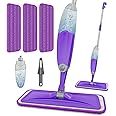
Recommended pick for fast floor touch-ups
HOMTOYOU Spray Mop for Floor Cleaning
A better fit for smaller homes and low-setup maintenance than for heavy whole-house floor work. This is the kind of tool that gets used because the barrier to starting is low.
- Useful for kitchens, entryways, hallways, and visible sticky messes.
- Strong when a bucket feels excessive for the size of the problem.
- Works best as a repeat-use convenience tool, not a universal mop replacement.
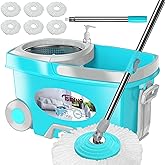
Recommended pick for larger sealed hard-floor homes
Spin Mop and Bucket System, Mop and Bucket with Wringer Set
This category makes sense when you need a fuller hard-floor routine that still feels manageable. It is especially helpful once your floor area is large enough that repeated sink trips and hand-wringing start wasting time.
- A stronger fit for medium and large hard-floor layouts than for tiny homes.
- Useful when you want a smoother room-to-room cleaning rhythm.
- Less compelling if your main messes are quick touch-ups rather than fuller floor passes.
3) Microfiber cloths for the highest-frequency cleaning job in the house
Microfiber cloths are easy to underestimate because they are not exciting. That is exactly why they win. Most homes need more fast wiping than deep cleaning: counters, mirrors, faucet splashes, appliance fronts, tabletops, bathroom sink areas, shelf dust, and kitchen edges. A good cloth system improves the most common cleaning task in the house at a very low cost.
They also work because they distribute well. You can keep some in the kitchen, some in the bathroom, and some near the laundry or utility area without dedicating storage to an entire new appliance. That makes them one of the rare tools that suit almost every budget, almost every home size, and almost every routine.
Where people go wrong is not washing them regularly or not assigning them to zones. Once cloths become mixed, damp, or hard to find, their usefulness drops fast. But when you keep a simple rotation, they often become the single most used cleaning item you own.
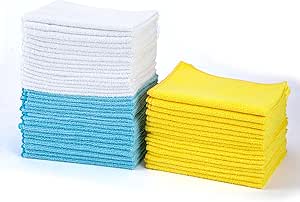
Recommended pick for daily surface cleaning
Amazon Basics Microfiber Cleaning Cloths
One of the best low-cost upgrades for homes that need fast wiping on counters, mirrors, faucet areas, appliance fronts, tables, and other surfaces that visually drift out of control every day.
- Great for kitchen, bathroom, and laundry-zone rotation.
- Useful across multiple rooms instead of solving one narrow problem.
- The key to repeat use is keeping them washed and sorted.
4) Electric scrubber for the room you avoid most
Bathrooms are often where good intentions break down. They are physically awkward, repetitive, and easy to postpone until the buildup becomes much worse. That is why an electric scrubber can be a genuine repeat-use tool in the right home. Not because everyone needs one, but because it reduces one of the most common forms of cleaning avoidance: manual scrubbing fatigue.
This is especially relevant if you have more than one bathroom, hard-water buildup, textured shower surfaces, grout that collects residue quickly, or if bathroom cleaning is the task that consistently gets delayed the longest. In those situations, reducing physical strain can improve consistency more than adding yet another general-purpose tool.
That said, this should not be everyone’s first purchase. If your biggest issue is crumbs or daily surface clutter, there are better first moves. Bathroom scrubbers make the most sense when the bathroom is your real bottleneck, not when you are just trying to buy something that feels productive.

Recommended pick for recurring bathroom friction
LyriFine Electric Spin Scrubber
A strong targeted option when tubs, showers, tile, and grout are the reason cleaning keeps getting postponed. This is less about owning a gadget and more about reducing one specific type of fatigue.
- Best when bathroom buildup returns quickly and manual scrubbing feels discouraging.
- Useful for turning a dreaded room into a manageable one.
- Usually a better third or fourth purchase than a first purchase.
Who Should Skip Some of These Tools
Not every useful cleaning tool is useful for every home. Skipping the wrong category is often smarter than “completing the set.” Here are the most common cases where restraint saves money, storage, and frustration.
Skip a spin mop if you barely have any open hard-floor area
If your home is small and your hard-floor messes are mostly kitchen drips, entryway spots, and quick touch-ups, a spray mop is often the more realistic winner. A larger spin system may clean well and still lose because it takes up more space than your routine justifies.
Skip an electric scrubber if the bathroom is not your bottleneck
An electric scrubber is a strong targeted solution, not a mandatory upgrade. If you clean bathrooms lightly and consistently already, or if your real problem is floors and surface clutter, there are better first purchases.
Skip extra vacuum accessories until you know what you actually use
Attachments are where a lot of households create drawer clutter. If you already own a vacuum, read vacuum accessories that actually improve performance before buying more pieces than your routine needs.
Skip all-in-one promises
One of the fastest ways to buy poorly in this category is to chase the idea of one tool doing everything. Repeat-use systems work better when each tool has a clear job: fast dry floor cleanup, fast wiping, broader hard-floor cleaning, or targeted scrubbing.
Best minimalist setup for many homes: a cordless vacuum + microfiber cloths + either a spray mop or a spin mop, not both at first. Add an electric scrubber only when bathroom friction is what keeps derailing your routine.
Scenario-Based Recommendations
Best setup for apartments and smaller homes
In smaller homes, storage friction matters almost as much as cleaning performance. The safest starting point is usually a cordless stick vacuum and microfiber cloths. Add a spray mop only if hard-floor touch-ups are constant. That trio covers most visible mess without taking over a closet. Apartment dwellers should also read best cordless vacuums for apartments because floor mix, noise, stair use, and storage layout all matter more in compact spaces.
Best setup for families with kids
Families usually do better with tools that remove recurring friction, not tools that promise occasional perfection. A cordless vacuum handles crumbs, dining-area debris, hallway drift, and the constant “Why is the floor messy again?” problem. Microfiber cloths handle counters, table surfaces, bathroom splashes, and appliance fronts. If your kitchen and entryway get dirty fast, a spray mop becomes a very realistic third tool because it allows quick resets before the mess spreads.
Best setup for pet owners
Pet homes are one of the clearest examples of why repeat-use tools matter more than impressive specs. Hair returns fast. Paw messes return fast. Upholstery drift returns fast. A cordless floor tool plus microfiber cloth rotation is often the right base. Add a spray mop when paws, wet spots, or entryway mess are frequent. For a more pet-specific maintenance angle, continue with pet cleaning and organization products.
Best setup for hard-floor-heavy homes
If most of your home is sealed hard flooring, a two-tool floor strategy often makes the most sense: cordless vacuum for dry mess and a spin mop for broader wet cleaning. That combination works because it separates fast daily maintenance from fuller room-by-room floor refreshing. Trying to make one floor tool do both jobs usually leads to disappointment or avoidance.
Best setup when bathrooms are the problem room
When one shower, tub, or tile-heavy bathroom keeps becoming the worst task in the house, stop spreading your budget evenly. Shift it. A scrubber plus a simple microfiber rotation may do more for your cleaning consistency than another floor product ever will. This is especially true if bathroom cleanup gets delayed not because it is technically hard, but because it feels exhausting and unpleasant.
Best setup when your utility or laundry area is slowing everything down
Sometimes the problem is not cleaning power. It is workflow. When the laundry or utility zone is disorganized, every cleaning task feels harder because getting the tool is harder, returning the tool is harder, and cloths or refills are never where they should be. If that sounds familiar, explore best laundry organization & cleaning tools, laundry room storage ideas, and products that reduce laundry time. Better organization often increases repeat use more than another device does.
Common Mistakes That Turn Useful Tools Into Clutter
Mistake 1: Buying a whole cleaning system at once
People often try to solve the feeling of being behind by buying multiple tools in a rush. The problem is that overlap arrives quickly. Now you have two floor tools, extra cloth systems, multiple accessories, and no clear reason to use one over the other. That usually creates confusion and storage pressure instead of a better routine.
Mistake 2: Buying for rare deep cleans instead of frequent messes
The tool that makes the biggest difference is usually the one that helps with the mess you see every week, not the mess you imagine fixing during a once-a-season reset. If your main pain point is pet hair and kitchen debris, a repeat-use floor tool matters more than a highly specialized deep-cleaning gadget.
Mistake 3: Ignoring maintenance discipline
A tool that is never ready stops being useful. Full dust bins, unwashed cloths, empty bottles, dirty mop pads, and dead batteries are some of the biggest reasons people quietly stop using tools that were originally good purchases. You do not need a complicated system, but you do need a reset habit.
Mistake 4: Letting storage decide the outcome after purchase
Storage should be part of the buying decision, not something you figure out later. If the mop needs too much drying space, if the vacuum has nowhere convenient to live, or if the cloths have no clean rotation zone, the tool starts losing before it even proves itself.
Mistake 5: Confusing “useful” with “worth buying right now”
Many cleaning tools are genuinely useful. That does not mean they are the next right purchase for your home. A bathroom scrubber can be a smart buy and still be the wrong first buy. A spin mop can work beautifully and still be unnecessary in a small apartment. Sequence matters more than people think.
Practical buying sequence: start with the highest-frequency mess, then solve the most physically annoying job, then address storage or workflow friction. That order keeps tools useful instead of collectible.
A Realistic Maintenance Routine That Keeps These Tools in Rotation
Buying a better tool helps only if that tool stays easy to use. The good news is that the maintenance side does not need to be elaborate. The goal is not perfect tool care. The goal is preventing readiness friction.
The 10-minute upkeep habit
- After vacuuming: empty the bin when it is noticeably full and put the vacuum back where it is easiest to grab.
- After mopping: rinse or swap the pad immediately instead of leaving it damp until later.
- After bathroom cleaning: charge the scrubber and keep the heads together so the next use starts quickly.
- For microfiber cloths: keep one stack for kitchen, one for bathroom, and one backup stack for laundry or utility use.
- For spray mops: refill before empty, not after empty, so the tool remains grab-and-go.
A realistic 20-minute weekly rhythm
For many homes, a manageable weekly pattern looks like this:
- 3–5 minutes: quick cordless vacuum pass in the highest-traffic zones.
- 4–5 minutes: microfiber wipe-down of kitchen counters, dining table, faucet areas, and appliance fronts.
- 4–5 minutes: spray mop the problem zones or do a broader hard-floor pass with the spin mop.
- 5 minutes: quick bathroom reset, with deeper scrubber use only where buildup is starting to form.
- 1–2 minutes: reset tools so the next use feels easy again.
That routine does not create magazine-level perfection. It creates control. And control is what makes cleaning feel sustainable. The most successful routines are rarely the most aggressive ones. They are the ones people can repeat without resentment.
What to Buy First If You Don’t Want to Waste Money
Start with the tool that matches your highest-frequency mess
If you are constantly bothered by floor drift, start with a cordless vacuum. If the home mostly looks messy because counters, mirrors, sinks, and visible surfaces never stay under control, start with microfiber cloths. If hard-floor touch-ups are the problem, start with a spray mop. If full-room hard-floor cleaning is the problem, step up to a spin mop system.
Second, solve the job you avoid most
This is where people often make smarter progress. Once the daily mess is better managed, buy for avoidance. That often means bathroom scrubbing, not because bathrooms matter most aesthetically, but because they often create the most procrastination. Tools that reduce dread can improve consistency more than tools that merely add capability.
Third, fix workflow and storage
If good tools already exist in your home but still do not get used, the issue may be storage or friction rather than product quality. That is usually when it makes sense to improve organization, laundry-zone access, and tool placement before buying something else entirely.
FAQ
What cleaning tools do people actually use the most?
In most homes, the tools with the highest repeat use are a fast floor-cleaning tool, microfiber cloths, and one low-friction hard-floor solution. That usually means a cordless vacuum, cloth rotation, and either a spray mop or spin mop depending on space and mess pattern.
What is the most useful cleaning tool for home?
For many households, it is a cordless stick vacuum because it handles the most common visible messes with low setup. But usefulness depends on the pain point. If surfaces are the real problem, microfiber cloths may have more day-to-day value. If bathrooms are always behind, a scrubber may create the biggest improvement in consistency.
Are spray mops actually worth it?
Yes, when you use them for the right job. Spray mops are worth it when the mess is frequent, visible, and small enough that a bucket would feel like too much work. They are especially strong in kitchens, entryways, and smaller homes. They are less compelling when you expect them to replace a fuller whole-home hard-floor routine.
Is a spin mop better than a spray mop?
Not universally. A spin mop is better for broader hard-floor cleaning and room-to-room floor work in medium or larger layouts. A spray mop is better for low-setup spot cleaning and faster in-between maintenance. The better choice depends on how much floor you clean and how often the mess happens.
Do electric scrubbers actually save time?
They can, but mainly when bathroom scrubbing is what keeps getting postponed. Their biggest value is often not pure speed. It is reducing fatigue and making the task feel less punishing. If bathrooms are already under control with light maintenance, the scrubber may not be a high-priority buy.
Are microfiber cloths really worth buying if I already use paper towels?
For many homes, yes. They are reusable, versatile, and better suited to a cleaning system where you want something ready in multiple rooms. Their real advantage is not novelty. It is frequency. They improve the jobs that happen every day.
How many cleaning tools does a normal home really need?
Usually fewer than people think. A practical setup for many homes is three to five good tools: one fast floor tool, one surface-wiping solution, one realistic hard-floor option, and one targeted tool for the toughest room. The goal is not owning more. The goal is owning the right few.
Should I buy a robot vacuum instead of a cordless vacuum?
That depends on your layout and how you clean. Robot vacuums help with automated maintenance. Cordless vacuums offer more direct control and usually handle stairs, corners, edges, spot cleanups, and furniture areas better. If you are stuck between them, the clearest next read is cordless vacuum vs robot vacuum.
What cleaning tools are best for small apartments?
Small apartments usually do best with low-footprint, high-frequency tools: a cordless vacuum, microfiber cloths, and a spray mop if hard-floor touch-ups happen often. Anything bulky or awkward to dry and store tends to underperform in small spaces, even when it cleans well on paper.
Final Verdict
The cleaning tools you actually use are not the ones that sound the most impressive. They are the ones that fit the pace of ordinary life. They make small jobs stay small. They lower the effort of starting. They are easy to reach, easy to reset, and tied to messes that happen often enough to justify their place.
For most households, the smartest path is simple: start with the mess that shows up most, buy the tool that makes that job easier to do right away, and do not confuse “useful in theory” with “worth the space in my home.” If you want the broader system-building version of this topic, continue with best home cleaning tools that save time. If your interest is more about preventing buildup and avoiding outsourced cleanup later, the best companion piece is cleaning tools that help you avoid expensive services.
Amazon Disclosure
As an Amazon Associate, Buyers Choice Lab may earn from qualifying purchases. That means this page may generate a commission at no extra cost to you. The purpose of this guide is not to push more products into your home. It is to help you choose tools that match real cleaning routines, reduce friction, and earn repeat use instead of becoming clutter.