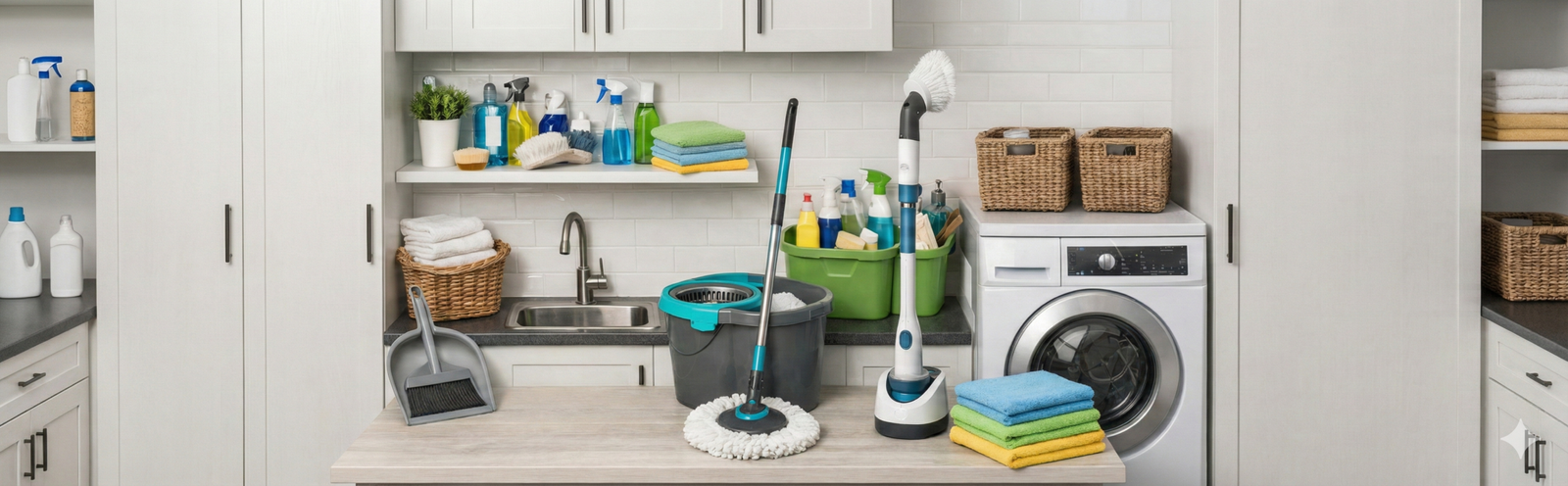
Cleaning takes forever for one simple reason: most homes are still using the wrong tools for the wrong jobs. People often assume the solution is to clean harder, clean longer, or buy a bigger appliance. In real life, the opposite is usually true. The fastest cleaning routine comes from reducing friction: fewer setup steps, less bending, less wringing, less dragging equipment around, and fewer products that sit in a closet because they are annoying to use.
That is exactly where this guide comes in. This is not a generic roundup full of novelty gadgets that look clever on social media and disappoint by week two. It is a practical guide to the best home cleaning tools that save time when you are dealing with actual daily messes: pet hair on the floor, bathroom buildup, crumbs in the kitchen, sticky spots near the entryway, fingerprints on appliances, and the endless feeling that the house resets back to “messy” almost immediately.
The goal here is simple: help you build a cleaning setup that makes everyday upkeep faster, easier, and more repeatable. Some tools are best for apartments. Some are better in family homes with lots of hard flooring. Some are most useful only when one room keeps becoming the problem room. By the end, you will know which tools actually deserve space in your home, which ones are easiest to skip, and which order makes the most sense when you do not want to overspend.
Quick Answer / TL;DR
The best home cleaning tools that save time are the ones that make you more likely to clean before the mess gets big. For most households, that means one fast floor-cleaning tool, one strong bathroom tool, one easy surface-cleaning tool, and one backup option for quick spot messes.
- Cordless stick vacuum: best for fast daily floor resets, crumbs, pet hair, corners, and quick cleanup without dragging out a full-size machine.
- Spin mop with bucket system: best for larger hard-floor areas where hand-wringing and repeated sink trips waste time.
- Electric bathroom scrubber: best for tubs, showers, grout, and tile where manual scrubbing takes the longest.
- Microfiber cloths: best low-cost upgrade for counters, glass, appliances, and everyday wiping with less streaking and less waste.
- Spray mop: best for small homes, fast touch-ups, and in-between cleanings when a bucket feels like too much work.
Why Most Cleaning Tools Don’t Actually Save Time in Real Life
A lot of cleaning tools fail for the same reason a lot of home gadgets fail: they solve a fantasy version of the problem instead of the real one. On paper, a product may promise less effort, faster cleaning, or “deep-cleaning performance.” But in day-to-day life, the tool only saves time when it removes steps from your routine rather than adding new ones.
Here is what usually goes wrong:
1. The setup is too annoying
Anything that requires too much assembly, filling, plugging in, dragging out, untangling, or cleanup after use becomes a “later” tool. And “later” almost always means the mess gets worse first.
2. It is trying to do the wrong job
Some tools are excellent for deep cleaning but terrible for daily maintenance. Others are perfect for quick resets but not powerful enough for neglected buildup. When people expect one tool to handle every situation, disappointment is almost guaranteed.
3. It creates storage friction
Bulky tools are less likely to be used frequently, especially in smaller homes. That matters because the time-saving value of a cleaning tool depends heavily on how often you can grab it without thinking. A decent tool that is easy to access often beats a stronger one that stays hidden in a closet.
4. It saves labor but not total time
Some products reduce physical strain but still involve too many steps overall. Others clean well but require so much rinsing, pad changing, brush cleaning, or reassembly that the total time savings disappear. This is especially common in the bathroom and on hard floors.
5. The marketing focuses on novelty instead of repeat use
The tool that wins in a real home is not usually the one with the flashiest feature. It is the one that reduces friction enough that you keep using it on Monday, Thursday, and Sunday without turning cleaning into a project.
That is also why this guide is intentionally different from a “look at these cool products” article. For a cost-saving angle, the better next read is cleaning tools that help you avoid expensive services. For a more ruthless filter focused on repeat use, see cleaning tools you actually use in real life. This page is broader: it is about building a faster whole-home cleaning system, not just buying more stuff.
The 5F Filter: A Better Way to Choose Time-Saving Cleaning Tools
Before looking at specific picks, here is the framework that matters most. The fastest homes are usually using tools that score well in five areas. Think of this as the 5F Filter:
This filter is useful because it stops you from overbuying. A tool may be excellent in one category and still be a poor fit for your home. A spin mop can save a lot of time on sealed hard floors, but it is less compelling in a tiny home with barely any open floor. A cordless vacuum is often a huge win, but not every household needs it as the first purchase. A spray mop is convenient, but it should not be treated like a true replacement for every floor-cleaning situation.
For anyone trying to simplify instead of accumulate, this is the real test: does the tool make you more likely to clean the area before it becomes a bigger job? When the answer is yes, that is where time savings become real.
Who This Guide Is For — and Who Should Skip It
This guide is a strong fit for:
- Busy households that need faster maintenance, not showroom-level perfection every day
- Apartment dwellers who cannot afford bulky, awkward tools
- Families with kids, pets, or high-traffic entryways where messes return fast
- Anyone tired of turning simple cleanups into a full weekend task
- People trying to build a small, useful system rather than collect a closet full of underused gadgets
Who should skip some of these tools:
- Homes with very little hard flooring may not need both a spin mop and a spray mop.
- People who already have a floor-cleaning setup they use consistently may get more value from better accessories than from another appliance. In that case, this guide on vacuum accessories that actually improve performance is often more useful than buying a second vacuum-related product.
- Tiny homes with almost no storage need to be especially strict about footprint. In those spaces, multipurpose items and low-bulk tools usually win.
- Anyone chasing the absolute cheapest option no matter what may end up spending less upfront but more time every week.
In other words, “best” depends on your floor types, mess patterns, storage reality, and tolerance for maintenance. The right tool is not the most powerful one on paper. It is the one that fits how your home actually gets dirty.
The Best Home Cleaning Tools That Save Time, by Real-Life Job
The strongest way to shop this category is by pain point, not by hype. Most people do not need “the best gadget.” They need a faster way to handle the one cleaning task that keeps dragging their routine down. That is why the picks below are organized by job.
1) Cordless stick vacuum for fast daily floor resets
For many households, this is the biggest time-saving upgrade of the entire list. A cordless stick vacuum is not necessarily the deepest-cleaning machine you will ever own, but it is often the fastest way to deal with everyday dirt before it spreads. That matters more than people think. Crumbs do not stay in the kitchen. Pet hair does not stay in one room. Dust shows up in corners, around table legs, on stairs, and near entryways in patterns that reward speed more than brute force.
The reason cordless vacuums save time is simple: they remove the “do I really want to deal with this right now?” moment. There is no cord to manage, no heavy canister to drag around, and less resistance between seeing the mess and fixing it. In a real home, that often means the difference between doing a two-minute reset today and doing a 25-minute clean later.
A cordless model is especially valuable in apartments, mixed-floor homes, homes with pets, and any setup where fast repeated use matters more than giant dust capacity. For a narrower category-specific breakdown, see the guide to best cordless vacuums for apartments. For shoppers deciding whether automation would be a better fit, the comparison at cordless vacuum vs robot vacuum helps clarify where each type wins.
The main caution: a cordless vacuum is a maintenance tool first and a heavy-duty deep-cleaning tool second. That is not a weakness when you buy it for the right reason. It is exactly what makes it useful. It saves time because it encourages cleanup before the job becomes big.

Cordless Vacuum Cleaner, Upgraded 650W 55KPA 70Mins Cordless Stick Vacuum
Best for homes that need fast floor resets several times per week and do not want to drag out a larger machine for every small mess.
- Useful for crumbs, pet hair, corners, stairs, and quick room-by-room touch-ups
- Most valuable when convenience matters more than oversized capacity
- Fits households that clean often in short sessions
One more practical note: a lot of people buy vacuum accessories they never use. Before adding more attachments than you need, read vacuum accessories that actually improve performance. That guide is especially useful for avoiding drawer clutter disguised as convenience.
2) Spin mop with bucket system for larger hard-floor homes
A spin mop with bucket system is one of the most underrated ways to save time on sealed hard floors. People sometimes dismiss it because it looks old-school next to newer gadgets, but that misses the point. In homes with a lot of tile, vinyl, or laminate, the time loss usually comes from bending, wringing, uneven water control, and repeated interruptions. A good spin system cuts out much of that friction.
This kind of tool becomes more valuable as floor area increases. In a small apartment, a spray mop may be enough for most touch-ups. In a house with larger open zones, the math changes. A spin mop covers more ground, handles more moisture control, and usually feels less repetitive when the goal is to clean the whole floor instead of one spill.
Its biggest strength is not glamour. It is rhythm. Dip, spin, mop, move on. That simple cycle is efficient because it keeps the cleaning flow going. For hard-floor-first homes, that can save far more time over a month than a “smarter” product that requires constant refilling or repeated trips back to the sink.
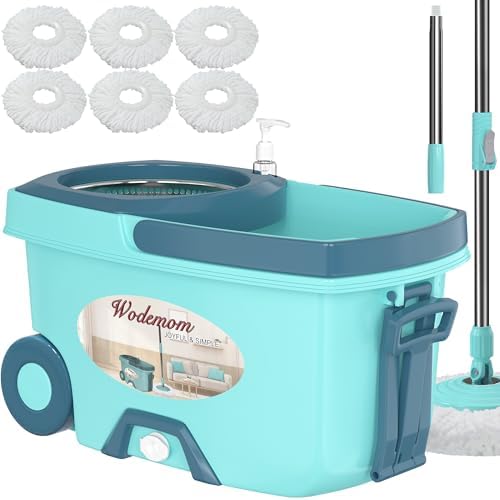
Spin Mop and Bucket System, Mop and Bucket with Wringer Set
Best for sealed hard-floor homes where a quick wipe is not enough and hand-wringing mops slow the whole job down.
- More useful in medium and large floor plans than in tiny spaces
- Helps keep the floor-cleaning rhythm consistent room to room
- Strong fit for tile, vinyl, and laminate routines
The biggest reason to skip a spin mop is storage, not performance. If your home is very small, or your main need is spot cleaning instead of full-room floor cleaning, a spray mop may earn its place more easily.
3) Electric bathroom scrubber for the room that steals the most time
Bathrooms are where “cleaning the house” often turns into “I lost 40 minutes scrubbing one room.” That is why an electric bathroom scrubber can be a major time saver in the right home. It is not essential for every situation, but for tubs, tile, grout, shower corners, and recurring buildup, it can remove the most physically frustrating part of the job: repetitive manual scrubbing.
This matters even more for households with more than one bathroom, hard water buildup, textured shower surfaces, or anyone who already avoids bathroom cleaning because it is uncomfortable. When a product reduces fatigue, consistency usually improves. And when consistency improves, the bathroom stops becoming a rescue mission.
An electric scrubber is not the best first purchase for every household. In very light-use bathrooms, it may be unnecessary. But in homes where the bathroom is always the room people dread most, this is the kind of targeted purchase that can make the whole routine feel more manageable.

LyriFine Electric Spin Scrubber
Best for homes where showers, tubs, tile, and grout take too much elbow grease and become the most delayed part of cleaning.
- Most useful when bathroom buildup returns quickly
- Helps reduce repetitive manual scrubbing
- Good fit for people who want less strain in bathroom cleanup
One mistake people make here is assuming every problem needs a powered tool. Bathroom scrubbers make the most sense when you are fighting recurring friction, not just occasional light messes. For a minimalist setup, this tends to be a third or fourth purchase rather than the very first one.
4) Microfiber cleaning cloths for the cheapest upgrade with the highest repeat use
Microfiber cloths are not flashy, but they belong in almost every serious “save time” conversation because they improve the most common cleaning job of all: wiping surfaces. Counters, mirrors, faucets, appliance fronts, tables, shelves, and quick kitchen resets all depend on fast, low-friction surface cleaning. Paper towels work, but they add cost, waste, and often leave you doing more passes than necessary.
Microfiber cloths work best as the low-effort foundation of your cleaning setup. They are especially useful when your main goal is to handle little messes before they become visual clutter. In other words, they are not exciting, but they are the kind of tool that makes the entire house feel easier to maintain.
This is also one of the few tools that makes sense for almost every budget. For many people, the smartest first move is not to buy a big appliance at all. It is to improve the tasks that happen every single day. That is why microfiber cloths often earn more real use than products that cost ten times as much.

Amazon Basics Microfiber Cleaning Cloths
Best for fast daily wiping on counters, appliance fronts, mirrors, tables, and small visible messes that pile up quickly.
- Strong entry point for households that want faster surface cleaning
- Easy to keep in the kitchen, bathroom, and laundry area for repeat use
- Useful across multiple rooms instead of solving just one niche problem
The only real downside is maintenance discipline: microfiber cloths need to be washed regularly and kept reasonably organized. That is still a good trade in most homes because the repeat-use value is so high.
5) Spray mop for quick touch-ups and low-setup floor cleaning
A spray mop is not the best choice for every whole-house floor routine, but it is one of the best choices for making floor cleaning feel less like a project. That distinction matters. Many people avoid floor cleaning not because it is physically impossible, but because setting up a bucket feels disproportionate to the mess. A spray mop solves that gap.
This tool shines in smaller homes, kitchens, entryways, and in-between messes. It is particularly useful when you need to clean now, not later: drips near the sink, muddy paw prints, quick hallway cleanup, dining-area splashes, or the kind of sticky floor patch that becomes more annoying every time you walk past it.
Where people go wrong is expecting it to replace everything else. A spray mop is strongest as a convenience tool, not as the only floor-cleaning tool in a large hard-floor home. Used that way, it can be incredibly valuable because it keeps small messes from becoming bigger ones.

HOMTOYOU Spray Mop for Floor Cleaning
Best for quick spot cleaning, smaller homes, and households that need a low-effort floor tool between fuller cleanings.
- Good for kitchens, hallways, entryways, and visible messes you want gone fast
- Useful when a bucket feels like too much work for the size of the mess
- Strong complement to a spin mop rather than a universal replacement
In smaller layouts, this can be the tool that keeps the floor looking under control most of the week. In larger homes, it is often the “between full cleans” solution that protects your time.
Practical Comparison Table: Which Tool Saves the Most Time Where?
| Tool | Best use | Main time-saving advantage | Less ideal when… | Storage footprint |
|---|---|---|---|---|
| Cordless stick vacuum | Daily floor cleaning, crumbs, pet hair, quick resets | Fast grab-and-go cleanup without cord setup | You need one tool mainly for heavy neglected cleaning | Low to medium |
| Spin mop | Larger hard-floor areas | Covers more floor efficiently with better cleaning rhythm | Storage is tight or you mostly handle small spills | Medium |
| Electric scrubber | Showers, tubs, tile, grout | Cuts down repetitive manual scrubbing | Bathrooms stay lightly soiled and clean easily by hand | Medium |
| Microfiber cloths | Counters, mirrors, appliances, everyday wiping | Improves the most common cleaning task at very low cost | You will not wash and rotate them consistently | Very low |
| Spray mop | Spot cleaning and smaller homes | Minimal setup for fast floor touch-ups | You expect it to replace a full hard-floor routine in a larger home | Low |
The pattern is clear: the best time-savers are not always the strongest tools. They are the ones that match the size of the mess and reduce the number of steps between seeing the problem and handling it.
Scenario-Based Recommendations
Best setup for apartments and smaller homes
Smaller homes usually benefit most from tools with low storage friction. A cordless stick vacuum plus microfiber cloths is often the smartest base setup, with a spray mop added when the kitchen or entryway gets dirty often. In many apartment layouts, that trio handles the majority of visible mess without taking over a closet. For a more focused apartment-specific buying path, read best cordless vacuums for apartments.
Best setup for families with kids or pets
Busy family homes usually need one fast floor tool and one reliable wipe-down system first. That points to a cordless vacuum for repeated resets and microfiber cloths for counters, table spills, appliance fronts, and bathroom surfaces. When pet hair, muddy paw prints, and repeated floor messes are part of the pattern, the spray mop becomes more useful too. For pet-heavy homes, the related guide on pet cleaning and organization products is a strong next step.
Best setup for hard-floor homes
Homes with a lot of tile, laminate, or vinyl often benefit from a two-tool floor strategy: cordless vacuum for dry mess plus spin mop for fuller floor cleaning. That combination works because it separates fast daily maintenance from more thorough hard-floor cleaning. The vacuum handles crumbs, dust, and pet hair. The spin mop handles the broader floor-refresh step without turning it into a sink-to-floor back-and-forth.
Best setup when bathrooms are the worst part of cleaning
When the bathroom is always the bottleneck, shift budget there. A home can stay fairly presentable even with imperfect floors, but a grimy shower or tub makes the whole cleaning routine feel behind. In that case, a bathroom scrubber and microfiber cloth rotation often create the biggest emotional and practical payoff.
Best setup when you already own a vacuum
There is no need to buy another floor machine automatically. Sometimes the better move is optimizing what you already use. That is where vacuum accessories that actually improve performance can help you avoid buying add-ons that sound useful but never leave a drawer. In other homes, it makes more sense to spend the next dollar on bathroom cleaning or faster floor touch-ups instead.
Best setup for overloaded utility and laundry spaces
A lot of people think they need more cleaning power when the real issue is clutter and workflow. When your laundry area, storage zone, or cleaning closet is disorganized, even good tools feel harder to use. That is where the related resources on laundry organization & cleaning tools and products that reduce laundry time can improve the overall routine beyond this article’s core picks.
Common Mistakes That Waste Time Instead of Saving It
Mistake 1: Buying too many tools at once
People often try to “fix cleaning” with a shopping spree. That usually creates overlap, storage problems, and more maintenance than expected. The better move is to solve one recurring pain point first, then add only what fills a real gap.
Mistake 2: Choosing based on specs instead of routine
More power, more features, more attachments, and more accessories do not automatically lead to a faster routine. The best tool is the one you will actually reach for without hesitation.
Mistake 3: Expecting one tool to do every job
A cordless vacuum is not a spin mop. A spray mop is not a full-floor deep-cleaning solution for every house. An electric scrubber is not necessary in every room. When people force a tool into the wrong job, it feels worse than it should.
Mistake 4: Ignoring maintenance after the purchase
Even the right tool becomes frustrating when the pad stays dirty, the battery is never charged, the cloths are all in the wash, or the vacuum is always full. Low-maintenance habits matter almost as much as the purchase itself.
Mistake 5: Treating visible mess as the only trigger
The fastest homes are usually cleaned in small predictable moments, not only when things look bad. Waiting until every room visibly needs attention makes the job feel bigger and encourages avoidance.
That is why the most useful products are often the ones that shorten the distance between “I noticed a mess” and “it is already handled.”
A Realistic Maintenance Routine That Keeps These Tools Helpful
Buying better tools only helps when the tools themselves stay easy to use. The good news is that maintenance does not need to become a chore. A simple rhythm is enough:
The 10-minute upkeep system
- After vacuuming: empty debris when it is noticeably full and put it back where you can reach it fast next time.
- After mopping: rinse or swap the pad instead of leaving it damp and forgotten.
- After bathroom cleaning: recharge the scrubber and store the heads together so the setup stays simple next time.
- Microfiber rotation: keep a small stack in the kitchen and another in the bathroom; wash them regularly so you are not hunting for a clean one.
- Spray mop: refill before it is completely empty so it stays a grab-and-go tool instead of becoming a “later” task.
This is one of the hidden truths of time-saving cleaning: tools save the most time when they stay in ready-to-use condition. The minute they become “I also need to deal with that first,” their advantage starts disappearing.
A simple 20-minute weekly rhythm
For most busy homes, a workable pattern looks like this:
- 3–5 minutes: cordless vacuum through the highest-traffic areas
- 4–5 minutes: wipe kitchen counters, dining table, and appliance fronts with microfiber cloths
- 4–5 minutes: spray mop kitchen and entryway or do a broader hard-floor pass with the spin mop
- 5 minutes: quick bathroom reset, then deeper scrubber use only where buildup is starting
- 1–2 minutes: reset the tools so they are ready again
That kind of routine does not create a “perfect” house. It creates a house that is much easier to keep under control. And that is where the real time savings show up.
What to Buy First When You Don’t Want to Overspend
The best buying sequence depends on the type of frustration you are trying to remove. Here is a practical order that fits most homes:
Tier 1: Start with the highest-use tools
For many households, that means microfiber cloths first and then either a cordless vacuum or spray mop, depending on which daily mess bothers you most.
Tier 2: Solve the biggest recurring floor problem
Lots of hard flooring points to a spin mop. Constant crumbs and pet hair point to a cordless vacuum. Small-space sticky messes point to a spray mop.
Tier 3: Target the room you avoid most
When one bathroom keeps becoming a dread task, that is when an electric scrubber makes more sense.
This order matters because it keeps you from building an expensive system around tasks that are not actually slowing you down. A smaller, well-used setup is almost always better than a larger collection with weak follow-through.
FAQ
What is the single best cleaning tool for saving time?
For many homes, it is a cordless stick vacuum because it handles the most frequent visible messes with the least setup. That said, households with large hard-floor areas may get more weekly value from a spin mop.
Is a spray mop enough for the whole house?
In smaller homes, sometimes yes. In larger hard-floor homes, it usually works better as a touch-up tool between fuller cleanings rather than as the only floor-cleaning solution.
Is a spin mop better than a spray mop?
Not universally. A spin mop is better for broader hard-floor cleaning and repeated room-to-room floor work. A spray mop is better for fast spot cleaning and lower setup friction.
Are microfiber cloths really better than paper towels?
For many recurring surface-cleaning tasks, yes. They are reusable, often more efficient for repeat wiping, and better suited to a system where you want tools ready in multiple rooms.
Should you buy a robot vacuum instead of a cordless vacuum?
That depends on how your home is laid out and how you clean. A robot helps with automated maintenance, while a cordless vacuum gives more direct control and is usually better for stairs, corners, furniture edges, and quick response cleaning. The guide on cordless vacuum vs robot vacuum breaks this down in more detail.
How many cleaning tools does a typical home actually need?
Usually fewer than people think. For many homes, three to five good tools are enough: one fast floor tool, one surface-wiping system, one hard-floor deeper-clean option, and one targeted solution for the toughest room.
What is the best setup for pet hair and daily debris?
A cordless vacuum plus microfiber cloths is a strong starting point. Add a spray mop when paws, drips, or entryway messes are part of the routine. For more pet-specific cleaning help, the guide on pet cleaning and organization products is the next logical read.
What matters more: cleaning speed or cleaning power?
For maintenance, speed usually matters more. A powerful tool that is annoying to use often loses to a more convenient tool that gets used consistently. The fastest routine is the one you actually keep doing.
Final Verdict
The best home cleaning tools that save time are not the ones with the most features. They are the ones that remove friction from the cleaning tasks you face most often.
For most households, the smartest path is this:
- Start with microfiber cloths if everyday surface clutter is the main problem.
- Start with a cordless stick vacuum if floors, crumbs, and pet hair constantly make the house feel messy.
- Add a spin mop when you have enough hard flooring that spray-only cleaning starts feeling incomplete.
- Add a spray mop when quick floor touch-ups matter more than broader floor-cleaning capacity.
- Add an electric bathroom scrubber when the bathroom steals more time and energy than every other room combined.
That is the real takeaway: buy for the part of cleaning that keeps getting postponed. That is where time is actually being lost.
For related angles, continue with cleaning tools you actually use in real life for a more minimal list, or cleaning tools that help you avoid expensive services for a more cost-saving approach. Together, those pieces help separate true repeat-use tools from the products that only sound useful at checkout.
Amazon Disclosure
As an Amazon Associate, Buyers Choice Lab may earn from qualifying purchases. That means this page may generate a commission at no extra cost to you. The goal of this guide is not to push more products into your home. It is to help you choose tools that fit real cleaning routines, solve real friction, and earn repeat use.