
Not every compact tool deserves drawer space. The best ones get used because they remove friction from cooking instead of adding more of it. They are fast to grab, easy to clean, simple to store, and helpful enough that you reach for them again next week without having to convince yourself.
That is the real standard for a worthwhile gadget in an American home kitchen. It is not novelty. It is not “smart” branding. It is not whether a product looks impressive in a social clip. It is whether it makes a repeated task easier in a kitchen where time, counter space, and cleanup all matter. That is especially true if you live in an apartment, cook on weeknights, share your kitchen with family, or simply do not want cabinets filled with tools you regret buying.
This page is intentionally narrower than a giant roundup. If you want a broader shopping list, start with our bigger guide to kitchen gadgets for everyday cooking. If your main goal is saving minutes during dinner prep, see these kitchen tools that save time for busy families. Here, the job is different: focus only on compact tools that are realistic to keep using in a normal routine.
Quick answer / TL;DR
The small kitchen tools that tend to earn permanent space are the ones tied to repeat tasks: checking doneness, trimming and opening, weighing ingredients, speeding up vegetable prep, and handling small drink-mixing jobs without dragging out a machine.
In this group, the most practical picks are an instant-read meat thermometer, a handheld milk frother, multi-purpose kitchen shears, a digital food scale, and a compact vegetable chopper. Each one solves a common task with low setup, low cleanup, and very little storage demand.
If a gadget only helps once in a while, only works for one oddly specific ingredient, or makes cleanup harder than the task it replaces, it is much more likely to become drawer clutter than a daily helper.
Why most compact kitchen gadgets fail in real life
Small tools do not fail because they are small. They fail because they are usually sold on possibility instead of routine. A product can sound useful in theory and still be a bad fit for everyday use. That is how people end up with drawers full of one-job tools they forget exist.
The most common reason a gadget gets abandoned is that it solves a problem you do not actually have often enough. A tool that only helps twice a month is competing with every spoon, knife, pan, and board you use every week. Most gadgets lose that fight. If a product does not line up with a repeated task, it is borrowing space from something more useful.
Cleanup is the second big reason. Many products save ten seconds during prep and then demand three extra minutes of disassembly, washing, drying, and reassembling. That is not a time-saver. It is a friction-shifter. The task feels easier in one moment and more annoying the minute you finish eating. Over time, people stop reaching for those tools because the “benefit” comes with too much hassle attached.
Storage is the third reason. A compact item can still be a bad use of space if it has an awkward shape, fragile pieces, or no obvious home. In small kitchens, every drawer has a cost. The best compact gadgets are not just small in absolute terms. They are easy to put away without creating a storage puzzle.
And finally, many gadgets fail because they add decision-making. If a tool needs a manual, a special technique, or mental effort to remember why you bought it, it loses to simpler options. The products that stick are the ones you can use half-awake on a Tuesday night and still feel that they made the job easier.
The practical rule: a kitchen gadget should reduce effort across the whole task, not just one step. That means setup, use, cleanup, and storage all have to feel light enough that the product fits real life instead of interrupting it.
A better way to judge small tools: the Weekly Friction Filter
Most roundup posts organize gadgets by category. That is useful for shopping, but it is not the best way to decide what belongs in your own kitchen. A better filter is to ask whether the tool lowers friction in a task you already repeat. That is the logic behind what we call the Weekly Friction Filter.
This filter explains why a thermometer can beat a flashier appliance. It is tied to a repeated cooking decision. It is quick to use. It stores easily. It replaces guesswork. The same logic is why a simple pair of kitchen shears can outperform a long list of trendier tools. They help with chores that show up again and again.
When you use this framework, shopping gets easier. Instead of asking whether a tool looks clever, you ask whether it meaningfully lowers the effort of a repeated job. That is the difference between a kitchen that feels efficient and a kitchen full of tiny regrets.
Side-by-side: the compact tools most likely to stay in rotation
Notice the pattern: every tool in this list either reduces uncertainty, reduces repetitive effort, or reduces the need to pull out something larger. That is what makes them different from novelty gadgets. They do not exist to impress. They exist to shorten the annoying part of a task you already do.
The compact tools worth keeping
1) Instant-read meat thermometer
This is one of the clearest examples of a small gadget that earns its keep. It solves a repeated decision: is the food done yet? That matters more than people think. Guessing usually leads to one of two outcomes: undercooked food that creates anxiety or overcooked food that wastes money and effort. A thermometer turns a vague judgment into a quick check.
It keeps getting used because it does not demand a new cooking style. You are already cooking chicken, steak, or pork. This tool simply makes the decision point faster and more reliable. That is exactly what a good compact gadget should do: fit into the routine you already have rather than asking you to create a new one.
It is especially useful for home cooks who do not want to cut into food to check doneness or second-guess themselves at the stove. For beginners, it builds confidence. For experienced cooks, it adds consistency. And in a busy household, consistency is often more valuable than culinary theater.
Who should skip it? Mostly people who rarely cook proteins at home, or people whose meals are heavily centered on soups, reheating, and prepared foods. For everyone else, it is one of the strongest “small but actually useful” buys in the kitchen.

Featured pick
Instant-Read Meat Thermometer
A compact digital thermometer designed to give temperature readings quickly, so you can cook with less guesswork and more confidence.
- Best for chicken, steak, and pork
- Good fit for busy home cooks
- Useful when food-safety confidence matters
2) Handheld milk frother
A handheld frother is the kind of tool that makes no sense for some households and perfect sense for others. That is exactly why it belongs on a list like this. In the right kitchen, it becomes part of the morning routine almost immediately. In the wrong kitchen, it is pointless. The difference is whether you regularly make coffee drinks, mix matcha, or stir small shakes without wanting to pull out a full blender.
Its biggest strength is that it handles small jobs without the overhead of a machine. That matters. A blender can do more, but people often avoid it for single-serving tasks because of noise, bulk, and cleanup. A frother is the opposite: quick, tiny, and easy to put away. That makes it one of the few beverage gadgets that truly belongs in a small-space kitchen.
This is also a good example of how “small” can mean better, not lesser. If your goal is a single cup, a simple whisking tool can be more realistic than a countertop appliance. You are not choosing the most powerful option. You are choosing the one you will actually use before work, before school drop-off, or while trying to keep the sink from filling up.
Who should skip it? Anyone who never makes coffee drinks at home, anyone who already defaults to a blender for every shake, or anyone who dislikes single-purpose beverage tools. But for coffee-first households, it is one of the easiest wins on this list. If that is your lane, you may also want to browse our coffee accessories guide for home baristas.
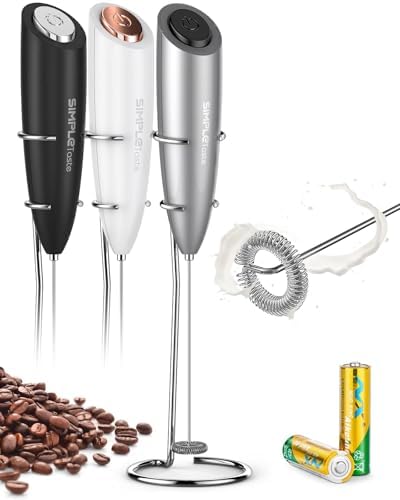
Featured pick
Handheld Milk Frother
A small frother for coffee, matcha, and quick mixing that is easy to store and easy to grab for short daily routines.
- Best for morning coffee routines
- Useful for protein shakes and matcha
- Easy fit for small kitchens
3) Multi-purpose kitchen shears
Kitchen shears are often underestimated because they do not feel like a gadget in the flashy sense. But that is part of why they get used. They solve small, annoying tasks all week long: trimming, snipping, opening, and cutting without forcing you to pull out a knife and board every time.
That matters most on busy nights, when the real goal is not perfect knife work. The goal is getting dinner moving without adding extra steps. Shears can save time, reduce the need for extra tools, and make certain small tasks feel more direct. That makes them especially valuable for people who cook often but do not want every prep step to become a production.
They also work well in homes where several people use the kitchen. A tool with a short learning curve and many simple uses usually stays in rotation longer than a specialty device. Just make sure the habit side is solid: wash them promptly, keep them dry, and be consistent about how you use them if raw meat is involved. Practical tools last when care stays practical too.
Who should skip them? Mostly people who already own kitchen shears and never touch them. Buying a second pair will not fix a routine problem. But if you do not have a dedicated pair and you regularly prep food, open packaging, or trim ingredients, this is one of the easiest low-cost additions to justify.

Featured pick
Multi-Purpose Kitchen Shears
Durable kitchen scissors built for quick cutting jobs that are faster and simpler than setting up a knife for every small task.
- Good for trimming meat
- Useful for opening packages fast
- Helps with quick food prep
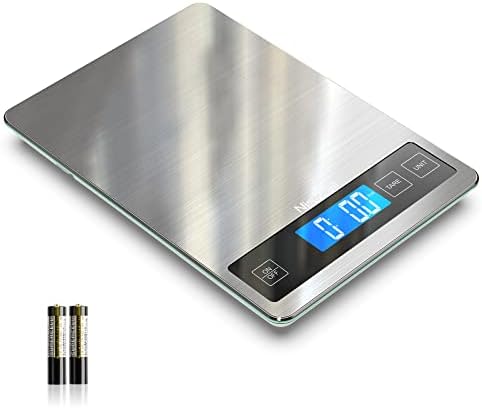
4) Digital food scale
A digital scale is one of the least glamorous tools in a kitchen and one of the most useful for the people who need it. If you bake, portion meals, or want more repeatable results, a scale quietly improves the entire process. It helps because it replaces rough estimating with simple measurement, and it does that without taking much space.
What makes it an “actually used” gadget is that it supports routines that happen often enough to matter. For bakers, it makes consistency easier. For meal-prep households, it supports portioning without guesswork. For anyone trying to reduce measuring-cup clutter, it can simplify prep rather than complicate it. That is a strong sign that the tool is carrying real weight in the kitchen instead of acting like a one-time novelty.
It is also one of the easiest compact tools to store. Slim scales fit into cabinets, drawer stacks, or narrow vertical spaces without much thought. That is a big advantage over bulkier “healthy cooking” tools that promise precision but demand too much room.
Who should skip it? People who never bake, never portion, and prefer loose eyeballing for nearly everything. That is a real use case, and there is nothing wrong with it. But if you have ever repeated a recipe and wondered why it came out differently, a scale is one of the smartest compact tools you can add.
Featured pick
Digital Food Scale
A slim digital scale that helps with baking, portioning, and meal prep when accuracy matters more than rough estimating.
- Best for baking accuracy
- Useful for portioning and meal prep
- Good fit for health-conscious households
5) Compact vegetable chopper
A compact chopper can either feel like a weeknight hero or like an extra item to wash. The difference depends on how often you prep vegetables and how much you value speed over knife work. In the right kitchen, it is not a gimmick. It is a shortcut for the most repetitive part of dinner: chopping a pile of ingredients when you are already low on time.
This is where context matters more than hype. If you cook for a family, batch-prep ingredients, or regularly make meals that start with chopped vegetables, the time savings can feel real. If you only cook tiny portions or enjoy the process of chopping by hand, the benefit narrows. That is why this gadget belongs lower on the list than a thermometer or shears. It can be very useful, but only for the households that truly repeat the task often enough.
Still, it earns a place in many small kitchens because it does real prep work without demanding permanent counter space. For apartment cooks who want help with weeknight meals but do not want another large appliance, a compact prep tool can make more sense than something bulkier. If small-space shopping is your main goal, pair this page with our guide to kitchen gadgets for small apartments.
Who should skip it? Anyone who only cooks quick solo meals, anyone who hates washing cutting blades, or anyone who already does efficient knife prep and does not feel slowed down by it. This is a good tool for repeated vegetable prep, not an automatic fit for every home cook.

Featured pick
Compact Vegetable Chopper
A small manual chopper made to speed up repetitive vegetable prep while taking up less space than a larger countertop machine.
- Best for weeknight meals
- Useful for families that cook often
- Helps reduce prep fatigue
Which type of kitchen gets the most value from these tools?
Apartment kitchens
Small kitchens benefit most from tools that do real work without becoming permanent counter residents. That is why the thermometer, shears, frother, and scale score so well here. They are light on storage and easy to hide between uses. The compact chopper can also work in this setup if you regularly prep vegetables, but it is slightly more dependent on your actual cooking style. If you are trying to build an apartment-friendly setup from the ground up, compare this page with our broader home and kitchen gadgets roundup and the more focused apartment guide linked above.
Busy families
Families usually get the most value from tools that reduce repeated friction. That means the thermometer for proteins, shears for small prep and packaging jobs, and the chopper for faster weeknight prep. These are not glamorous purchases, but they support the kind of repetition family kitchens deal with all the time. That is exactly why they keep getting used.
Coffee-first households
If mornings are driven by coffee routines, the frother becomes much more valuable than it looks on paper. A simple beverage tool can be worth more than a larger multipurpose machine if it matches how the household actually starts the day. In that scenario, the frother is not a niche item. It is a routine shortcut.
Meal-prep cooks
Meal-prep households usually benefit most from the scale and chopper, with shears as a supporting tool. The reason is simple: these homes repeat cutting, portioning, and packaging steps often enough for small efficiencies to compound. A tool that saves only a little time per session can still become valuable when the routine repeats every week.
Beginner cooks
Beginners often get the most value from tools that improve confidence. That makes the thermometer especially strong. It lowers the stress around doneness and reduces trial-and-error. A scale can do the same thing for baking and portioning. These are helpful because they remove uncertainty instead of adding complexity.
Who should skip most small gadgets?
Not every home needs more compact tools. In fact, one of the best ways to save money and keep a kitchen calmer is to buy fewer gadgets overall. If you cook rarely, order in often, or rotate through a very small list of easy meals, you probably do not need five more little tools to manage.
You should also be careful if you are attracted to gadgets mostly because they look clever. That is the fastest path to clutter. The more specific a tool becomes, the more often it turns into a storage problem. If the product is built for one narrow task, it has to solve that task extremely well and show up often in your routine. Otherwise, it is taking up mental and physical space without giving much back.
And if you already own a version of the tool but never use it, do not assume a newer one will fix the issue. Sometimes the problem is not the product. It is that the task was never common enough in your kitchen to justify the tool in the first place.
Common mistakes people make when buying compact kitchen tools
- Buying for fantasy cooking instead of real cooking. If you imagine elaborate prep but mostly make quick dinners, your purchases should reflect quick dinners.
- Ignoring cleanup. A gadget is not efficient if washing it is more annoying than doing the task manually.
- Overvaluing novelty. Single-purpose tools often feel fun on day one and unnecessary by week three.
- Forgetting storage math. Small kitchens make every drawer more valuable. Compact tools still need a home.
- Buying overlap. If another tool in your kitchen already handles the job well enough, a new gadget has to be clearly easier to justify itself.
- Confusing “possible” with “likely.” Many products can be useful. Far fewer are likely to become part of your actual weekly routine.
This is also why cluster differentiation matters. Pages about broad “best gadgets,” pages about apartment kitchens, pages about time-saving tools, and pages about small tools that stay in rotation should not all say the same thing. They serve different decisions. This page should help readers narrow down what is worth keeping when space and routine are the real constraints.
A simple maintenance routine so these tools stay convenient
The best compact tools only stay useful if they stay easy to grab. That means maintenance should be just as low-friction as the tool itself. A thermometer should be wiped down and stored where it is visible. Shears should be washed promptly and kept in the same spot every time. A scale should be stored flat so it does not disappear behind heavier items. A frother should be cleaned right after use so it does not become “annoying later.” A chopper should be washed before food dries into the blade area.
The broader point is simple: convenience is not just about the moment of use. It is about whether the product feels ready the next time you need it. When a tool becomes hard to find, sticky, awkward, or buried, its practical value drops fast. Small tools succeed when you can keep them clean, visible, and easy to return to the same place.
A good rule for storage:
If a compact tool does not have an obvious home after a week, that is a warning sign. Either the tool is not worth keeping, or your kitchen is telling you it should not be in regular rotation.
How this page fits the broader kitchen-gadget cluster
This page works best as the “practical keeper” angle inside the cluster. It should not try to be a giant all-purpose Amazon roundup. It should not try to replace a time-saving guide. And it should not become an apartment-only page. Its strength is the narrow promise: show which compact tools earn space because they fit repeated real-life routines.
Readers who want a broader list of shopping ideas can move to best kitchen gadgets for everyday cooking. Readers who want a family-efficiency angle can go to kitchen tools that save time for busy families. Readers who need a smaller-space lens can continue to kitchen gadgets for small apartments. And readers who want a routine-focused companion piece can also see small kitchen gadgets used every day.
That separation matters because it gives each page a clearer job. It also helps readers self-sort. Some want a shopping list. Some want faster family cooking. Some want compact picks that fit a tiny kitchen. This page should stay disciplined and serve the reader who wants fewer, better, more useful small tools.
FAQ
What makes a small kitchen gadget worth buying?
A compact tool is worth buying when it solves a repeated task with less effort across setup, use, cleanup, and storage. The best small gadgets are not just tiny. They are easy enough to use that they fit your weekly routine without adding extra hassle.
Are small gadgets better for apartments than larger appliances?
Often, yes. In apartments, the best tools are usually the ones that do meaningful work without permanent counter space. That does not mean every small gadget is smart. It means the useful ones tend to offer better value per inch of storage than bulkier products that only come out occasionally.
Which compact gadget is the best all-around first buy?
For many households, an instant-read thermometer is the strongest first buy because it improves confidence and consistency without taking up room. A pair of kitchen shears is another very practical first addition because it supports many small tasks instead of only one.
How do I avoid filling drawers with unused gadgets?
Use the Weekly Friction Filter. Ask whether the task shows up often enough, whether cleanup is truly light, whether the tool stores easily, and whether it replaces guesswork or repetitive effort. If the answer is no on most of those points, skip it.
Are single-purpose kitchen tools always a bad idea?
No. They are only a bad idea when the task is rare or the cleanup is annoying. Some single-purpose tools are excellent if they support a daily routine. A beverage frother can be a great example in coffee-first homes. The point is not “never buy single-purpose.” The point is “buy single-purpose only when the purpose shows up all the time.”
What is the biggest sign a gadget will become clutter?
The biggest warning sign is when the product sounds useful but you cannot picture exactly when you will use it next week. If the use case is vague, occasional, or heavily dependent on a fantasy version of your cooking life, the gadget is probably headed for the back of a drawer.
Final verdict
The best compact kitchen tools are not the ones with the loudest marketing. They are the ones that quietly keep showing up in real kitchens because they remove friction from jobs people already do. On that standard, the strongest picks here are the thermometer, shears, and scale, with the frother and chopper becoming especially worthwhile when they match a specific routine.
If your goal is a smarter kitchen, do not start by asking what looks exciting. Start by asking what repeated task feels more annoying than it should. The right small tool is the one that makes that task easier often enough to earn permanent space.
Amazon disclosure
Buyers Choice Lab participates in affiliate programs, including Amazon Associates, which may generate commissions at no extra cost to the reader. That does not change the price you pay. It supports the work involved in researching, comparing, and maintaining these buying guides.
Our editorial process focuses on verified buyer feedback, specs, price history, return policy, and category reputation. You can read more on our affiliate disclosure page.
Shop only for the tools that match your actual routine. That is the simplest way to build a kitchen that works better and stays less cluttered.