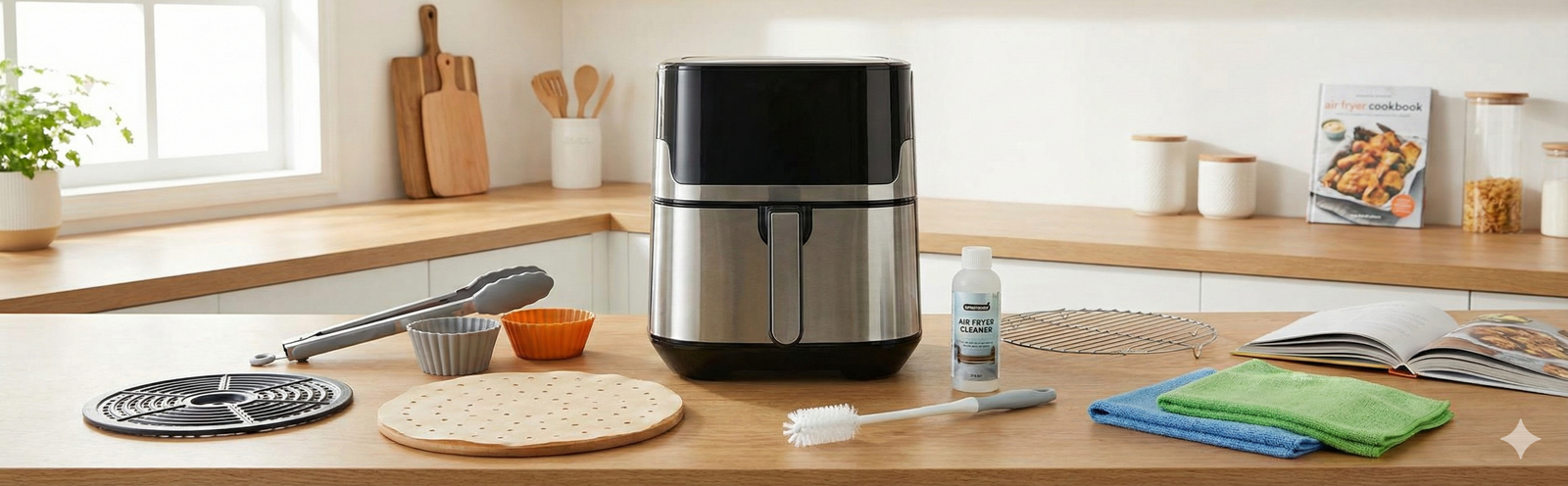

Busy families usually do not need more kitchen gadgets. They need fewer tools that remove the same bottlenecks over and over again: chopping vegetables after work, measuring quickly while a child asks for help, checking whether chicken is done, opening packaging, and finishing small drink or shake tasks without dragging out a full blender. That is the real job of a time-saving kitchen tool. It should reduce friction on a weeknight, not just look clever on a product page.
This guide is intentionally narrower than a broad “best kitchen gadgets” roundup. It focuses on time-saving kitchen tools for busy families and on the routines that actually create stress in a home kitchen: weekday dinner prep, lunchbox prep, meal prep Sundays, quick breakfast assembly, and small-space cleanup. If you want a wider roundup of gadgets by category, you can also browse our best kitchen gadgets on Amazon for everyday cooking, our broader best kitchen gadgets on Amazon guide, and our larger best home and kitchen gadgets on Amazon in 2026 roundup.
The short version: most families get the biggest payoff from tools that reduce repetitive prep, eliminate second-guessing, and stay easy enough to clean that they get used again tomorrow. That usually means practical categories such as a vegetable chopper, a digital kitchen scale, an instant-read thermometer, and a pair of dependable kitchen shears. A handheld frother can also earn its place, but mostly for households that make coffee drinks, protein shakes, or quick mixed drinks often enough to justify the drawer space.
Quick answer / TL;DR
- Best overall time savers: a vegetable chopper for repetitive prep, a digital scale for one-bowl measuring, an instant-read thermometer for faster doneness decisions, and kitchen shears for low-friction multitasking.
- Best family rule: buy tools that solve a task you do at least two or three times per week, not a task that sounds useful in theory.
- Best small-kitchen rule: cleanup and storage matter almost as much as performance. A good tool that is annoying to wash becomes drawer clutter fast.
- What to avoid: novelty multi-tools, oversized gadgets with hard-to-clean parts, and products that duplicate a task you already handle well with a knife, cutting board, or sheet pan.
- Best next step: build a two-tool starter setup first, then add a third tool only if it saves time in a proven weekly routine.
Where families actually lose time in the kitchen
A lot of kitchen buying advice is written as if every home cook spends time the same way. In real family life, that is rarely true. Some homes lose time in prep. Others lose time in cleanup. Others lose time in indecision: Is the chicken done? Did I measure enough rice? Do I really want to drag out the blender for one drink? Before you buy a “time-saving” tool, it helps to understand which kind of time loss you are trying to fix.
Prep drag
This is the daily tax of chopping onions, peppers, cucumbers, fruit, herbs, and lunchbox items one piece at a time. It is not glamorous, but it is where weeknight momentum disappears.
Measurement drag
Scooping, leveling, correcting, and washing measuring cups feels minor until you repeat it across baking, meal prep, sauces, and portioning leftovers.
Decision drag
This is the pause that happens when you do not know if food is done, whether portions are right, or if a shortcut will ruin dinner. Good tools reduce hesitation, not just labor.
Cleanup drag
The hidden cost of a gadget is often not using it. It is washing the parts, drying them, and finding somewhere to store them in a kitchen that is already full.
The best family kitchen tools solve at least one of these problems strongly, and ideally two. A vegetable chopper reduces prep drag and can reduce cleanup if it contains the mess well. A digital scale cuts measurement drag and dishwashing. A thermometer cuts decision drag and can prevent the extra time of overcooking and starting over. That is the lens to use throughout this page.
Why most “time-saving” kitchen gadgets fail in real life
The reason many gadgets end up unused is not that families are lazy. It is that the product solves the wrong problem or solves it in a way that creates new friction. A tool might be fast during the first thirty seconds of use, but slow when you account for assembly, washing, drying, and storage. Another may promise five functions, but do each one badly enough that you still reach for your regular knife, bowl, or pan.
In busy households, products tend to fail for five predictable reasons. First, they save time only in a demo, not in a normal kitchen with interruptions. Second, they handle one “special occasion” task rather than a repeated daily task. Third, they have too many pieces. Fourth, they are bulky enough that getting them out feels like a chore. Fifth, they duplicate something you already do quickly with a simple tool. Those are the exact traps that cause canister sets, novelty slicers, all-in-one breakfast machines, and oversized prep gadgets to collect dust.
That is also why this page avoids pretending there is one magic tool for everybody. The right choice depends on the kind of family routine you are trying to speed up. The answer for a household that meal-preps chopped vegetables every Sunday is different from the answer for a small apartment household that mostly needs faster reheating, portioning, and drink prep. If compact storage is your priority, our guide to small kitchen gadgets that actually get used is a smart companion read.
A simple framework: the Family Friction Filter
Before buying any tool, run it through this five-part filter. A product earns space in a family kitchen only when it passes most of these tests.
- Frequency: Will you use it at least weekly?
- Friction removed: Does it reduce a repeated pain point, not just a rare project?
- Cleanup reality: Is washing and drying it easy enough that you will not regret using it?
- Storage reality: Can it live somewhere accessible, especially in a small or shared kitchen?
- Consistency payoff: Does it reduce mistakes, second-guessing, or rework, not only physical effort?
Comparison table: which type of tool saves the most time for your routine?
| Tool type | Biggest time win | Best for | Skip it if | Cleanup/storage burden |
|---|---|---|---|---|
| Vegetable chopper | Cuts repetitive prep and speeds uniform dicing | Families making soups, salads, taco fillings, stir-fries, lunchbox produce | You mostly cook very simple meals or hate hand-washing blades | Moderate |
| Digital kitchen scale | Speeds measuring and reduces dishes | Baking, meal prep, portioning leftovers, one-bowl recipes | You rarely measure ingredients or mostly eyeball simple dinners well | Low |
| Instant-read thermometer | Reduces doneness guesswork and prevents re-cooking | Chicken, pork, burgers, reheating leftovers, food-safety-minded cooks | You rarely cook proteins and mostly rely on long braises or slow cookers | Very low |
| Kitchen shears | Reduces tool swapping for quick snips and package opening | Families doing lots of quick prep and pantry access | You already own excellent shears that stay in use | Low |
| Handheld frother | Speeds small drink mixing without a blender | Coffee, matcha, cocoa, protein shakes, tiny kitchens | Your household rarely makes mixed drinks | Very low |
The tools most families will actually keep using
Below are the tool categories that make the most sense for this page’s specific job: saving time for busy families. Notice that they are not necessarily the flashiest options. They are the tools that create the best balance of speed, repeatability, and realistic cleanup. That is the combination that prevents buyer’s remorse.
1) Vegetable choppers for repetitive prep
A vegetable chopper is not essential in every kitchen, but it can be a genuine time saver for families who chop the same ingredients repeatedly. Think onions for sauces, peppers for fajitas, cucumbers and strawberries for lunchboxes, or large batches of vegetables for chili, soups, pasta sauce, and sheet-pan dinners. The biggest benefit is not that chopping becomes effortless. It is that prep becomes faster, more uniform, and less mentally draining when you are tired.
This matters because repetitive knife work is one of the first places families abandon their cooking plans. A recipe may look simple, but fifteen minutes of repetitive dicing at 6:15 p.m. feels very different from fifteen minutes of active cooking once dinner is already moving. Uniform cuts also help vegetables cook more evenly, which can make timing easier when you are trying to get protein, vegetables, and a starch on the table together.
Where people go wrong is expecting a chopper to replace all knife work. It will not. It shines when the ingredient size is compatible, when you want repeated cuts, and when you are okay cleaning the blades right away. If your family mostly cooks one onion at a time and nothing else, a chopper may feel like overkill. But if your normal week includes taco night, pasta night, stir-fry night, and lunchbox prep, it can pull its weight quickly.
Best use cases
- Meal prep Sundays with lots of onions, peppers, and salad vegetables
- Families that cook multiple vegetable-heavy dinners every week
- Parents who want more consistent cuts without a lot of knife work after work
When to skip it
Skip this category if you do little vegetable prep, dislike blade cleaning, or already chop quickly and comfortably with a chef’s knife. A chopper saves time only when it gets used often enough to justify the washing and storage.
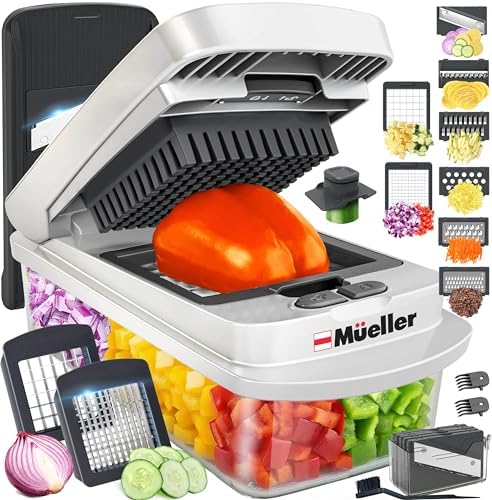
4-in-1 Vegetable Chopper
A compact chopper that dices and slices vegetables evenly in seconds, making it a strong fit for families that do recurring meal prep and want faster weekday prep.
- Useful for onions, peppers, cucumbers, and lunchbox produce
- Helps create more uniform pieces for faster, more even cooking
- Most worthwhile when repetitive prep is your main pain point
2) Digital kitchen scales for faster measuring and fewer dishes
A digital kitchen scale is one of the least exciting tools on this page, which is exactly why it is one of the best. Good family kitchen tools do not need to feel dramatic. They need to remove repeated annoyances. Measuring ingredients directly into one bowl or container reduces clutter, speeds baking, and makes portioning leftovers or lunch components far simpler. That is especially helpful when mornings are rushed or when different family members eat different portion sizes.
Scales are also underrated for weeknight cooking, not just baking. They help when portioning rice, pasta, grated cheese, ground meat, snack servings, or meal-prep containers. That translates to less guesswork, more consistency, and fewer tiny adjustment steps. In practice, many families start using a scale for baking and keep using it because it quietly reduces dishes and repeat measuring.
Where a scale may not help is in a household that mostly cooks intuitive, low-measurement meals and has no interest in baking or portioning. But even then, it can still earn a place if leftovers, lunches, or macro tracking matter. In a small kitchen, a slim scale is also easier to store than an assortment of measuring gadgets.
If you are trying to build a broader compact setup, pair this idea with our guide to small kitchen gadgets that actually get used. If you are shopping more widely beyond just time-saving tools, the larger roundups linked above may help you compare where a scale fits into a complete kitchen toolkit.
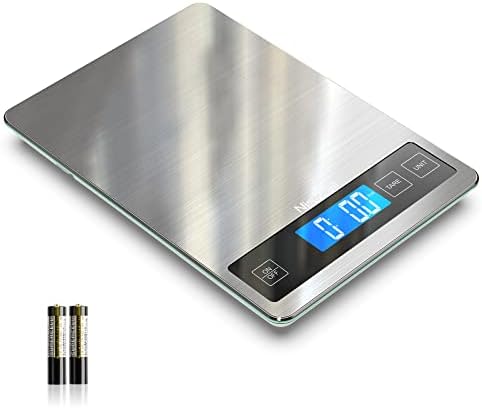
Digital Kitchen Food Scale
A precise digital scale that speeds up baking, portioning, and one-bowl measuring while reducing the mess created by multiple cups and spoons.
- Great for baking, lunch prep, leftovers, and meal-prep containers
- Helps reduce dishwashing by letting you measure straight into one bowl
- Best for households that value consistency more than gadget novelty
3) Instant-read thermometers to reduce guesswork
An instant-read thermometer saves time in a different way from prep tools. It reduces hesitation. That matters more than many people realize. Families lose time when they cut into chicken to check the center, cook “just a few more minutes” to be safe, or hesitate because dinner depends on getting protein right. A thermometer helps you make a faster decision with more confidence, which is a genuine time saver on busy nights.
This is one of the highest-value tools for households that frequently cook chicken breasts, thighs, burgers, pork chops, meatballs, salmon, or reheated leftovers where dryness is a risk. It does not make food cook faster by itself. What it does is prevent the delays created by uncertainty. It also helps prevent the “start over” problem where food gets overcooked, dry, or unappealing and the meal plan falls apart.
For parents who are often juggling homework questions, unloading groceries, and checking on another pan, the ability to take a quick reading and move on is a bigger quality-of-life improvement than a flashy countertop appliance. It is also one of the easiest categories to store and maintain. Wipe the probe, keep it accessible, and it stays useful without demanding much from you.
This is also the tool I would recommend to many families before a more specialized appliance accessory. If you are already cooking regularly in an air fryer, though, the right supporting setup can help too, and our guides to air fryer accessories that improve results and how to choose an air fryer for apartments can help you build that system thoughtfully.

Instant-Read Meat Thermometer
A fast digital thermometer that removes doneness guesswork and helps families cook proteins more confidently without repeated checking or cutting into food.
- Useful for chicken, beef, pork, burgers, and reheated leftovers
- Helps prevent the delay caused by uncertainty and overcooking
- One of the easiest time-saving tools to clean and store
4) Kitchen shears for low-friction multitasking
Kitchen shears are easy to underestimate because they do not look like a dramatic “upgrade.” In practice, they can save more micro-moments than many single-purpose gadgets. They help trim chicken, snip herbs, cut parchment, open stubborn packaging, break down tortillas, and handle quick prep jobs without forcing you to switch tools and wash a cutting board for every small task.
That makes them especially good for busy homes where the cook is frequently bouncing between prep, cleanup, and serving. In many households, kitchen shears are the closest thing to a friction-reducer rather than a true gadget. They are one of the easiest tools to keep near the cooking zone and one of the easiest to justify because they replace lots of tiny pauses and tool swaps.
They are also a smart category for people who do not want more bulk. If you have a small drawer, limited counter space, or a shared apartment kitchen, a good pair of shears may save more real-life time than a larger tool that technically does more. The main caution is hygiene: if you use them on raw meat, clean and dry them thoroughly before using them on herbs, pizza, or packaging again.
This is the kind of humble purchase that often fits well alongside broader apartment-friendly kitchen planning. If that is your situation, the two air fryer guides above and the small-gadget guide can help you avoid crowding your space with too many single-purpose tools.

Heavy-Duty Kitchen Shears
Multi-purpose kitchen scissors for cutting meat, herbs, packaging, and other quick-prep items when you want less tool switching and less counter mess.
- Strong fit for quick trimming, herb snipping, and package opening
- Useful in small kitchens where every drawer item needs to earn its place
- Most valuable when you want simpler, faster everyday kitchen flow
5) Handheld frothers for quick drinks and tiny mixing jobs
A handheld frother is the most niche option in this guide, but it can still be a legitimate time saver for the right household. If someone in your home makes coffee drinks, hot cocoa, matcha, or protein shakes regularly, a small frother can replace the hassle of pulling out a full blender or shaker bottle for every small job. That is the kind of convenience that adds up during chaotic mornings.
This category works best when you are honest about your routine. If your family almost never makes mixed drinks, this is not essential. But if you routinely whisk powders into milk, froth coffee, or make a quick shake before school or work, it can be the kind of small tool that gets used far more often than expected. It is also one of the easiest products on this page to rinse quickly and put away.
The risk is buying it because it seems cheap and cute rather than because it solves a real habit. That is the theme of this whole page: a tool is only time-saving when it removes repeated friction. For some families, a frother absolutely does that. For others, it is the first thing that turns into drawer clutter. Be honest about which group you are in.
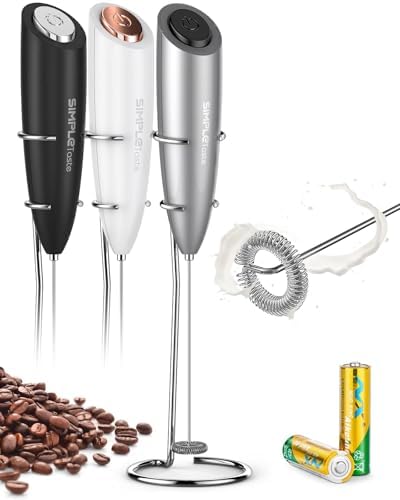
Handheld Milk Frother
A small frother for coffee, hot drinks, and quick mixing jobs when a full blender or shaker feels like too much work for a single serving.
- Best for coffee drinks, cocoa, matcha, and protein shakes
- Useful in households that want fast mornings and minimal cleanup
- Least essential tool here unless drinks are part of your daily routine
Recommended setups by scenario
The best way to avoid can’t-believe-I-bought-that regret is to buy for a specific household pattern. Here are the combinations that make the most sense in real family use.
Weeknight dinner sprint
For families trying to get dinner on the table in roughly thirty minutes, the best combination is usually vegetable chopper + instant-read thermometer + kitchen shears. The chopper handles repetitive produce prep, the thermometer prevents second-guessing on protein, and the shears cover trimming, opening, and quick snipping tasks without creating extra mess. This is the setup for families where dinner stress comes from interruptions and task switching.
Meal-prep Sunday household
If your family does one larger prep session to make the week easier, the strongest pairing is vegetable chopper + digital scale. The chopper speeds bulk produce work; the scale makes portioning containers, snacks, and leftovers faster and more consistent. This pairing is not flashy, but it is often the most efficient in terms of minutes saved across a whole week.
Small apartment kitchen
In apartments or shared kitchens, space changes the math. You should prioritize tools with minimal storage burden: digital scale + kitchen shears + instant-read thermometer. A chopper can still be worth it, but only if vegetable prep is a very regular part of your routine. If you are also comparing appliance-related efficiency, our article on how to choose an air fryer for apartments can help prevent buying something too large or awkward for the space.
Breakfast and drink-heavy household
Families that do lots of coffee drinks, cocoa, smoothies, and quick breakfast mixing may get more out of handheld frother + digital scale than they expect. It is not the highest-impact combination for dinner, but it can remove enough morning friction to justify itself in the right home.
The two-tool starter kit
If you want the safest place to start, I would begin with either thermometer + scale or chopper + thermometer. The first pairing is lower maintenance and lower storage burden. The second pairing saves more hands-on prep time if vegetables are a major part of your meals.
Who should skip these tools?
Not every household should buy all five categories. In fact, most should not. This page works best when it helps you avoid the wrong purchase as much as it helps you find the right one.
- Skip the chopper if you do very little produce prep or already chop quickly without frustration.
- Skip the frother if mixed drinks are not a meaningful part of your routine.
- Skip duplicate shears if you already own a pair that stays sharp and accessible.
- Skip the scale if you truly never measure and do not portion leftovers or bake.
- Skip this whole category hunt if what you actually need is a better weekly meal plan, not another drawer item.
There is also a mindset issue worth naming clearly: some people shop for a tool because they hope it will create a new habit. Usually the reverse works better. Build the habit first, then buy the tool that makes the habit easier to keep. A family that never meal-preps will not suddenly become organized because of a chopper. But a family that already meal-preps will often feel real relief from the right chopper or scale.
Common mistakes busy families make when buying kitchen tools
- Buying for fantasy cooking, not real cooking. If your weeknights are built around quick proteins, chopped vegetables, and one or two pans, buy for that reality instead of the elaborate weekend version of yourself.
- Choosing “more functions” over better flow. A product with six weak functions is often worse than a simple tool that does one job well and cleans up fast.
- Ignoring cleanup burden. Time saved on prep can disappear if blades, lids, and corners take too long to clean.
- Overvaluing aesthetics. Beautiful gadgets that live in a cabinet do not save time. Accessible tools do.
- Buying too many tools at once. Start with one or two high-frequency wins, then add only after you know the first purchases truly help.
- Forgetting storage location. A useful tool stored high up, buried behind appliances, behaves like a useless tool.
- Skipping the broader system. Sometimes the better move is not another gadget but a better companion setup, such as using the right accessories for appliances you already rely on.
A realistic maintenance and storage routine
One overlooked truth about time-saving tools is that maintenance determines whether they keep saving time. Families should not buy kitchen tools that require a whole ritual after every use. At the same time, even good low-fuss tools last longer and feel better when they have a realistic home and a simple care routine.
Keep them near the task they support
Store the scale where you actually bake or portion leftovers. Keep the thermometer in the same drawer as your tongs or spatulas. Keep kitchen shears where you open packaging and prep ingredients. The easier the reach, the more likely the tool becomes part of your routine.
Clean immediately when the tool has blades
Vegetable choppers and shears are the categories most likely to become “I’ll deal with it later” purchases. Later is when food dries, frustration builds, and the product starts feeling like a mistake. If a tool has blades or narrow spaces, wash and dry it right after use if you can.
Do tiny resets instead of big weekend catch-up
Replace batteries in scales or thermometers when displays start fading. Wipe the thermometer probe immediately. Rinse the frother whisk right after the drink is made. These tiny resets take seconds and prevent the bigger annoyance of a tool failing when dinner is already in motion.
Re-evaluate after a month
A useful family rule is simple: if a tool has not earned repeat use after a month of normal cooking, it may not match your routine. That is not failure. It is clarity. Use that insight before buying the next gadget.
How this page fits the broader Buyers Choice Lab kitchen cluster
This article works best as a family-efficiency decision page, not as a giant all-purpose roundup. That is important because kitchen gadget content easily becomes repetitive. If you want broader inspiration, more categories, or a wider shopping view, the best companion resources are:
- Best Kitchen Gadgets on Amazon for Everyday Cooking for a broader everyday-cooking perspective
- Best Kitchen Gadgets on Amazon for a wider gadget roundup
- Best Home and Kitchen Gadgets on Amazon in 2026 for a larger home-and-kitchen overview
- Small Kitchen Gadgets That Actually Get Used if storage efficiency is the main constraint
- Air Fryer Accessories That Improve Results if your family already relies on an air fryer and wants better output from that routine
- How to Choose an Air Fryer for Apartments if you need a compact appliance plan that matches a small-space kitchen
That separation matters. This page should help a reader answer, “Which tools actually save time for my family?” The broader pages can then handle larger category exploration without turning this article into a cluttered, cannibalized roundup.
Frequently asked questions
What kitchen tools save the most time for busy families?
For most families, the highest-impact categories are a vegetable chopper, digital kitchen scale, instant-read thermometer, and kitchen shears. Those tools reduce repetitive prep, measurement clutter, doneness guesswork, and tool switching. A handheld frother can also help, but mostly in drink-heavy households.
Are multi-function kitchen tools better for busy families?
Only when the product is genuinely easy to use and easy to clean. In many cases, busy families do better with a few simple tools that solve one repeated problem very well. A product with too many weak functions often creates more friction than it removes.
How do I avoid buying a kitchen gadget I will not use?
Use the Family Friction Filter: buy only when the tool solves a task you do weekly, reduces real frustration, is easy to clean, stores accessibly, and improves consistency or speed in a visible way.
What is the best first time-saving kitchen tool to buy?
If you want the safest first purchase, start with an instant-read thermometer or digital scale. They have low storage burden, low cleanup burden, and high everyday usefulness. If repetitive vegetable prep is your biggest pain point, then a chopper can be the best first upgrade instead.
Which time-saving kitchen tool is easiest to justify in a small apartment?
Usually a digital scale, kitchen shears, or instant-read thermometer. They take up little space, require very little cleanup, and remove repeated friction without demanding a lot of storage.
Do busy families need a lot of kitchen gadgets?
No. Most families are better served by a small set of well-chosen tools that get used constantly. In practice, fewer reliable tools usually outperform a drawer full of novelty gadgets.
Are Amazon kitchen tools reliable enough for everyday family use?
They can be, especially when you focus on straightforward products with a clear job and avoid gimmicky over-featured items. The best approach is to buy around routine fit, cleanup reality, and repeat use rather than hype.
Final verdict
The best kitchen tools for busy families are not the ones with the longest feature list. They are the ones that shorten repeated tasks, reduce uncertainty, and stay easy enough to clean that you use them again tomorrow. For most homes, that means prioritizing practical categories over novelty.
If your biggest frustration is repetitive vegetable prep, start with the chopper. If you want the easiest low-maintenance improvement, start with the thermometer or the scale. If you want micro-efficiency with almost no storage penalty, add kitchen shears. And if your mornings revolve around drinks and quick mixing, the frother can make sense as a small final add-on.
The winning strategy is not buying everything. It is choosing the one or two tools that remove the friction your family feels every single week.
Amazon disclosure
As an Amazon Associate, Buyers Choice Lab may earn from qualifying purchases. That does not change the price you pay. We recommend products only when they fit the purpose of the page and the routine they are meant to improve.