If you’ve ever wondered how BuyersChoiceLab decides what to recommend, what to avoid, what to update, and what we refuse to claim, this page is the answer. Our goal is not to publish louder indoor air quality content. Our goal is to publish more useful indoor air quality content: guidance that is practical, transparent, and grounded in evidence readers can actually understand.
Indoor air quality content is one of the easiest categories on the internet to exaggerate. It is full of miracle language, vague coverage claims, “best for everyone” rankings, and copy-paste testing claims that never explain what was actually measured, under what conditions, and by whom. That is exactly what we try to avoid. We would rather be clear than flashy, conservative than misleading, and specific than impressive-sounding.
This editorial policy explains how we research air purifiers, HVAC filters, dehumidifiers, humidity-control strategies, and air quality monitors. It also explains how we use standards, how we interpret specifications, how we treat uncertainty, how affiliate relationships fit into our process, and how we decide when a page needs to be updated instead of left online to drift out of date.
At a Glance
Who this page is for: readers who want to understand the standards behind our indoor air quality recommendations before trusting a guide, comparison, or review.
Who this page is not for: anyone looking for made-up “we tested everything ourselves” marketing language, blanket promises, or one-size-fits-all answers.
What we prioritize: verifiable specifications, recognized standards, practical room-fit logic, cost of ownership, reliability signals, and clear explanation of tradeoffs.
What we avoid: fake lab claims, unqualified health promises, copied brand messaging, and recommendations that ignore the realities of room size, humidity, maintenance, and budget.
Why This Policy Exists
Indoor air quality problems are real, but they are often oversimplified. A purifier is not the same thing as ventilation. A better HVAC filter is not the same thing as fixing moisture. A dehumidifier is not the same thing as particle filtration. A monitor can tell you something is changing, but it cannot automatically tell you what device you should buy. Because the category is naturally confusing, it is easy for a website to publish advice that sounds complete while quietly skipping the hardest part: matching the right tool to the right problem.
We created this policy because we want readers to know the rules behind our recommendations. We do not want trust to depend on tone alone. We want trust to come from method. If we say a purifier seems like a better first purchase than a dehumidifier for a particular room, there should be a reason. If we say a stronger HVAC filter is useful only when the system can support it, there should be a reason. If we say a monitor is helpful in some homes and unnecessary in others, that should also come from a framework rather than a sales angle.
This page also serves another purpose: it keeps our own content disciplined. A good editorial standard is not just a promise to the reader. It is a constraint on the publisher. It forces us to ask better questions before publishing: What do we know? What do we infer? What remains uncertain? What are we using as a proxy? Is the recommendation truly useful, or is it merely easy to write?
In short, this policy exists so that our indoor air quality content stays clear, consistent, and honest even as product lines change, manufacturers update specifications, and new devices enter the market with stronger marketing than evidence.
What We Do — and What We Do Not Do
What we do
- Use publicly verifiable specs and recognized standards as a starting point, not as decorative jargon.
- Cross-check claims against credible documentation, reputable educational sources, and independent testing or directories when available.
- Prioritize practical buying factors that affect real ownership: room size fit, noise at realistic settings, filter cost, maintenance burden, warranty clarity, and long-term value.
- Explain tradeoffs instead of pretending a single product is ideal for every home, every climate, and every sensitivity profile.
- Revise content when evidence improves, availability changes, product lines are replaced, or our earlier framing is no longer the clearest path for the reader.
What we do not do
- We do not invent hands-on testing claims, chamber-test language, or performance measurements we cannot document.
- We do not present marketing copy as if it were our conclusion.
- We do not promise medical outcomes, guaranteed allergy relief, or universal comfort improvement from a single device.
- We do not ignore important context such as damp basements, undersized rooms, HVAC limitations, noise tolerance, or replacement-filter costs.
- We do not keep stale “best” pages online unchanged simply because the topic gets clicks.
Our broader philosophy is consistent with Google’s guidance on creating helpful, reliable, people-first content and with Google Search’s documentation on review content. You can read those official references here: Creating Helpful, Reliable, People-First Content and Google Search’s Reviews System.
Our Core Editorial Principles
1) Verifiability over vibe
A recommendation should stand on something stronger than tone. We therefore prefer criteria that a reader can inspect, compare, and revisit: CADR logic, room-size assumptions, filter type, MERV context, humidity ranges, warranty language, replacement costs, sensor transparency, and known maintenance requirements. We understand that not every product category offers perfect standardized metrics, but we still prefer evidence that is inspectable over claims that are merely persuasive.
2) Conservative claim language
Indoor air quality affects comfort and can matter for health, but the path from device purchase to personal outcome is not identical for every household. Because of that, we avoid dramatic wording such as “this will cure,” “this will solve,” or “this always works.” We are comfortable saying a setup is more appropriate, more realistic, or more likely to help under certain conditions. We are not comfortable pretending certainty where none exists.
3) User-fit matters more than category hype
A purifier can be a smart buy in one bedroom and the wrong first move in another home. An HVAC filter upgrade can be valuable in a whole-home system, but not if the furnace or air handler cannot handle the pressure drop. A dehumidifier can matter more than any purifier if dampness is the main driver of discomfort. Our process is built around matching the device to the real problem rather than forcing every problem into the same product category.
4) Long-term ownership is part of product quality
We do not view purchase price as the whole story. Some devices are easy to buy and expensive to live with. Filter replacements, cleaning routines, tank-emptying frequency, app frustration, noise fatigue, and short warranty windows all matter. A “cheap” purifier that becomes annoying to use or expensive to maintain is not truly a value pick in our methodology.
5) Updates are part of accuracy
Product categories such as air purifiers and dehumidifiers change quickly. Models get replaced, stock disappears, filters change, app experiences drift, and “new generation” refreshes can alter the value equation. We therefore treat updates as part of editorial quality, not as a separate maintenance chore. If a page is no longer the clearest or most accurate version of the topic, it should be revised.
How We Evaluate Indoor Air Quality Gear
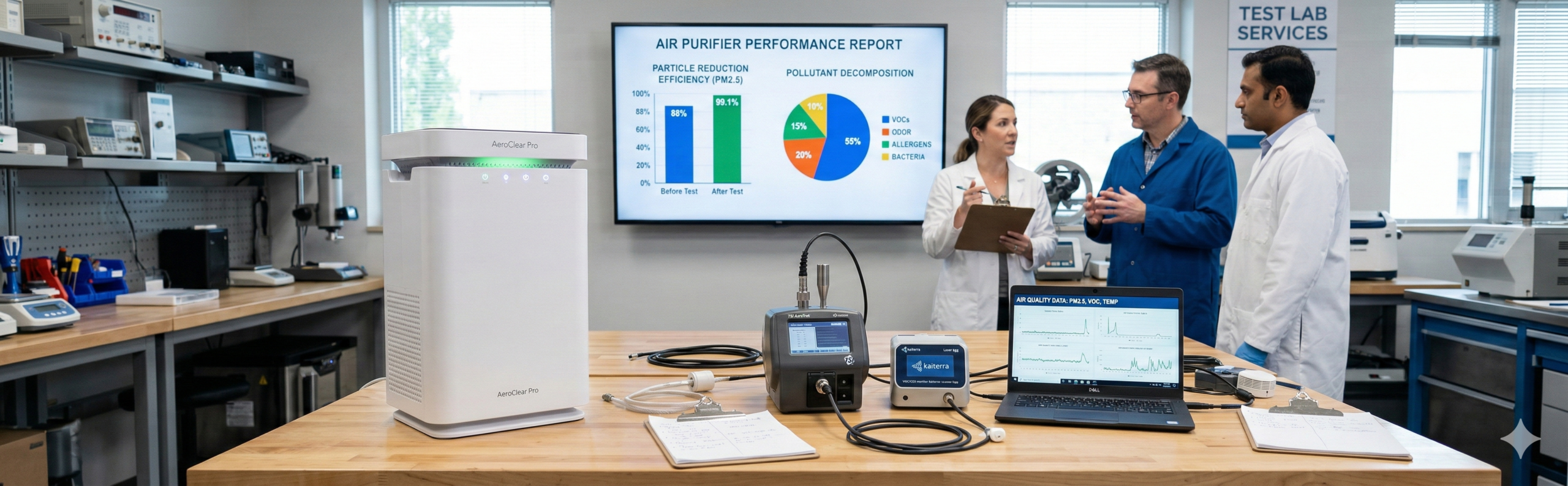
We use a category-specific framework because indoor air quality products do not solve the same kind of problem. A purifier is largely a particle-filtration decision. An HVAC filter decision also involves airflow and system compatibility. A dehumidifier is fundamentally a moisture-management tool. A monitor is an information tool. Treating those categories as interchangeable creates bad advice, bad purchases, and unrealistic expectations.
If you want the practical, step-by-step version of choosing what your home actually needs, start with our Indoor Air Quality Home Guide (2026). If you want the direct category comparison for common reader confusion, also read Air Purifier vs HVAC Filter vs Dehumidifier.
Our evaluation criteria in plain English
- Performance signals: meaningful indicators of effectiveness, ideally standardized or at least consistently reported.
- Usability: whether the product is realistic to run, maintain, tolerate, and understand in daily life.
- Cost of ownership: filters, consumables, replacement intervals, cleaning needs, and energy-related considerations.
- Reliability and support: warranty clarity, parts availability, failure patterns, and brand support signals.
- Fit for the home: room size, occupancy, pet load, allergy priorities, HVAC setup, humidity conditions, and user habits.
Air purifiers
For air purifiers, our methodology starts with realistic room fit. We do not like vague “covers up to” claims without context. A purifier should be matched to the room where it will actually run, using airflow logic, CADR-related framing when available, and common-sense expectations about fan speed. We also evaluate filter design, noise at usable settings, replacement filter availability, long-term cost, and whether the device seems likely to remain practical after the first month of ownership.
We pay special attention to the difference between theoretical performance and lived performance. A purifier that can move a lot of air only on a loud mode many people will never use may not be the best choice for a bedroom. A purifier with low ongoing filter cost but weak practical output may also underperform in real homes. Our process aims to balance paper specifications with real-world ownership tradeoffs.
HVAC filters
HVAC filters are not evaluated like standalone purifiers. Here, the key issue is system compatibility. A stronger filter can help with baseline whole-home filtration, but only if the HVAC system can support the change. We therefore consider MERV context, replacement schedule, airflow implications, size availability, and whether the advice would still make sense for a cautious homeowner who does not want to stress equipment unnecessarily.
We are careful not to oversell HVAC filter upgrades as magical solutions. In some homes they can be an excellent background improvement. In others they are only part of the picture. If a reader has a damp basement, poor bathroom ventilation, heavy cooking emissions, wildfire smoke intrusion, or a bedroom with strong allergy symptoms, a filter upgrade alone may not be the highest-return first action.
Dehumidifiers and humidity control
For dehumidifiers, we evaluate moisture-control logic first. If the main problem is dampness, condensation, musty smell, or a room that never really dries out, humidity control may be more urgent than particle filtration. In this category, capacity logic, drainage options, defrost behavior, maintenance, noise, and reliability matter more than marketing phrases.
We do not treat dehumidifiers as mold guarantees. Lowering humidity can be a smart part of a healthier building strategy, but moisture problems often involve source issues such as leaks, seepage, poor ventilation, insulation problems, or bad drainage. We therefore describe dehumidifiers as tools within a system rather than as one-box building cures.
Air quality monitors
For monitors, transparency is everything. We look for clarity around sensor type, data presentation, app reliability, update cadence, trend usefulness, and whether the product helps a reader make better decisions rather than simply stare at numbers. A monitor is valuable if it helps you verify patterns, test ventilation habits, observe PM changes, or notice humidity drift. It is less valuable if it presents opaque “air quality scores” with no meaningful interpretation.
We also avoid calling consumer monitors “medical-grade” unless such accuracy is independently demonstrated in a context that deserves that language. For most households, the real value is not perfection. It is trend visibility, context, and better decision-making.
Table 1: Comparison-by-criteria
| Category | Key criteria | Typical evidence we use | What we won’t claim |
|---|---|---|---|
| Air purifiers | Room-fit logic, CADR context, filter design, noise at realistic speeds, replacement cost, practical maintenance, reliability signals | Manufacturer documentation, standards context, independent evaluations when available, broad ownership patterns | We do not claim we measured CADR ourselves or guaranteed health outcomes in every home |
| HVAC filters | MERV context, airflow implications, compatibility, replacement cadence, value over time | Standards guidance, HVAC best-practice references, product spec sheets, educational resources | We do not claim a stronger filter is always better for every HVAC system |
| Dehumidifiers | Capacity logic, moisture-control fit, drainage options, defrost behavior, noise, maintenance, reliability | Specifications, known ownership patterns, maintenance requirements, practical setup considerations | We do not promise mold prevention or structural correction from a dehumidifier alone |
| Air quality monitors | Sensor transparency, data clarity, trend usefulness, app reliability, export value, long-term consistency | Manufacturer disclosures, independent evaluations when available, product documentation, long-term user feedback patterns | We do not call a monitor highly accurate in every condition without strong evidence |
For purifier sizing specifically, we prefer clear room-fit logic over vague marketing language. If you want practical help translating purifier performance into a realistic room decision, use our Indoor Air Quality Home Guide (2026), which is the live page we use as our main IAQ starting point.
How We Interpret Common Metrics and Standards
CADR
CADR is one of the most useful standardized ideas in the purifier category because it helps anchor the conversation in airflow-cleaning potential rather than in decorative language. That does not mean CADR is the only thing that matters. A purifier still has to be tolerable to run, reasonably priced to maintain, and sensibly matched to the room. But when used correctly, CADR-related thinking helps us avoid the trap of recommending machines that sound impressive yet are functionally undersized for the room.
Our use of CADR is practical, not theatrical. We do not wave the metric around to sound technical. We use it to ask simple questions: Is this unit plausibly sized for the room? Is the coverage language believable at realistic fan use? Is the buyer likely to run it at a level that still gives meaningful benefit? When content ignores those questions, it becomes much easier to recommend products that are technically interesting but practically mismatched.
MERV ratings
MERV discussion can become misleading when it is treated like a simple ladder where every step up is automatically better. In reality, HVAC systems vary, and filtration decisions exist inside a whole-airflow system. That is why our methodology uses MERV as context, not as a slogan. We look at the likely benefit, the practical replacement pattern, and the compatibility question before describing a stronger filter as a smart move.
We also avoid the lazy framing that a stronger filter automatically means a stronger result for the reader. In some homes, a better-filter strategy is excellent as a background upgrade. In others, the more urgent issue is a bedroom purifier, a damp room, or source control. Our policy is to place MERV recommendations where they fit rather than where they sound impressive.
Humidity targets
Humidity discussion often gets oversimplified into “higher is more comfortable” or “lower is safer,” but practical indoor comfort usually requires a middle zone and context. Our humidity-related content therefore focuses on signs, use cases, and source logic. Are there signs of dampness? Is there condensation? Is the room persistently musty? Are dust-mite or mold concerns part of the problem? Is the air truly dry enough to create irritation? We want our humidity guidance to help readers think clearly about what their home is doing rather than to chase a number without context.
Air quality monitor readings
Consumer air quality monitors are useful when they help readers see patterns and make decisions. They become less useful when they provide dramatic labels without enough interpretive support. That is why we care about trend usefulness, data transparency, and practical readability. A monitor should help a reader answer questions such as: Does cooking spike particles here? Does opening a window reduce stuffiness? Is the room repeatedly humid overnight? Did the purifier actually change PM trends?
In our methodology, monitors are not a replacement for judgment. They are feedback tools. We describe them that way because doing so helps readers understand what kind of value to expect from the device.

What Counts as Evidence in Our Process
We use a layered evidence model rather than relying on one source type alone. The best buying guidance usually comes from combining several kinds of information responsibly. For example, a spec sheet can tell you some things clearly. A standard can tell you how to interpret one metric. Independent testing can add useful perspective. Owner patterns can reveal pain points. Warranty language can indicate support confidence. On their own, each source type has limits. Together, they create a more reliable decision framework.
Evidence we value most
- Recognized standards and terminology used correctly, not as decorative badges.
- Manufacturer documentation for baseline specifications, interpreted carefully and not treated as gospel.
- Independent evaluations, directories, or test references when they are relevant and reasonably trustworthy.
- Practical ownership factors such as noise tolerance, replacement availability, maintenance burden, and recurring cost.
- Cross-page consistency: whether a recommendation still makes sense when compared with adjacent categories and real-room scenarios.
Evidence we treat carefully
- Raw user reviews without context. They can reveal patterns, but they can also overrepresent edge cases and emotional extremes.
- Unqualified “covers up to” claims.
- Generic “best seller” signals without technical fit.
- App screenshots or marketing videos that imply reliability but do not prove it.
- Single-source summaries that are not supported by broader product behavior or category logic.
Evidence we do not treat as proof
- Brand adjectives such as “advanced,” “medical-grade,” “professional,” or “ultimate” without strong verification.
- Copied comparison tables that fail to explain assumptions.
- Anonymous performance claims with no visible method.
- Outcome promises that bypass room conditions, source control, or user behavior.
Table 2: Our evidence hierarchy
| Evidence type | How we use it | Main limitation |
|---|---|---|
| Standards / recognized metrics | Anchor the explanation and keep product comparisons honest | Not every useful category feature is captured by one metric |
| Manufacturer specs | Baseline facts about capacity, dimensions, filters, and features | Can be incomplete, framed generously, or difficult to compare directly |
| Independent evaluations | Add outside perspective, challenge marketing assumptions, and clarify category behavior | Coverage is uneven and methods vary |
| Ownership patterns | Reveal noise complaints, maintenance pain points, durability concerns, and support issues | Can skew emotional or inconsistent |
| Editorial comparison logic | Turn scattered information into a reader-useful decision framework | Requires discipline to stay conservative and transparent |
How We Build a Recommendation Without Faking Lab Testing
One of the biggest problems in home-product publishing is the pressure to sound more authoritative than the evidence actually allows. We reject that pressure. We do not need to pretend we ran every product in a chamber to publish useful advice. What readers actually need is a transparent explanation of what the product appears designed to do, how it compares in context, what tradeoffs come with ownership, and where the recommendation becomes more or less appropriate.
Our recommendation process is therefore evidence-first and scenario-based. We start by identifying the problem type. Is this primarily particles, odor, humidity, or uncertainty about what is happening in the room? Then we identify the decision criteria that matter most for that problem. Then we compare products or categories against those criteria in a way that avoids magical language. If uncertainty remains, we say so. If a device looks promising but has ownership compromises, we say so. If the category itself is the wrong first move for the reader, we say so.
This matters because readers are not helped by false certainty. They are helped by clear judgment. A transparent framework lets readers adapt the advice to their room, budget, climate, sensitivity level, and maintenance tolerance. That is far more useful than a dramatic sentence that treats every house as the same house.
Category-Specific Decision Logic We Use
When a purifier is usually the right first move
We lean purifier-first when the reader is mainly dealing with airborne particles in the room they spend the most time in: allergies, pet dander, smoke particles, dusty bedroom discomfort, or recurring irritation in a main living area. In those cases, a well-sized purifier often gives the clearest near-term improvement, especially when combined with basic source control and consistent operation.
Even then, we do not describe the purifier as a one-box life fix. We still care about placement, noise tolerance, filter replacement costs, and whether the unit seems realistically livable. That is why our purifier recommendations are tied to room fit and ownership logic rather than to generic “top 10” formatting.
When an HVAC filter strategy matters more
We lean HVAC-filter strategy higher when the home already has a functional central system and the reader wants a broader baseline improvement across the house. This can make sense when the issue is not isolated to one room or when the reader wants to improve background filtration without placing a standalone purifier in every space.
But our policy here is cautious. We do not casually tell every homeowner to install the strongest filter they can find. System compatibility matters. Airflow matters. Replacement discipline matters. The goal is a practical system strategy, not a spec-sheet flex.
When humidity control should come first
We move humidity control to the front of the line when signs point strongly toward moisture as the real problem: damp smell, sticky rooms, visible condensation, chronic basement discomfort, or a space that never seems to dry out. In those cases, a purifier can still have a role, but it is not the most logical first answer if humidity remains unchecked.
This is one of the most common places where readers waste money. They buy the more fashionable category first because it feels like air cleaning, but the room is actually asking for moisture management and source correction. Our editorial process tries hard to prevent that mismatch.
When a monitor is genuinely useful
We view monitors as especially useful when the reader wants to verify changes, understand patterns, or reduce guesswork. If you are not sure whether cooking, ventilation, humidity, or purifier operation is actually changing conditions in the room, a monitor can create helpful feedback loops. We just do not want to oversell that device into the role of a solution machine. It is a decision-support tool, not the final answer by itself.
Table 3: “Best place to start” decision table
| Your situation | Start here | Why |
|---|---|---|
| Bedroom allergies, pets, dust, or smoke particles | Correctly sized air purifier | Main comfort gain often comes from room-targeted particle control |
| Whole-home baseline filtration with central HVAC | HVAC filter strategy, compatibility first | Can improve background filtration across the house when the system supports it |
| Musty room, damp basement, sticky air, condensation | Dehumidifier + source check | Moisture is likely the real driver of discomfort and risk |
| You are not sure what is changing or whether your fixes are working | Air quality monitor | A monitor can help verify patterns and reduce guesswork |
How We Keep Recommendations Honest
1) We separate measurable claims from personal outcomes
This is one of the most important rules in our process. Measurable or documentable claims include things like filter type, dimensions, replacement cadence, certain category metrics, and practical room-fit logic. Personal outcomes include sleep quality, symptom severity, comfort improvement, and perceived freshness. The first group can often be discussed with more confidence. The second group always depends on more variables.
We therefore avoid writing as though every buyer will feel the same result. Instead, we explain what kind of setup is more plausible under certain conditions and what limitations still remain even after purchase.
2) We prefer methods readers can reuse
Good editorial work should make the reader more capable, not more dependent. That is why we try to teach decision logic, not just present picks. If we discuss purifier sizing, we explain the reasoning. If we discuss humidity control, we explain the signs that make it the more logical first tool. If we compare categories, we explain when each category is appropriate.
For a practical step-by-step implementation path, we direct readers to our Indoor Air Quality Home Guide (2026) and our category comparison guide. Those pages help readers apply the methodology instead of merely reading about it.
3) We update when the reader benefit changes
A page can become weaker for many reasons: a model disappears, a better option enters the category, a line refresh changes the value case, or our own previous wording no longer seems clear enough. We do not see those as reasons to ignore a page. We see them as reasons to improve it. A “best” list that is not maintained can become more misleading with time than an honest framework page ever will.
How Affiliate Relationships Fit Into Our Editorial Process
BuyersChoiceLab may earn commissions from qualifying purchases made through affiliate links, including Amazon links. That commission helps support research, updates, writing, and maintenance. It does not give a manufacturer control over our conclusions, and it does not give us permission to blur the line between evidence and advertising.
In practical editorial terms, this means a product does not become a good recommendation simply because it is available through an affiliate platform. We still ask whether it is appropriately sized, reasonably priced to maintain, practical to live with, and better matched to the use case than the alternatives. If the product category itself is the wrong first move for the reader, we would rather say that than force a weak conversion path.
We also avoid recommendation inflation. If a product appears inconsistent, overpriced relative to what it offers, weakly documented, or too context-dependent to praise cleanly, we either leave it out, narrow the use case sharply, or explain the uncertainty. A useful website should not need to recommend everything in order to survive.
Our Correction, Update, and Maintenance Policy
We treat corrections and updates as part of editorial quality. If a reader spots a broken claim, outdated link, unsupported sentence, or a clearer source we should consider, that is not an inconvenience to us. It is a chance to improve the page.
We update pages when:
- Product lines change and the old examples no longer represent the category well.
- Availability shifts make a former recommendation impractical.
- Better evidence becomes available.
- A clearer explanation would materially help the reader choose better.
- Broken internal or external links reduce page usefulness.
- We identify overly broad wording, ambiguous claims, or stale examples that should be tightened.
How we handle corrections:
If a correction is straightforward, we make it. If the issue changes the recommendation logic, we revise the surrounding explanation too. Our standard is not simply “make the page technically true.” Our standard is “make the page clearer, safer, and more useful after the correction than it was before.”
What We Think Readers Actually Need From IAQ Content
Many readers do not need another giant list of products before they understand the problem. They need help asking better first questions. Is the issue mostly particles? Is moisture the main driver? Is the room too large for the device category under consideration? Is the buyer willing to replace filters on time? Is the machine quiet enough to run at night? Does the home already have HVAC support that changes the answer?
Our editorial policy is built around those questions because they turn a random shopping experience into a reasoned one. When we succeed, the reader should feel more capable before clicking a product link, not merely more persuaded.
This is also why we produce connected content rather than isolated pages. The editorial policy explains the standards. The home guide helps readers apply the standards across a real home. The comparison guide helps readers decide which category likely matters most first. Together, those pages form a small system rather than a loose pile of posts.
Frequently Asked Questions
Do you actually test air purifiers yourselves?
We do not claim in-house lab testing for every product we discuss. Our recommendations are research-backed and methodology-driven. We use documented specifications, standards context, independent information where available, and practical buying logic. We also disclose where certainty is limited rather than pretending every conclusion came from proprietary experiments.
Why do you emphasize CADR and room fit so much?
Because a purifier that is poorly matched to the room can disappoint even if the product sounds impressive. Room fit is one of the easiest places for readers to make expensive mistakes. We therefore emphasize the match between output logic, room size, operating reality, and long-term use instead of treating purifier shopping like a feature checklist game.
Why don’t you just recommend the highest-rated HVAC filter?
Because filtration happens inside a system. A stronger filter is not automatically the best move for every setup. Our methodology is designed to avoid simplistic advice that sounds strong but ignores airflow, compatibility, maintenance, and whether the reader’s core problem is actually elsewhere.
Why are you careful about mold and humidity claims?
Because moisture issues are often partly environmental and partly structural. A dehumidifier can be a useful tool, but it is not a full explanation for why the room is damp and it is not a guarantee against larger building issues. We use careful wording because readers deserve guidance that recognizes complexity instead of hiding it.
How do affiliate links affect your recommendations?
Affiliate links may generate commissions, but they do not determine the logic of our recommendations. We still prefer clarity, fit, and defensible reasoning over pushing a product into every scenario. If a category is the wrong first answer, we would rather say so than force a weak recommendation.
How often do you update indoor air quality content?
We update when it matters: model turnover, changing availability, stronger evidence, clearer comparison logic, or an identified weakness in the existing page. Evergreen topics still need care because examples, links, and product context change even when the basic principles remain useful.
Can I suggest a correction or source?
Yes. Helpful corrections are welcome. If you spot a broken link, outdated example, ambiguous sentence, or a credible source we should consider, that improves the page. Our goal is accuracy, clarity, and stronger decision support for the next reader.
What should I read next if I want practical help, not just methodology?
Start with our Indoor Air Quality Home Guide (2026) for the step-by-step framework, then use Air Purifier vs HVAC Filter vs Dehumidifier if you are still deciding which category deserves attention first.
Next Step
If you’re ready to apply this methodology to your own home, do not start by buying everything. Start by identifying the real problem, the room that matters most, and the most logical first tool. That is the exact process we built into our main guide.
Read the Indoor Air Quality Home Guide (2026)
And if you want the direct category comparison before you choose a device, read: Air Purifier vs HVAC Filter vs Dehumidifier