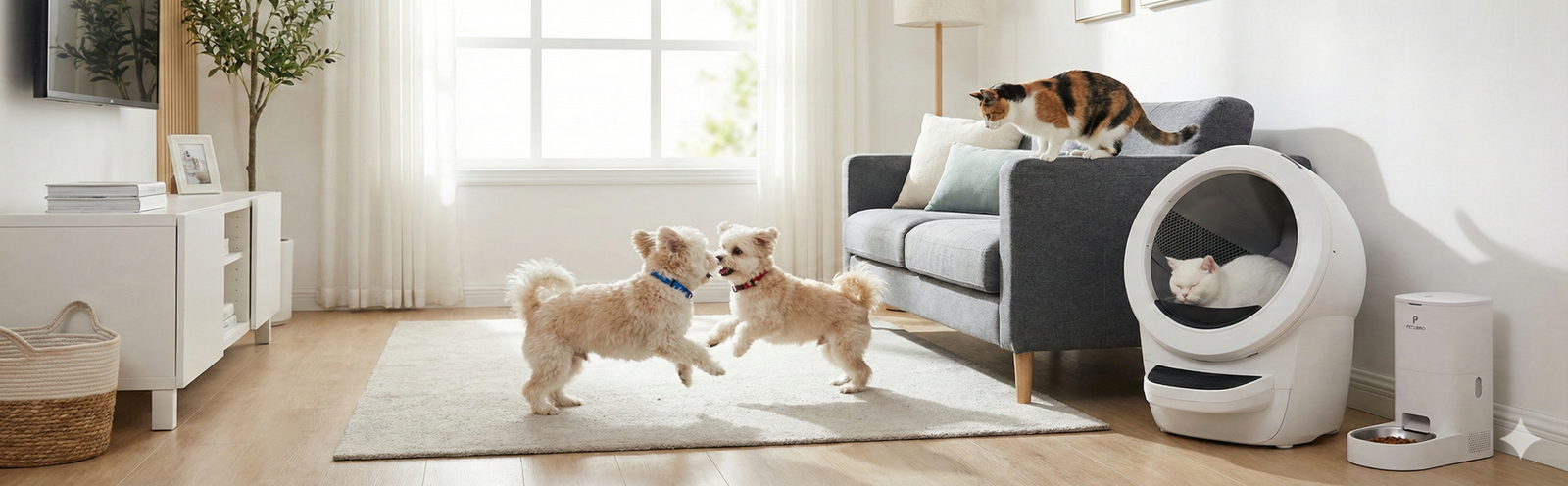
Must-have products for dogs and cats are not the items with the longest feature list or the prettiest product page. They are the products that keep daily life easier, cleaner, safer, and more manageable in a real home.
That sounds obvious, but it is exactly where most people lose money. They do not usually waste money because they bought the wrong category. They waste money because they bought the right category in the wrong version for their space, their pet, and their actual routine.
A bowl can be technically good and still be annoying to wash. A grooming tool can be highly rated and still be too harsh for the coat you are dealing with. A feeder can sound efficient and still add more maintenance than it saves. A storage solution can look tidy and still make it harder to grab what you need when the mess is already happening.
This guide is built to help you choose must-have products for dogs and cats without falling into the buy-return-ignore cycle. Instead of chasing hype, you will learn how to filter pet essentials by cleanability, size fit, routine match, long-term upkeep, storage footprint, and repeat-use realism. The goal is simple: buy fewer things, use them longer, and build a pet setup that supports everyday life instead of quietly complicating it.
Quick answer: what should you buy first?
- Start with products that remove daily friction: reliable feeding basics, cleanup tools, one useful grooming solution, and simple storage that stops clutter from spreading.
- Treat “must-have” as household-specific. A fountain, feeder, organizer, or travel product is only essential if it solves a recurring problem in your home.
- Choose the version you will actually maintain. Easy cleaning beats extra features in most pet categories.
- Buy for repeat use, not first impression. A simple product you use weekly beats a more advanced one you avoid after month one.
- When uncertain, buy the simpler version first and upgrade only after your routine proves the need.
Must-have products for dogs and cats: what actually deserves a place in your home
A true must-have is not just something pet owners commonly purchase. It is something that improves daily life enough to justify its cost, maintenance, and space. That is a much stronger standard than “popular,” “cute,” or “best seller.”
For most households, real essentials fall into five practical buckets: feeding and hydration, grooming and coat control, odor and accident cleanup, safety and transport, and basic organization. Everything else sits somewhere between a helpful upgrade and an optional extra.
That distinction matters because broad pet roundups often mix practical essentials with impulse-friendly extras. The result is a shopping list that feels complete without actually being useful. A cat owner in a compact apartment does not need the same priorities as a dog owner dealing with muddy paws, seasonal shedding, and frequent car rides. A first-time puppy home does not need the same setup as a calm one-cat household focused on odor control and litter scatter.
Good buying decisions begin when you stop asking, “What do pet owners buy?” and start asking, “What problem repeats in my home often enough to deserve a real solution?”
Why so many pet products fail in real life
Pet products rarely fail for dramatic reasons. They fail for small, repetitive reasons that look minor at checkout and annoying by week three.
1) They solve the fantasy version of your day
A product can make sense on your most organized day and still be wrong for your real life. An elaborate feeder sounds efficient until you realize the parts are irritating to clean. A decorative storage bin looks polished until it never fits where you actually need it. A “smart” pet gadget sounds helpful until it adds charging, setup, syncing, and one more thing to remember.
2) They create upkeep you did not budget for
The purchase is only part of the decision. Filters, liners, replacement parts, refills, hand-washing, and extra cleaning time all become part of the real cost. Many supposedly great items feel worth it on day one and annoying by month two.
3) They are sized for the wrong pet or the wrong home
A product can be well made and still fail because the bowl is too shallow, the carrier is too bulky, the grooming tool is too aggressive for the coat, or the mat is too small to catch the actual mess zone. Size mismatch is one of the fastest ways to turn a good product into regret.
4) They add friction instead of reducing it
Every good pet product should remove a task, shorten a task, or make a messy task easier. If it adds a new step every time you use it, it is probably a downgrade no matter how polished it looks on the product page.
5) They were bought because of emotion, not pattern
The pet category is full of emotional buying traps: cute colors, reassuring wording, premium branding, and the feeling that you are being extra caring. But care and convenience are not the same thing. The products that earn a permanent place in your home are almost always the ones tied to recurring problems: spilled food, visible fur, tracked litter, odor, travel stress, muddy paws, or badly organized supplies.
Want product ideas after you narrow the problem?
Use a narrower companion guide instead of jumping between random tabs. This makes it much easier to move from strategy to actual picks.
See Amazon Finds for Pet OwnersA better filter for pet essentials: the C.L.E.A.R. framework
Before you buy anything, run it through one simple framework. If it fails most of these tests, it probably is not a real essential for your household.
C = Cleanable
The product should be easy to wipe, rinse, empty, wash, sanitize, or refresh without a complicated process. This is the most underrated buying factor in the pet category. A product can be affordable, attractive, and technically useful, but if you hate cleaning it, you will slowly stop using it.
L = Life-stage and size appropriate
A growing puppy, senior dog, large dog, indoor cat, long-haired cat, or double-coated dog all interact with products differently. Bowl height, brush type, travel setup, and cleanup tools change based on the pet. Never assume a top-rated product is automatically the right one for your animal.
E = Everyday payoff
Ask how often the product solves a recurring problem. The more frequent the problem, the more forgiving you can be about price. Daily fur, feeding mess, litter scatter, odor control, and repeated transport stress are all high-payoff problems. A decorative storage tray or novelty organizer usually is not.
A = After-purchase burden
The best product is not always the cheapest one upfront. But it should not come with hidden burdens you are not willing to absorb. Think replacement parts, frequent refills, bulky storage, complex setup, noise, or hand-wash-only care. A product can save time in theory and still be a bad buy if ownership feels annoying.
R = Repeat-use realism
Picture yourself using the product three months from now. Does it still fit the corner where it lives? Is it still easy to grab when you are busy? Does it still help on a rushed day? Products that only work when you are motivated tend to become clutter. Products that still work when you are tired are the ones worth keeping.
Start with the product categories that create the biggest daily payoff
Feeding and hydration basics
For most homes, this is the first place to improve. Reliable bowls, an easy-to-clean feeding surface, and a hydration setup you will realistically maintain are usually more valuable than niche accessories. If your current feeding area slides around, traps grime, or turns every meal into a wipe-down, upgrading that system often creates immediate value.
The right question is not whether a bowl or fountain is “premium.” It is whether the setup is stable, washable, and realistic for your routine. If you already struggle to keep water areas clean, a more complex hydration product may create more work than it removes.
Grooming and coat-control tools
A useful grooming product does not need to feel impressive. It needs to match your pet’s coat and encourage consistency. A brush or de-shedding tool that feels too rough, too time-consuming, or too awkward will not get used enough to matter. That is why so many homes own multiple grooming tools without seeing much real improvement.
The better approach is usually one coat-appropriate tool plus one simple solution for the fur that still lands on furniture and fabric. Buy for short, repeatable sessions, not idealized grooming weekends.
Cleaning and odor-control products
This category creates outsized value because it stops everyday irritation from spreading into the rest of the home. Good cleanup tools protect floors, rugs, upholstery, feeding zones, litter areas, and entryways. Bad ones waste time and leave you repeating the same job over and over.
If tracked litter, shed fur, food spills, odor, or accident cleanup are recurring pain points, this is one of the strongest places to spend money. It is also where storage matters almost as much as the product itself. A good cleanup product hidden in a closet gets used less than a decent one stored where the mess happens.
For a more focused look at that side of the setup, see pet cleaning and organization products that actually help in daily life.
Travel and safety gear
Travel products earn their place when they reduce chaos, improve security, and make transitions smoother. That might mean a carrier that is easier to load, a simpler restraint setup, or a portable bowl that does not leak all over the car. This is a category where simplicity matters. If setup is irritating, you are less likely to use it consistently.
This is also where low-use households should be honest. If your pet rarely travels, you may not need an elaborate system. But if vet visits, daycare drop-offs, road trips, or weekend movement are common, a reliable travel setup stops being optional very quickly.
Storage and organization
Storage becomes valuable when pet supplies are visually messy, difficult to access, or scattered across multiple rooms. The right organizer should make your routine faster, not prettier but slower. If you need to unstack, unzip, or move three items just to reach one essential, the organization system is failing. Good storage reduces friction. It does not create a mini project every time you need wipes, bags, brushes, or food scoops.
How to choose by real household scenario
This is where pet buying decisions get easier. Instead of trying to build the perfect master list, build around the kind of home you actually have.
Scenario 1: One cat in a small apartment
Your real enemies are usually litter scatter, odor drift, visible clutter, and products that consume too much floor space. In this setup, compact organization and easy cleanup often matter more than tech-heavy upgrades. A practical litter-area system, a wipeable feeding zone, and one dependable grooming tool usually create more value than stacking on specialty accessories.
Apartment setups reward a small footprint, low visual clutter, and quick cleanup. If a product needs dedicated space you do not really have, it stops feeling helpful very fast.
Scenario 2: One dog with outdoor walks and dirty paws
Cleanup becomes the priority here. Your smartest buys are the ones that prevent dirt and moisture from traveling deeper into the house. That usually means door-adjacent cleanup supplies, a grooming tool you will actually use between baths, and a feeding area that does not create another mess zone.
This household benefits from placing products at the point of friction. The towel, wipe, or cleanup tool that lives by the door gets used. The one stored in another room usually does not.
Scenario 3: Multi-pet household
Multiple pets amplify every weakness in a product. Hair multiplies. Bowls get dirty faster. Odor problems escalate quicker. Storage disappears sooner than expected. In this kind of home, durability and cleanability deserve more weight than novelty or design.
Scale becomes part of the decision. That does not always mean the largest version of everything. It means recognizing that underbuying often creates more work later. A too-small system in a multi-pet home usually means more refilling, more mess, and more frustration.
Scenario 4: Puppy or kitten setup
New-pet homes are especially vulnerable to buying too much too soon. It is easy to assume that being prepared means owning every category immediately. In practice, you usually need a smaller starter setup and a willingness to adjust after you see the actual patterns. What matters first is safety, feeding, cleanup, and a manageable basic routine.
Do not overinvest in highly specific accessories before you know your animal’s size, coat needs, habits, and pain points. Early buying should lean practical, flexible, and easy to replace.
Scenario 5: Busy owner who wants low-maintenance solutions
This is the household that should be most skeptical of “smart” gear. Low-maintenance owners do best with products that are straightforward, durable, and forgiving. You are not looking for the most advanced option. You are looking for the option that still works when you are distracted, tired, or rushing out the door.
Common mistakes buying pet supplies
This is the hidden core of the page. Most shopping regret does not come from buying nothing. It comes from repeating the same decision errors across different categories.
Mistake 1: Buying for aesthetics before usability
Products that photograph well do not always live well. A sleek feeder, stylish bowl set, or attractive storage container can still be frustrating in the daily routine. If the opening is awkward, the surface traps residue, or the product takes too long to wash, the visual upgrade rarely feels worth it.
Mistake 2: Underestimating cleaning effort
This is probably the biggest reason pet products get abandoned. Owners often think about what the product does, not what it asks from them. The time cost of rinsing, disassembling, wiping, drying, and reassembling becomes the real decision point. Treat cleaning effort as a major feature, not a footnote.
Mistake 3: Buying duplicates instead of fixing the underlying issue
When one brush or cleanup tool disappoints, many owners buy a second and third version. But often the issue is not the category. It is that the first item was mismatched, badly placed, or used inconsistently. Before buying another version, ask whether the real problem is routine, storage, or fit.
Mistake 4: Ignoring the home layout
A product that works in a large home may feel irritating in a small one. A wide feeder base, oversized carrier, or bulky organizer can become a visual and physical obstacle. Always judge the product in the exact location where it will live, not as an abstract object on a listing page.
Mistake 5: Buying advanced features before mastering the basic routine
If your feeding area is chaotic, your cleanup routine is inconsistent, or you are still learning your pet’s habits, extra features usually do not fix the problem. First simplify the routine. Then add upgrades only where there is a clear and repeated benefit.
Mistake 6: Assuming expensive automatically means low-maintenance
Higher price can buy better materials, better fit, or stronger construction. It does not automatically buy easier ownership. Some premium products still create a lot of upkeep. Judge by how the product behaves over time, not by how elevated it looks on day one.
Mistake 7: Failing to buy for the next six months
This matters especially with puppies, kittens, growing dogs, and active homes. If the product only works for the exact moment you are in, it may become obsolete too fast. The better buy is often the one with a little flexibility in size, storage, or usage pattern.
Mistake 8: Treating every purchase as isolated
Pet products work best as part of a system. Bowls need a wipeable zone. Cleanup tools need reachable storage. Grooming tools need to live where they will actually get used. Travel gear needs a place to stay ready. A good product disconnected from the rest of your setup often underperforms.
If your biggest pain point is mess, fur, odor, or clutter…
Go deeper into the cleanup side of the category before buying more gadgets.
See Pet Cleaning & Organization PicksWho should skip certain popular pet products
Not every popular category deserves space in every home. Many shopping regrets happen because “recommended” gets interpreted as “necessary.”
Skip a water fountain if…
…you already struggle to clean basic pet items, your home does not have a good spot for it, or you know you get annoyed by products with multiple parts. A fountain can be useful, but only if maintenance is realistic. Otherwise, a simpler bowl setup is often the better buy.
Skip an automatic feeder if…
…your feeding routine is already stable, you prefer direct control over mealtimes, or you are unlikely to keep the food path and bowl area clean. For many owners, the feeder solves a scheduling problem they do not actually have while creating a maintenance problem they did not need.
Skip smart monitoring extras if…
…you mainly want reassurance rather than a specific use case. Smart products can be worth it in some homes, but they are easy to overestimate. If your actual problem is routine consistency rather than monitoring, improve the routine first.
Skip decorative feeding and storage pieces if…
…they are harder to wash, heavier to move, or slower to refill than simpler versions. Pet setups can look tidy, but they should not make the routine slower. Beauty is a bonus. Ease is the requirement.
Skip oversized organization systems if…
…your real problem is not lack of storage but too many products. Sometimes the smartest organizational upgrade is not a larger bin. It is owning fewer things, removing duplicates, and keeping only the supplies you actually touch every week.
A realistic maintenance rhythm that keeps your setup usable
One of the easiest ways to waste money is to buy pet products that only work under perfect upkeep. The smarter move is to build a very basic maintenance rhythm around the categories you use most.
Notice how simple that is. A good product should fit into this rhythm, not demand a completely separate system. If you need a detailed checklist just to keep one item usable, that item had better be solving a major recurring problem. Otherwise, you are probably overbuying.
This is also why placement matters so much. A fur-removal tool near the couch gets used more often. A wipe container near the feeding station prevents buildup. A pet organizer by the entryway supports consistency after walks. Small positioning decisions often do more for product success than a more expensive upgrade.
How to read pet product reviews without getting fooled
Do not use reviews as a scoreboard. Use them as pattern detection. The question is not, “How many stars does this have?” It is, “What friction points keep showing up across different buyers?”
Repeated mentions of awkward lids, hard-to-clean parts, leaking seams, weak clips, or inconsistent performance with certain pet sizes are much more valuable than generic praise. On the positive side, repeated mentions of easier cleanup, better storage, more convenient daily use, or better fit in small homes are stronger signals than vague words like “nice” or “love it.”
Also pay attention to who is leaving the review. A product that works beautifully for one calm indoor cat may disappoint a multi-dog household. A tool praised by owners of short-haired pets may not hold up for heavy shedders. Match the feedback to your own environment before treating it as proof.
When paying more actually makes sense
Pay more when the improvement shows up repeatedly in real life. Better materials, easier cleanup, sturdier construction, a better fit for your space, or stronger daily convenience can justify a higher price because the benefit keeps paying you back in time or reduced frustration.
Do not pay more for vague smart benefits, decorative upgrades, or features you will barely touch after the first week. The pet category is full of products that look premium because they offer more settings, accessories, or a more polished appearance. But if those extras do not make daily life noticeably easier, they are not value. They are packaging.
A practical rule is this: spend more where failure creates recurring annoyance, hygiene issues, or safety concerns. Save money where the category is mostly aesthetic, occasional-use, or easy to replace.
The smartest buying order if you are on a budget
If you cannot upgrade everything at once, do not try. Buy in the order of repeated daily impact.
- Fix feeding and hydration basics first. These are daily-touch items and often the fastest quality-of-life upgrade.
- Upgrade cleanup next. The best purchase is often the one that reduces the mess you already hate.
- Add one grooming solution. Not a collection. One useful tool you will actually use.
- Improve storage only after you know what stays. Organizing the wrong products better is not progress.
- Move to convenience upgrades last. Feeders, fountains, and tech extras make more sense after the basic routine is already working.
This sequence keeps the page aligned with what people actually need when shopping for must-have products for dogs and cats: practical choices that reduce daily friction, not just more items entering the home.
FAQ: must-have products for dogs and cats
What are the real must-have products for dogs and cats in most homes?
For most owners, the real essentials are reliable feeding basics, effective cleanup products, one grooming tool that matches the coat, and a simple way to manage transport or containment when needed. Organization becomes essential when clutter is already slowing the routine.
How do I know whether a pet product is actually useful or just trendy?
Use the C.L.E.A.R. filter. Is it easy to clean? Appropriate for your pet and home? Tied to a frequent problem? Manageable after purchase? Realistic for repeated use? Trendy products usually sound exciting but fail on upkeep, fit, or repeat-use realism.
Are water fountains really worth it?
They can be, but only if you are willing to clean them consistently and the setup fits your space. For some homes, a fountain helps and feels worthwhile. For others, a simple, easy-clean bowl routine is the smarter lower-friction choice.
What is the biggest mistake people make when buying pet supplies?
The biggest mistake is buying for appearance or promise instead of routine fit. A product can look excellent online and still be a poor match for your space, patience, or cleaning habits. The second biggest mistake is buying duplicates before diagnosing why the first product failed.
Should I buy a lot of pet products at once when bringing home a new pet?
Usually no. Start with the basics that support safety, feeding, grooming, and cleanup. Then let real life reveal the next purchase. Buying too much too early often leads to wrong sizes, unnecessary categories, and products that do not match the pet you end up living with day to day.
How many grooming and cleanup tools do I actually need?
Fewer than most people think. One coat-appropriate grooming tool, one dependable fur-control solution for surfaces, and one effective cleanup strategy for odor or mess is often enough to start. More tools only make sense when each one has a distinct job and gets real use.
When does organization become more than a nice-to-have?
Organization becomes essential when clutter slows the routine, supplies get lost, or cleanup items are too far from the mess to be useful. At that point, storage is no longer decorative. It becomes part of the function of the pet setup itself.
Where should I go next if I want actual picks instead of just a framework?
Once you know your main problem, move into a narrower guide instead of opening ten random product pages. Start with Amazon Finds for Pet Owners for broader shopping ideas, or browse more Amazon finds here if you want to keep comparing adjacent solutions.
Final verdict
The best pet products are not the most advanced, the cutest, or the ones with the longest feature list. They are the ones that reduce friction in a way you can actually sustain. That usually means easier cleaning, better sizing, lower upkeep, and a closer fit with the real patterns in your home.
If you take one idea from this guide, make it this: buy for repeat use, not first impression. A modest product that works every day beats a fancier one that becomes another thing to maintain. Start with the categories that affect feeding, mess, grooming, and movement. Let the routine prove what deserves an upgrade. Skip anything that looks impressive but does not fit your actual life.
Continue your research without wasting more time
Use the right next step instead of restarting your shopping process from zero.
Amazon disclosure
Some related pages on Buyers Choice Lab may include affiliate links, including Amazon links. If you buy through qualifying links, Buyers Choice Lab may earn a commission at no extra cost to you.